Hydrogen Peroxide → Sodium percarbonate
Reaction equation

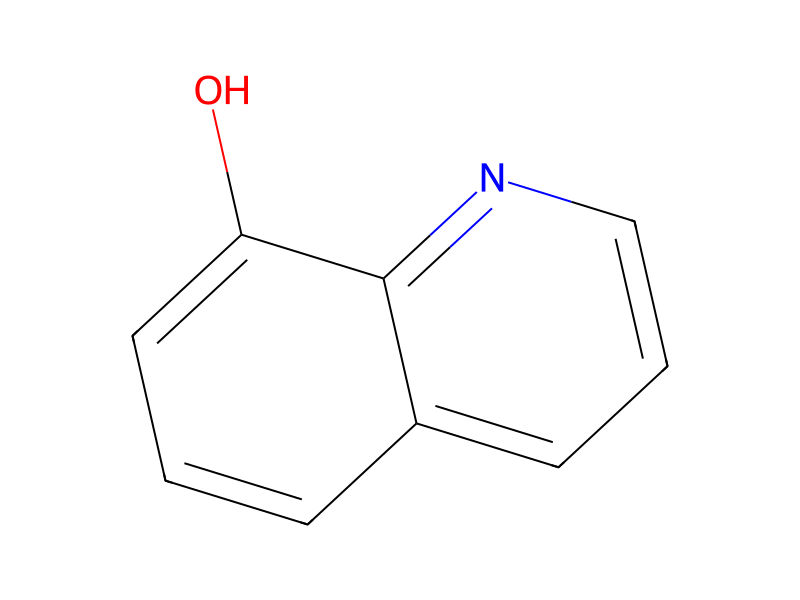
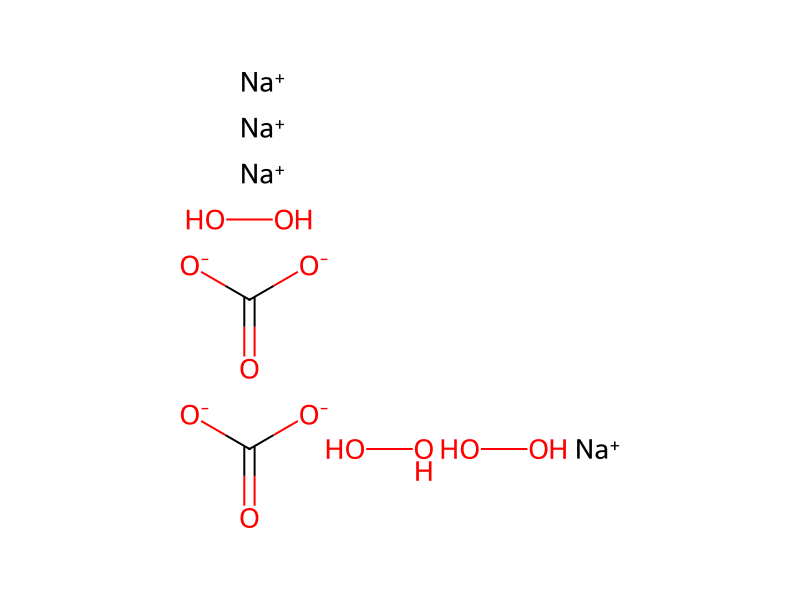
C1C=C(O)C2N=CC=CC=2C=1.C(OS(C1C=CC=CC=1)(=O)=O)CCCCCCCCCCC.[Na].[C:35](=[O:38])([O-:37])[O-:36].[Na+:39].[Na+].[OH:41][OH:42]>C(O)C.O>[C:35]([O-:38])([O-:37])=[O:36].[C:35]([O-:38])([O-:37])=[O:36].[OH:41][OH:42].[OH:41][OH:42].[OH:41][OH:42].[Na+:39].[Na+:39].[Na+:39].[Na+:39]Participants
Reactant 4



Product 1
Reagents, catalysts & solvents 2


Procedure
0.1 Gram of oxine and 1 gr of sodium dodecylbenzenesulfonate were dissolved in 5 ml of ethanol, and the mixture was poured into 500 ml of water and well agitated. Then 210 gr of sodium carbonate was added and dissolved in the mixture, followed by the further addition of 340 gr of 30% aqueous hydrogen peroxide solution to react with the mixture. The solution was then cooled to 0° to 5° C. and the produced crystals of sodium percarbonate were filtered out. These crystals were then dried either under a reduced pressure of 20 mmHg at about 30° C. or naturally in air to obtain powdery sodium percarbonate. There were also prepared sodium percarbonate powder products in the same way as described above except there were used various other kinds of chelating agents and surface active agents as shown in Table 1.
Workup
- dissolutiondissolved in the mixture
- customto react with the mixture
- temperatureThe solution was then cooled to 0° to 5° C.
- filtrationthe produced crystals of sodium percarbonate were filtered out
- customThese crystals were then dried either under a reduced pressure of 20 mmHg at about 30° C. or naturally in air
Sources & evidence
- ORD record
- ord-017ecdd506604459ab4bf60a2def4db7
- Source dataset
- uspto-grants-1977_05
- Patent number
- US04025609
Reaction notes
Loading…