Hydrochloric Acid → Megazol
Reaction equation

[CH3:1][N:2]1[C:6]([N+:7]([O-:9])=[O:8])=[CH:5][N:4]=[C:3]1[C:10]([NH:12][NH:13][C:14]([NH2:16])=[S:15])=N.NNC(N)=S.Cl>CO>[NH2:16][C:14]1[S:15][C:10]([C:3]2[N:2]([CH3:1])[C:6]([N+:7]([O-:9])=[O:8])=[CH:5][N:4]=2)=[N:12][N:13]=1Participants
5
Reactant 3

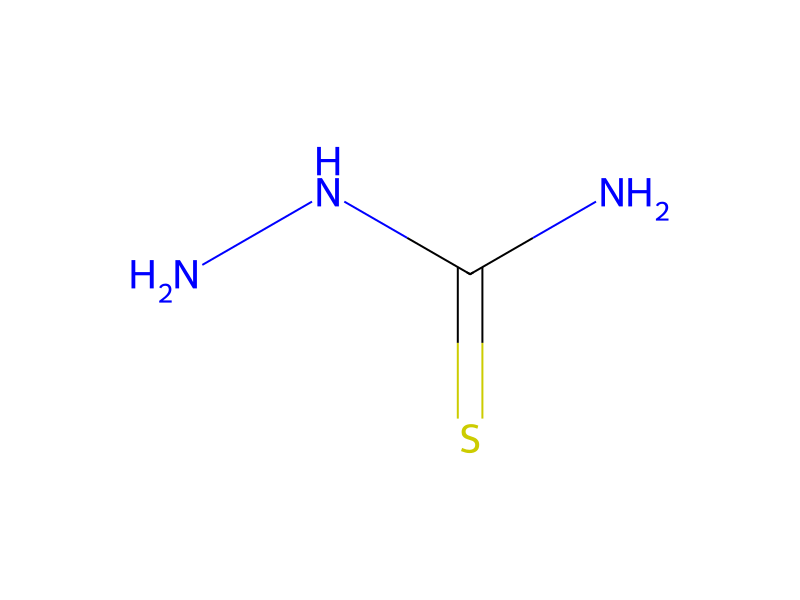

Product 1

Reagents, catalysts & solvents 1

Procedure
1-(1-Methyl-5-nitro-2-imidazolecarboximidoyl)-3-thiosemicarbazide is cyclized as in Example 10 with the exception that the 0.3 g. of the thiosemicarbazide in 7 ml. of 6N hydrochloric acid is replaced by 0.49 g. of the thiosemicarbazide in 5 ml. of methanol plus 0.5 ml. of concentrated hydrochloric acid. The cyclization is also effected by the use of 0.49 g. of the thiosemicarbazide in 5 ml. of methanol plus 0.5 ml. of 6N ethanolic hydrogen chloride. In each of these variations, a 78% yield of the title compound is realized. The cyclization is likewise accomplished by the use of dilute aqueous sulfuric acid, phosphoric, nitric, p-toluenesulfonic, benzene sulfonic, methylsulfonic or hydrobromic acid.
Sources & evidence
- ORD record
- ord-4cc0fae46171409697b0166ea842953f
- Source dataset
- uspto-grants-1977_05
- Patent number
- US04026903
Reaction notes
Loading…