Aniline → 4-Bromo-2-nitro-N-phenylaniline
Reaction equation

[Br:1][C:2]1[CH:7]=[CH:6][C:5](F)=[C:4]([N+:9]([O-:11])=[O:10])[CH:3]=1.[NH2:12][C:13]1[CH:18]=[CH:17][CH:16]=[CH:15][CH:14]=1>CN(C)C=O>[Br:1][C:2]1[CH:7]=[CH:6][C:5]([NH:12][C:13]2[CH:18]=[CH:17][CH:16]=[CH:15][CH:14]=2)=[C:4]([N+:9]([O-:11])=[O:10])[CH:3]=1Participants
4
Reactant 2

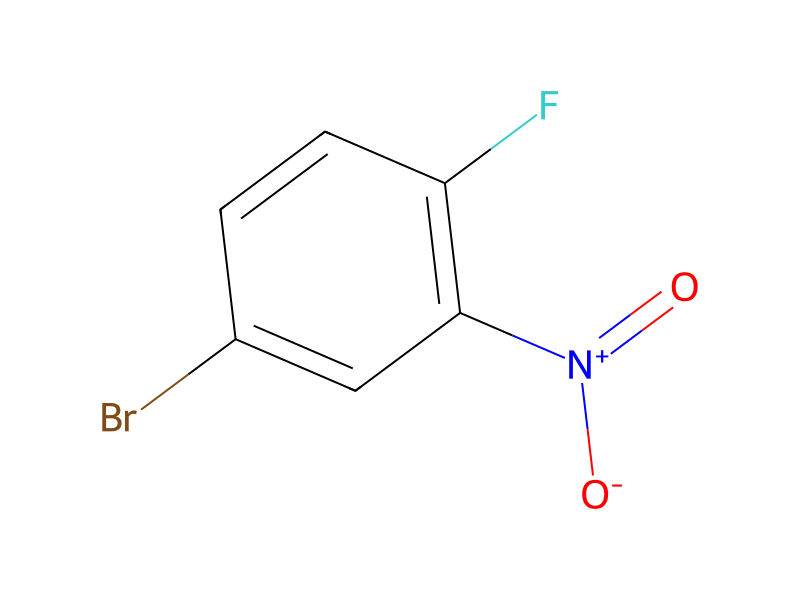
Product 1

Reagents, catalysts & solvents 1

Conditions
- Temperature
- 100 °C
Procedure
A mixture of 1-bromo-4-fluoro-3-nitrobenzene (2270 mg, 10.01 mmol), aniline (3 ml) and DMF (20 ml) was heated at 100° C. under an atmosphere of Nitrogen for 7 h. The mixture was then concentrated in vacuo, and the residue triturated with heptane (30 ml) to give the desired product. 18 NMR (400 MHz, CDCl3) δ=7.11 (d, 1H, J=9.2 Hz), 7.25-7.29 (m, 3H), 7.40-7.45 (m, 3H), 8.35 (d, 1H, J=2.4 Hz) and 9.45 (brs, 1H).
Workup
- concentrationThe mixture was then concentrated in vacuo
- customthe residue triturated with heptane (30 ml)
Sources & evidence
- ORD record
- ord-389254f51f5d40cbbf2b530c5c525cab
- Source dataset
- uspto-grants-2014_08
- Patent number
- US08796455B2
Reaction notes
Loading…