Sodium Hydroxide → 3-(1,1-Difluoroethyl)aniline
Reaction equation

[F:1][C:2]([C:5]1[CH:10]=[CH:9][CH:8]=[C:7]([N+:11]([O-])=O)[CH:6]=1)([F:4])[CH3:3].O.O.[Sn](Cl)(Cl)(Cl)Cl.[OH-].[Na+].C(=O)([O-])O.[Na+]>O.C(O)C>[F:1][C:2]([C:5]1[CH:6]=[C:7]([CH:8]=[CH:9][CH:10]=1)[NH2:11])([F:4])[CH3:3]Participants
7






Procedure
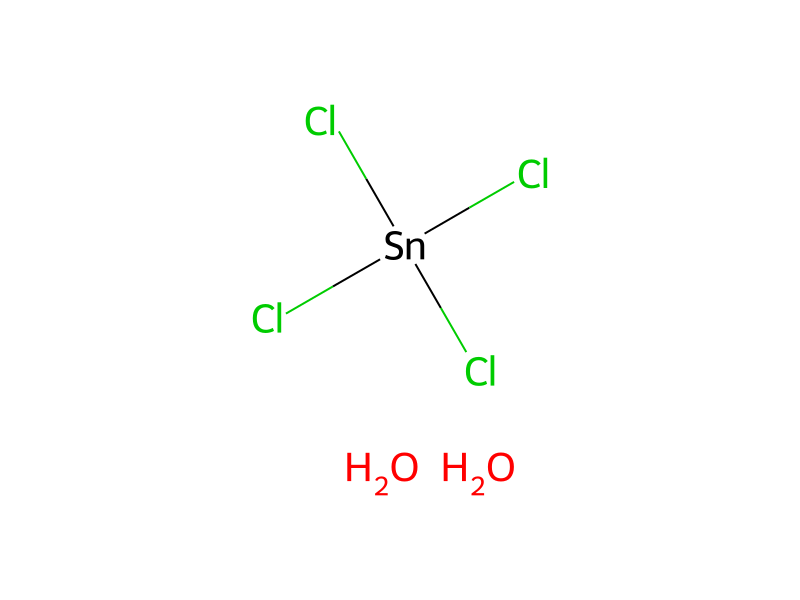
A mixture of 3.0 g (16 mmol) of 1-(1,1-difluoroethyl)-3-nitrobenzene, 18.0 g (80 mmol) of tin chloride dihydrate and 50 mL of ethanol is refluxed for one hour. The mixture is slowly poured on cooled water. The pH is adjusted to 7 by addition of an aqueous 10N solution of sodium hydroxide, then adjusted to 9 by addition of an aqueous saturated solution of sodium hydrogen carbonate. The product is extracted 4 times with ethyl acetate. The organic phases are combined, dried over magnesium sulfate, filtered and concentrated under reduced pressure. The oily residue (2.2 g) is purified over 100 g of silica gel (eluant heptane/ethyl acetate 2/1) to give 1.7 g (68%) of 3-(1,1-difluoroethyl)aniline as an oil.
Workup
- temperatureis refluxed for one hour
- additionThe mixture is slowly poured
- extractionThe product is extracted 4 times with ethyl acetate
- dry with materialdried over magnesium sulfate
- filtrationfiltered
- concentrationconcentrated under reduced pressure
- customThe oily residue (2.2 g) is purified over 100 g of silica gel (eluant heptane/ethyl acetate 2/1)
Sources & evidence
- ORD record
- ord-0dc4ea169cd04109a4bdc1d7adf95be1
- Source dataset
- uspto-grants-2014_08
- Patent number
- US08802678B2
Reaction notes
Loading…