Sodium Carbonate → 1-Bromo-4-(2-formylphenyl)naphthalene
Reaction equation

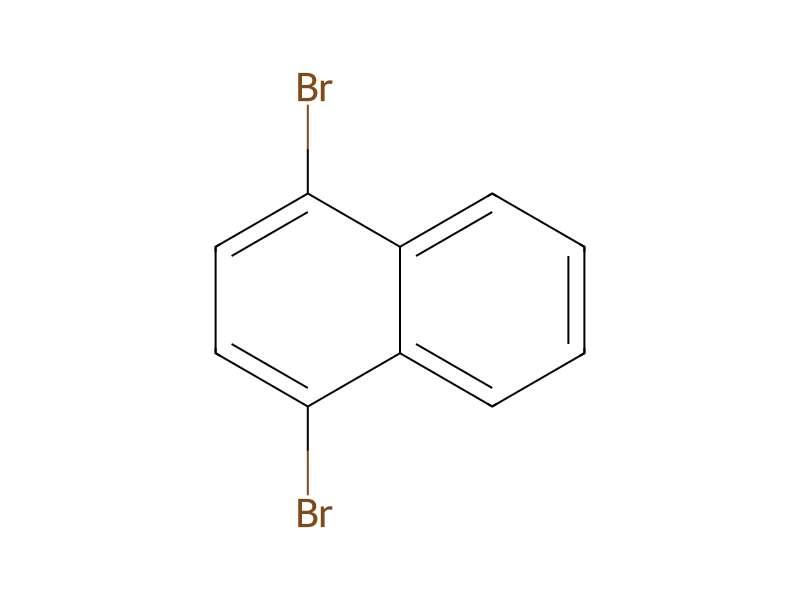
Br[C:2]1[C:11]2[C:6](=[CH:7][CH:8]=[CH:9][CH:10]=2)[C:5]([Br:12])=[CH:4][CH:3]=1.[CH:13]([C:15]1[CH:20]=[CH:19][CH:18]=[CH:17][C:16]=1B(O)O)=[O:14].C(=O)([O-])[O-].[Na+].[Na+]>C1C=CC([P]([Pd]([P](C2C=CC=CC=2)(C2C=CC=CC=2)C2C=CC=CC=2)([P](C2C=CC=CC=2)(C2C=CC=CC=2)C2C=CC=CC=2)[P](C2C=CC=CC=2)(C2C=CC=CC=2)C2C=CC=CC=2)(C2C=CC=CC=2)C2C=CC=CC=2)=CC=1.C(COC)OC>[Br:12][C:5]1[C:6]2[C:11](=[CH:10][CH:9]=[CH:8][CH:7]=2)[C:2]([C:16]2[CH:17]=[CH:18][CH:19]=[CH:20][C:15]=2[CH:13]=[O:14])=[CH:3][CH:4]=1Participants





Procedure
A flask was charged with 230 g of 1,4-dibromonaphthalene, 121 g of 2-formylphenylboronic acid, and 18.5 g of tetrakis(triphenylphosphine)palladium(0) in an argon atmosphere. After the addition of 2.4 L of dimethoxyethane (DME) and 1.2 L of a 2 M sodium carbonate aqueous solution, the mixture was heat refluxed with stirring for 8 hours. The mixture was then cooled to room temperature. After removing the aqueous phase, the organic phase was washed with water and a saturated sodium chloride solution, and dried over magnesium sulfate. After removing magnesium sulfate by filtration, the organic phase was concentrated. The residue was purified by silica gel column chromatography to obtain 170 g of the target 1-bromo-4-(2-formylphenyl)naphthalene (yield: 67%).
Workup
- temperaturethe mixture was heat
- temperaturerefluxed
- customAfter removing the aqueous phase
- washthe organic phase was washed with water
- dry with materiala saturated sodium chloride solution, and dried over magnesium sulfate
- customAfter removing magnesium sulfate
- filtrationby filtration
- concentrationthe organic phase was concentrated
- customThe residue was purified by silica gel column chromatography
Sources & evidence
- ORD record
- ord-d22be38e2aaf4630b048e89953a565bd
- Source dataset
- uspto-grants-2014_08
- Patent number
- US08803420B2
Reaction notes
Loading…