Methyl morpholine oxide → 2-Bromo-5-(trifluoromethyl)benzaldehyde
Reaction equation

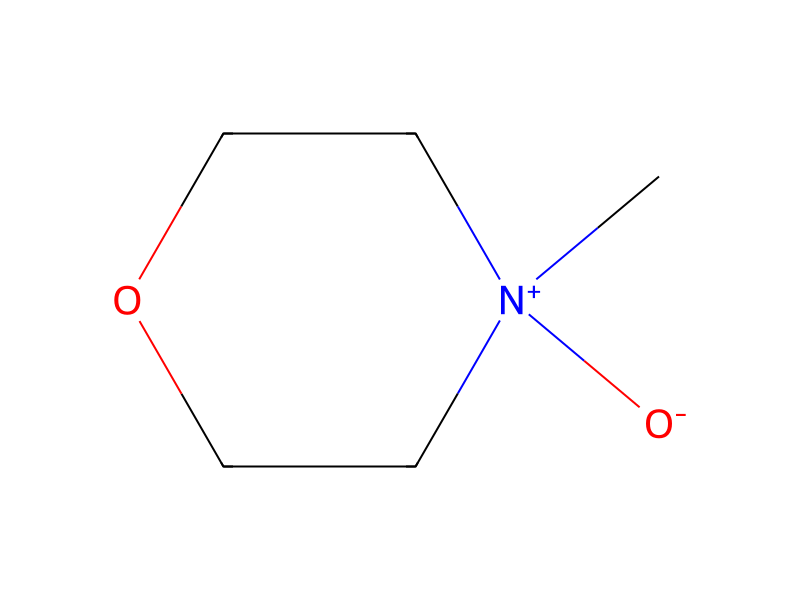
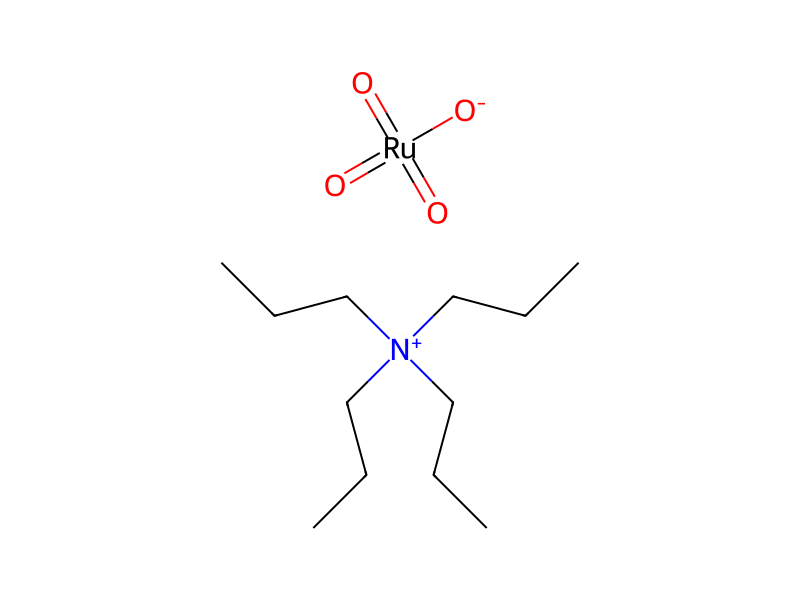
[Br:1][C:2]1[CH:7]=[CH:6][C:5]([C:8]([F:11])([F:10])[F:9])=[CH:4][C:3]=1[CH2:12][OH:13].C[N+]1([O-])CCOCC1>C(Cl)Cl.CC#N.[Ru]([O-])(=O)(=O)=O.C([N+](CCC)(CCC)CCC)CC>[Br:1][C:2]1[CH:7]=[CH:6][C:5]([C:8]([F:9])([F:10])[F:11])=[CH:4][C:3]=1[CH:12]=[O:13]Participants
6




Procedure
To (2-bromo-5-trifluoromethyl-phenyl)-methanol (2.216 g, 8.69 mmol) and N-methylmorpholine N-oxide (2.051 g, 17.38 mmol) in CH2Cl2 (44 mL) and MeCN (2.2 mL) was added tetrapropylammonium perruthenate (0.311 g, 0.87 mmol), and the reaction was stirred at room temperature for 20 minutes. Once no starting material was seen by analytical tlc, the mixture was concentrated and purified by silica gel chromatography to give 2-bromo-5-trifluoromethyl-benzaldehyde.
Workup
- concentrationthe mixture was concentrated
- custompurified by silica gel chromatography
Sources & evidence
- ORD record
- ord-da120e4b0a554e90ab30064bd5613d24
- Source dataset
- uspto-grants-2014_08
- Patent number
- US08815917B2
Reaction notes
Loading…