Toluene → 4-(3,5-Dicyclopropylpyridin-2-yl)piperazine-1-carboxylic acid tert-butyl ester
Reaction equation

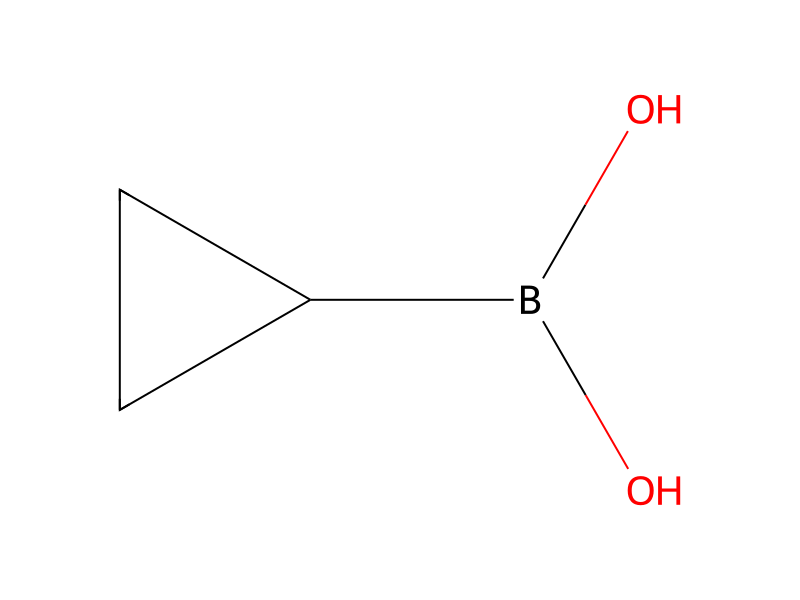
[C:1]([O:5][C:6]([N:8]1[CH2:13][CH2:12][N:11]([C:14]2[C:19](Br)=[CH:18][C:17](Br)=[CH:16][N:15]=2)[CH2:10][CH2:9]1)=[O:7])([CH3:4])([CH3:3])[CH3:2].P([O-])([O-])([O-])=O.[K+].[K+].[K+].[CH:30]1(B(O)O)[CH2:32][CH2:31]1.[C:36]1([CH3:42])C=CC=C[CH:37]=1>C1CCC(P(C2CCCCC2)C2CCCCC2)CC1.C1CCC(P(C2CCCCC2)C2CCCCC2)CC1.[Cl-].[Cl-].[Pd+2].O>[C:1]([O:5][C:6]([N:8]1[CH2:13][CH2:12][N:11]([C:14]2[C:19]([CH:30]3[CH2:32][CH2:31]3)=[CH:18][C:17]([CH:42]3[CH2:36][CH2:37]3)=[CH:16][N:15]=2)[CH2:10][CH2:9]1)=[O:7])([CH3:4])([CH3:3])[CH3:2]Participants
Reactant 4



Product 1

Reagents, catalysts & solvents 2


Procedure
To a mixture of 2,3,5-tribromopyridine (10 g), 1-Boc-piperazine (6 g) and potassium carbonate (20 g) was added 2-butanone (80 mL), and the mixture was stirred with heating under reflux for 8 hr. The reaction mixture was cooled, water was added, and the mixture was extracted with ethyl acetate. The organic layer was washed with saturated brine, and the solvent was evaporated to give 4-(3,5-dibromopyridin-2-yl)piperazine-1-carboxylic acid tert-butyl ester (13 g). To a mixture of the obtained 4-(3,5-dibromopyridin-2-yl)piperazine-1-carboxylic acid tert-butyl ester (13 g), bis(tricyclohexylphosphine)palladium(II)dichloride (1.3 g), tripotassium phosphate (38 g) and cyclopropylboronic acid (8.4 g) were added toluene (100 mL) and water (5 mL), and the mixture was stirred with heating under reflux for 8 hr. The reaction mixture was cooled, water was added, and the mixture was extracted with ethyl acetate. The organic layer was washed with saturated brine, and the solvent was evaporated. The obtained residue was purified by column chromatography (hexane:ethyl acetate) to give 4-(3,5-dicyclopropylpyridin-2-yl)piperazine-1-carboxylic acid tert-butyl ester (7 g). The obtained 4-(3,5-dicyclopropylpyridin-2-yl)piperazine-1-carboxylic acid tert-butyl ester (7 g) was dissolved in chloroform (25 mL), 4N hydrogen chloride/ethyl acetate (25 mL) was added, and the mixture was stirred at room temperature overnight. To the reaction mixture was added 1N aqueous sodium hydroxide solution (100 mL), and the mixture was extracted with chloroform. The organic layer was washed with saturated brine, and the solvent was evaporated. The obtained residue was dissolved in ethyl acetate (50 mL), 4N hydrogen chloride/ethyl acetate (8 mL) was added, and the precipitate was collected by filtration to give the title compound (3.2 g).
Workup
- temperaturewith heating
- temperatureunder reflux for 8 hr
- temperatureThe reaction mixture was cooled
- extractionthe mixture was extracted with ethyl acetate
- washThe organic layer was washed with saturated brine
- customthe solvent was evaporated
- customThe obtained residue was purified by column chromatography (hexane:ethyl acetate)
Sources & evidence
- ORD record
- ord-369e0ca20bab467e88ca5d673996e995
- Source dataset
- uspto-grants-2014_08
- Patent number
- US08816079B2
Reaction notes
Loading…