Water → 19-Acetoxyandrost-4-en-3,17-dione
Reaction equation

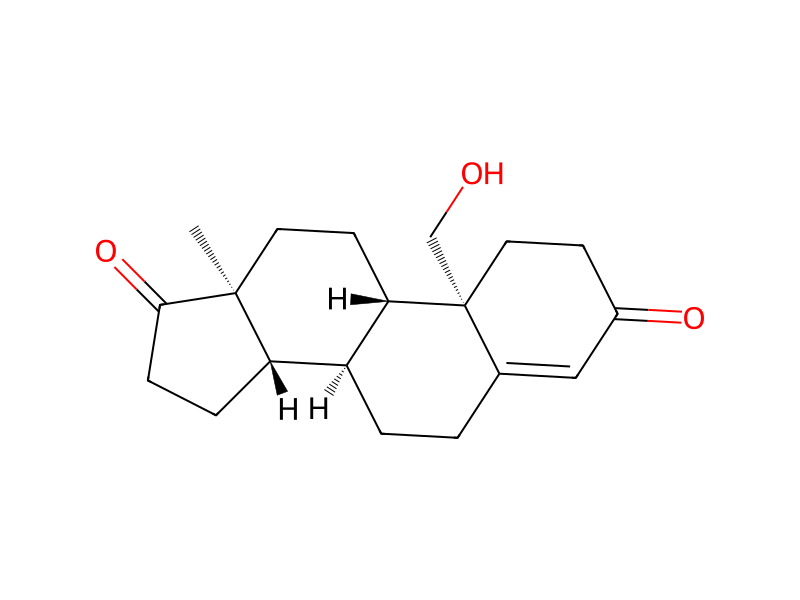
[OH:1][CH2:2][C@@:3]12[C@@H:20]3[C@H:11]([C@H:12]4[C@@:16]([CH2:18][CH2:19]3)([CH3:17])[C:15](=[O:21])[CH2:14][CH2:13]4)[CH2:10][CH2:9][C:8]1=[CH:7][C:6](=[O:22])[CH2:5][CH2:4]2.[C:23](OC(=O)C)(=[O:25])[CH3:24].O>N1C=CC=CC=1>[C:23]([O:1][CH2:2][C@@:3]12[C@@H:20]3[C@H:11]([C@H:12]4[C@@:16]([CH2:18][CH2:19]3)([CH3:17])[C:15](=[O:21])[CH2:14][CH2:13]4)[CH2:10][CH2:9][C:8]1=[CH:7][C:6](=[O:22])[CH2:5][CH2:4]2)(=[O:25])[CH3:24]Participants
5
Reactant 3


Product 1

Reagents, catalysts & solvents 1

Procedure
19-Hydroxyandrost-4-ene-3,17-dione (50 g) dissolved in 100 ml of pyridine and 250 ml of acetic anhydride was swirled while being warmed on a steam bath. When solution was complete, the reaction was allowed to stand at room temperature. After two hours ice and water were added and the resultant oil was extracted into ethyl acetate. The organic phase was washed with water, dried over sodium sulfate, filtered, and concentrated in vacuo to give 58 g of the title compound as an amorphous solid. The product, homogeneous by thin-layer chromatography using 1:1 ethyl acetate/Skellysolve B on silica gel, was employed for subsequent reactions without further purification.
Workup
- temperaturewhile being warmed on a steam bath
- customto stand at room temperature
- extractionthe resultant oil was extracted into ethyl acetate
- washThe organic phase was washed with water
- dry with materialdried over sodium sulfate
- filtrationfiltered
- concentrationconcentrated in vacuo
Sources & evidence
- ORD record
- ord-63c03300bd7f4eab829fc7a9b2d8002d
- Source dataset
- uspto-grants-1985_01
- Patent number
- US04495102
Reaction notes
Loading…