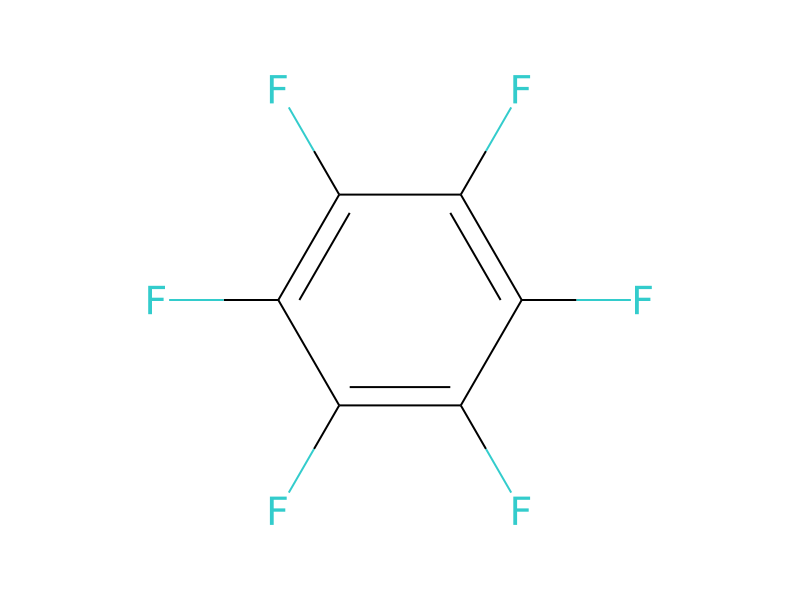
Hexafluorobenzene → 1,2,3,4,5-Pentafluoro-6-(1-methylpropyl)benzene
Reaction equation

[CH:1]([Li])([CH2:3][CH3:4])[CH3:2].[F:6][C:7]1[C:12](F)=[C:11]([F:14])[C:10]([F:15])=[C:9]([F:16])[C:8]=1[F:17].C(=O)=O.CC(C)=O>C1CCCCC1>[CH:1]([C:12]1[C:11]([F:14])=[C:10]([F:15])[C:9]([F:16])=[C:8]([F:17])[C:7]=1[F:6])([CH2:3][CH3:4])[CH3:2]Participants
Reactant 3
Product 1

Reagents, catalysts & solvents 1

Procedure
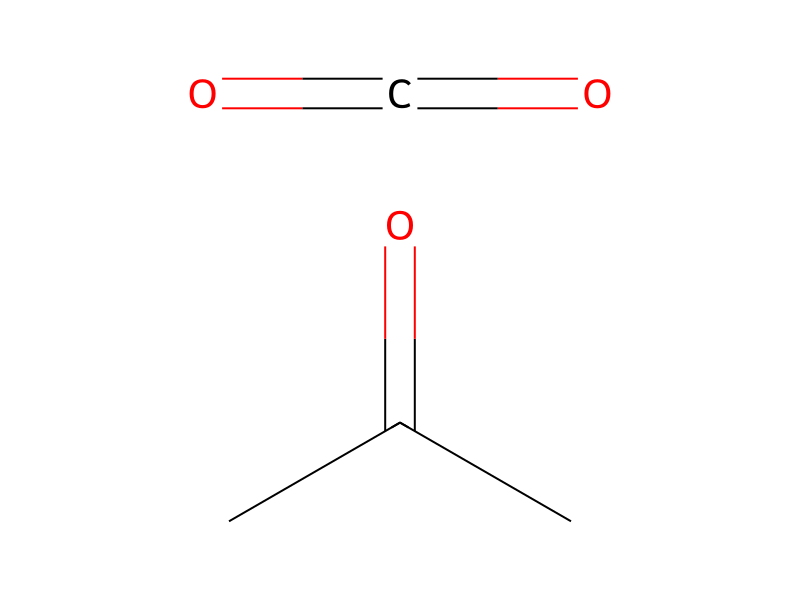
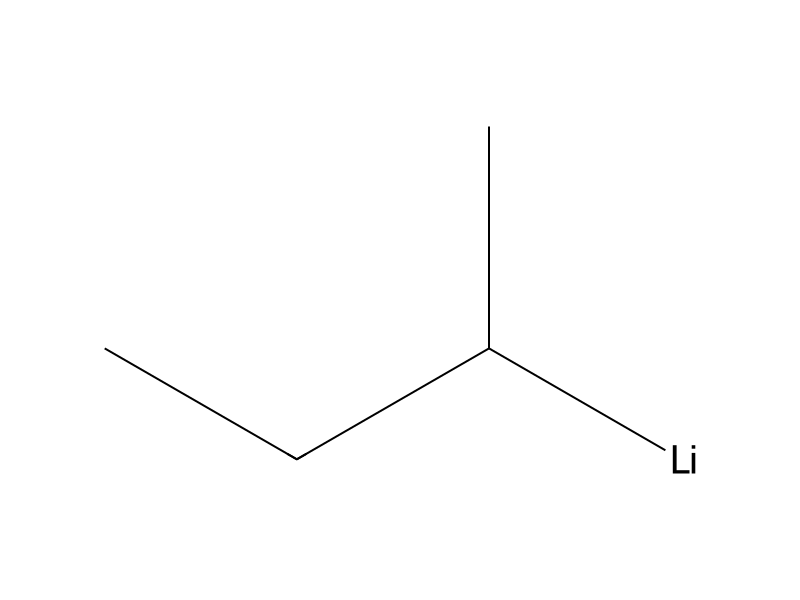
A solution of sec-butyl lithium (350 ml; 12% in cyclohexane) was added over a period of 1 hour to a stirred mixture of hexafluorobenzene (80 g) in cyclohexane (750 ml) at a temperature of 0° C. On warming the reaction above 0° C. a violently exothermic reaction took place which was brought under control by external cooling (Cardice-acetone). The reaction mixture was subsequently brought to room temperature (no further reaction occurred) and was quenched with water (600 ml). The organic layer was separated, washed with dilute hydrochloric acid (2N; 2×200 ml) and water (2×200 ml) and dried over anhydrous magnesium sulphate and distilled through a 15 cm vigreux column. The fraction distilling at 160°-170° C. was collected to give sec-butylpentafluorobenzene (50.3 g), b.p. 162°-164° C. (760 mm), in the form of a colourless liquid. Hexafluorobenzene is a known compound and is readily available.
Workup
- temperatureOn warming
- customthe reaction above 0° C.
- customa violently exothermic reaction
- customwas subsequently brought to room temperature
- customno further reaction
- customwas quenched with water (600 ml)
- customThe organic layer was separated
- washwashed with dilute hydrochloric acid (2N; 2×200 ml) and water (2×200 ml)
- dry with materialdried over anhydrous magnesium sulphate
- distillationdistilled through a 15 cm vigreux column
- distillationThe fraction distilling at 160°-170° C.
- customwas collected
Sources & evidence
- ORD record
- ord-adc2db16496b49ae9230c840287480bf
- Source dataset
- uspto-grants-1985_01
- Patent number
- US04496390
Reaction notes
Loading…