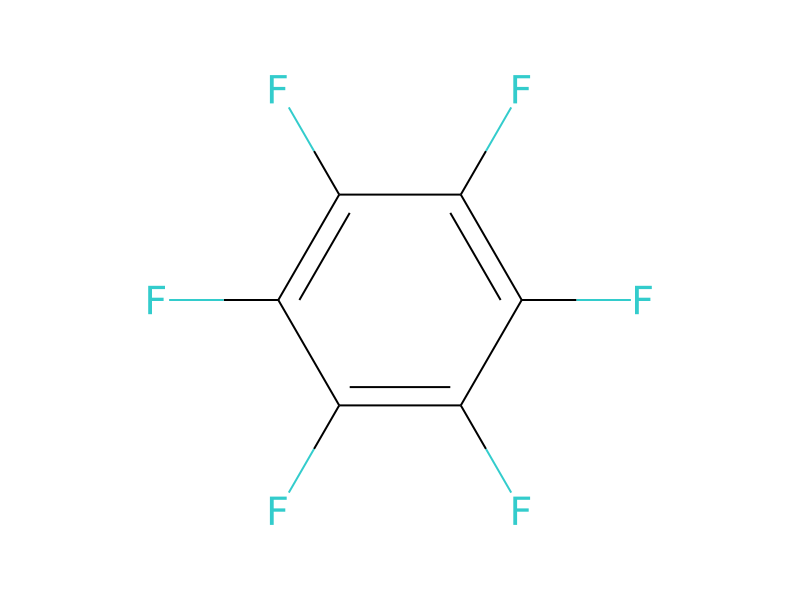
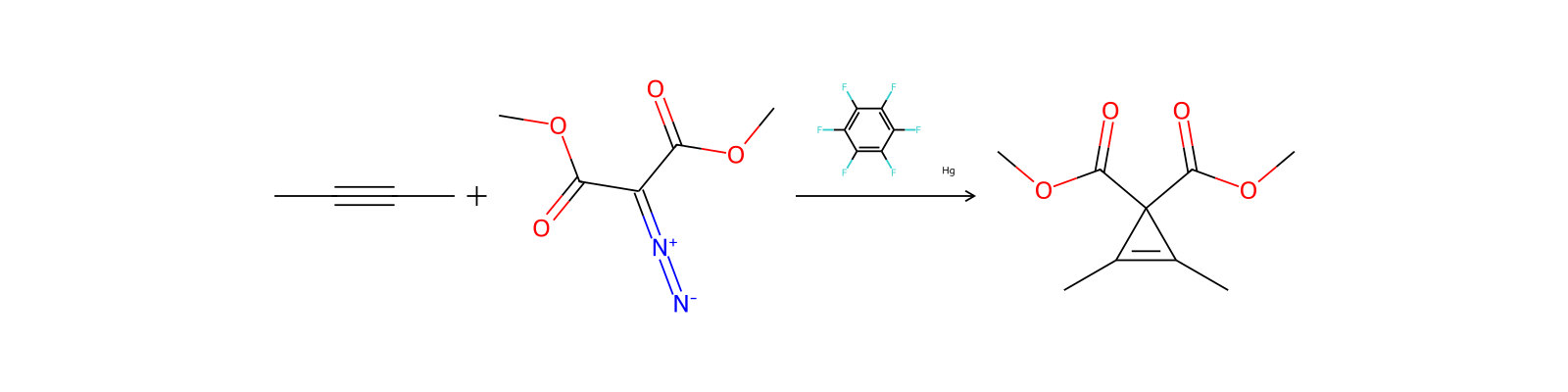
Hexafluorobenzene is a member of the class of fluorobenzenes that is benzene in which all six hydrogen atom have been replaced by fluorine. It has a role as a NMR solvent. It is a member of fluorobenzenes and a fluorocarbon.
Safety information is for reference only and does not replace the supplier’s Safety Data Sheet (SDS), applicable regulations, or professional assessment.
GHS classification
GHS Classification · 4 items
Danger
H225 (100%): Highly Flammable liquid and vapor [Danger Flammable liquids]
P210, P233, P240, P241, P242, P243, P264+P265, P280, P303+P361+P353, P305+P351+P338, P337+P317, P370+P378, P403+P235, and P501 (click each P-code to see the statement)
Aggregated GHS information provided per 76 reports by companies from 6 notifications to the ECHA C&L Inventory. Each notification may be associated with multiple companies.
Hazard information
Regulatory InformationBenzene, hexafluoro-: Does not have an individual approval but may be used under an appropriate group standard
Hazards SummaryAn irritant; [MSDSonline] See Hexachlorobenzene.
Hazard Classes and CategoriesFlam. Liq. 2 (100%)
Safety & protection
Protective Action Criteria (PAC) · 3 items
50 [mg/m3]
550 [mg/m3]
3300 [mg/m3]
Toxicology
Toxicity DataLC50 (mice) = 95,000 mg/m3/2h
Safety data
F
10
PPE
Eyeshields, Faceshields, Gloves, type ABEK (EN14387) respirator filter
Chemistry & industry
Uses & manufacturing
UsesUsed as solvent and for chemical synthesis; [Merck Index] Used as solvent in NMR spectroscopy; [Hawley]
General Manufacturing InformationBenzene, 1,2,3,4,5,6-hexafluoro-: ACTIVE
Applications · 4 items
DescriptionHexafluorobenzene, HFB, C6F6, or perfluorobenzene is an organic, aromatic compound. In this derivative of benzene all hydrogen atoms have been replaced by fluorine atoms. The technical uses of the compound are limited, although it is recommended as a solvent in a number of photochemical reactions. In the laboratory hexafluorobenzene is used as standard in fluorine-19 NMR spectroscopy, solvent and standard in carbon-13 NMR, solvent in proton NMR, solvent when studying some parts in the infrared and solvent in ultraviolet–visible spectroscopy, as hexafluorobenzene itself hardly shows any absorbance in the UV region.
UsesHexafluorobenzene is used as a solvent in photochemical reactions. It is also used as a reference compound in fluorine-19 NMR, carbon-13 NMR. It is used as a solvent in proton NMR, IR spectrum and UV-spectra. It is used as anticorrosive, antifriction and anti-tumor agents. Further, it is used as a reference molecule to investigate tissue oxygenation in vivo studies. It forms series of 1:1 complexes with naphthalene, anthracene, phenanthrene, pyrene and triphenylene.
UsesHexafluorobenzene can be used as a standard in 19Fluorine NMR (nuclear magnetic resonance) spectroscopy and also as a solvent in 13Carbon and 1H NMR spectroscopy.
General DescriptionHexafluorobenzene was repoted to be a sensitive 19F NMR indicator of tumor oxygenation. Rotational Raman spectra of hexafluorobenzenehas been studied under high resolution using a single mode argon laser as the exciting source. Hexafluorobenzene in the gas phase reacts spontaneously with lithium amalgam, to give a solid and intimate mixture of lithium fluoride and elemental polymeric carbon with a small amount of superstoichiometric lithium. Hexafluorobenzene forms series of 1:1 complexes with naphthalene, anthracene,phenanthrene, pyrene and triphenylene.
Stable. Incompatible with strong oxidizing agents. May form complexes with transition metals which can explode when heated. Highly flammable.
InChI
1S/C6F6/c7-1-2(8)4(10)6(12)5(11)3(1)9
InChIKey
ZQBFAOFFOQMSGJ-UHFFFAOYSA-N
SMILES
Fc1c(F)c(F)c(F)c(F)c1F
CAS DataBase Reference
392 · 392-56-3(CAS DataBase Reference)
FDA UNII
18 T611K · CMC18T611K
NIST Chemistry Reference
Benzene, hexafluoro-(392-56-3)
EPA Substance Registry System
Benzene, hexafluoro- (392-56-3)
UNSPSC Code
12352100 · 12352100
NACRES
22 · NA.22
Symbol(GHS)
2 · GHS02
Signal word
Danger
Hazard statements
225 · H225
Precautionary statements
210 · P210-P233-P240-P241-P242-P243
PPE
Eyeshields, Faceshields, Gloves, type ABEK (EN14387) respirator filter
Hazard Codes
F,Xi
Risk Statements
11 · 11-36/37/38
Safety Statements
16 · 16-33-7/9-29-26-37/39
RIDADR
1993 · UN 1993 3/PG 2
WGK Germany
3 · 3
RTECS
3050000 · DA3050000
F
10 · 10
Hazard Note
Highly Flammable
TSCA
TSCA listed
HazardClass
3 · 3
PackingGroup
II
HS Code
29039990 · 29039990
Storage Class
3 · 3 - Flammable liquids
Hazard Classifications
2 · Flam. Liq. 2
Toxicity
11800 ppm/4H · guinea pig,LCLo,inhalation,11800ppm/4H (11800ppm),BEHAVIORAL: ATAXIASENSE ORGANS AND SPECIAL SENSES: LACRIMATION: EYELUNGS, THORAX, OR RESPIRATION: OTHER CHANGES,National Technical Information Service. Vol. OTS0571186,
Limited Quantities
1 L · 1.0 L (0.3 gallon) (liquid)
Excepted Quantities
Max Inner Pack (30g or 30ml) and Max Outer Pack (500g or 500ml)
wgk
3
tsca
TSCA listed
rtecs
DA3050000
ridadr
UN 1993 3/PG 2
hs_code
29039990
Toxicity
guinea pig,LCLo,inhalation,11800ppm/4H (11800ppm),BEHAVIORAL: ATAXIASENSE ORGANS AND SPECIAL SENSES: LACRIMATION: EYELUNGS, THORAX, OR RESPIRATION: OTHER CHANGES,National Technical Information Service. Vol. OTS0571186,
risk_code
11-36/37/38
Signal word
Danger
Symbol(GHS)
GHS02
hazard_code
F,Xi
hazard_note
Highly Flammable
safety_code
16-33-7/9-29-26-37/39
hazard_class
3
Storage Class
3 - Flammable liquids
packing_group
II
Hazard statements
H225
Limited Quantities
1.0 L (0.3 gallon) (liquid)
Excepted Quantities
Max Inner Pack (30g or 30ml) and Max Outer Pack (500g or 500ml)