Water → 2-(Prop-2-en-1-yl)cyclododecan-1-one
Reaction equation

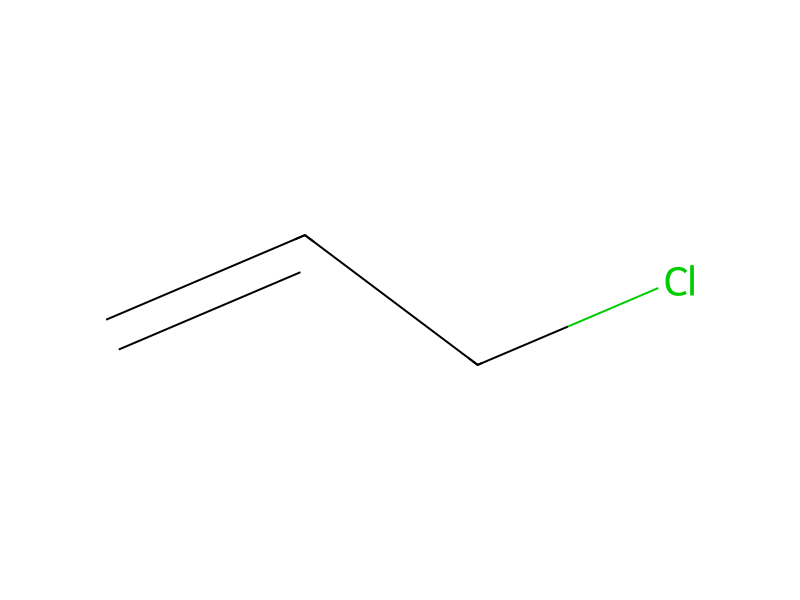
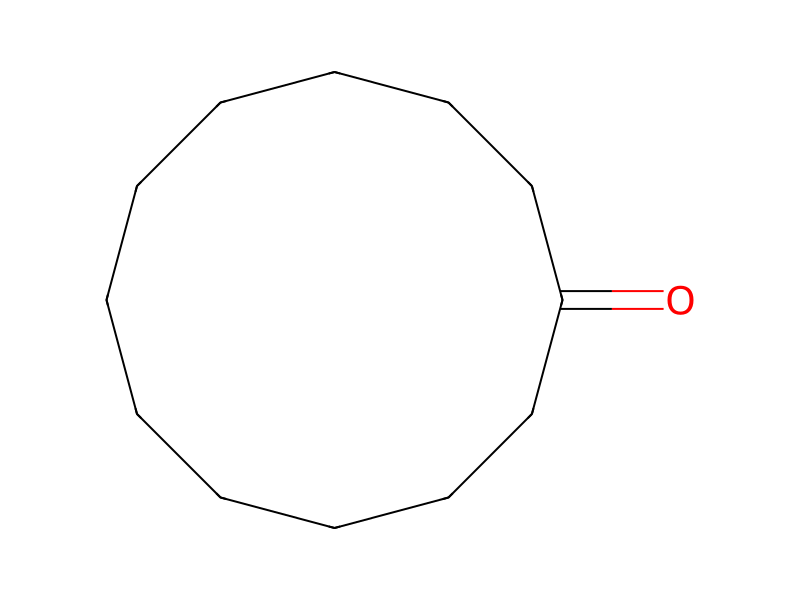
[OH-].[Na+].[C:3]1(=[O:15])[CH2:14][CH2:13][CH2:12][CH2:11][CH2:10][CH2:9][CH2:8][CH2:7][CH2:6][CH2:5][CH2:4]1.[CH2:16](Cl)[CH:17]=[CH2:18].O>C1(C)C=CC=CC=1.[Br-].C([N+](CCCC)(CCCC)CCCC)CCC>[CH2:18]([CH:4]1[CH2:5][CH2:6][CH2:7][CH2:8][CH2:9][CH2:10][CH2:11][CH2:12][CH2:13][CH2:14][C:3]1=[O:15])[CH:17]=[CH2:16]Participants
Reactant 4


Product 1

Reagents, catalysts & solvents 2


Procedure
40 g (1 mole) of sodium hydroxide platelets, 182 g (1 mole) of cyclododecanone dissolved in 200 ml of toluene, and 10 g of tetrabutylammonium bromide are placed in a 500 ml three-necked flask provided with a stirrer, reflux cooler and dropping funnel. Over a period of one hour, 1 mole of allyl chloride is added dropwise, with stirring, at a reaction-mixture temperature of from 70° to 80° C. The reaction mixture is subsequently stirred for a further 5 hours at 80° C. and finally 200 ml of water are added and the phases are separated. The organic phase is then washed until neutral with a further 100 ml of water and subsequently distilled. After the low-boiling components have been drawn off, unreacted cyclododecanone is first distilled off. Finally, at 0.01 torr and from 82° to 84° C., the desired 2-(2-propenyl)-cyclododecanone is obtained as a colorless liquid in a yield of 149.8 g, corresponding to 67.5% of the theoretical yield.
Workup
- customprovided with a stirrer
- temperaturereflux cooler
- stirringThe reaction mixture is subsequently stirred for a further 5 hours at 80° C.
- customthe phases are separated
- washThe organic phase is then washed until neutral with a further 100 ml of water
- distillationsubsequently distilled
- distillationunreacted cyclododecanone is first distilled off
Sources & evidence
- ORD record
- ord-759b61fea8c142d5b58a9aef7d60b1ac
- Source dataset
- uspto-grants-1985_01
- Patent number
- US04496748
Reaction notes
Loading…