Dicyclohexylcarbodiimide → Diisopropylamine
Reaction equation

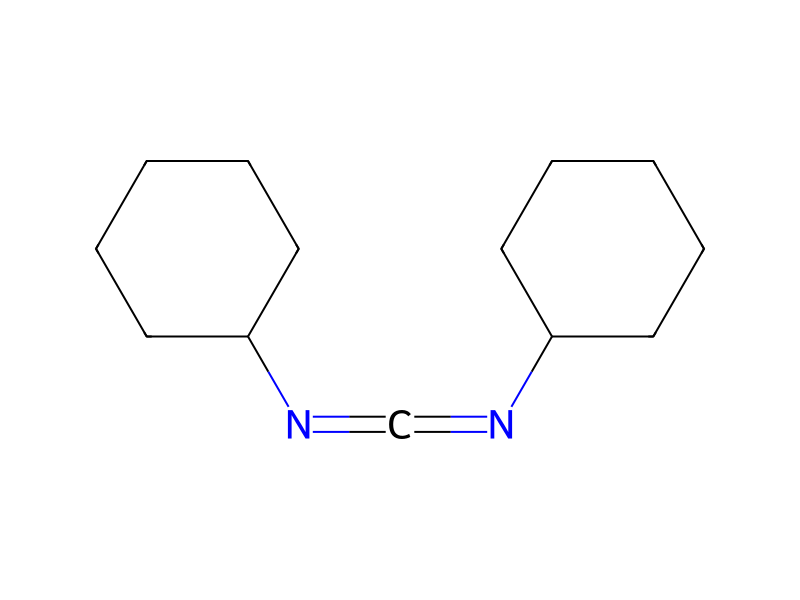
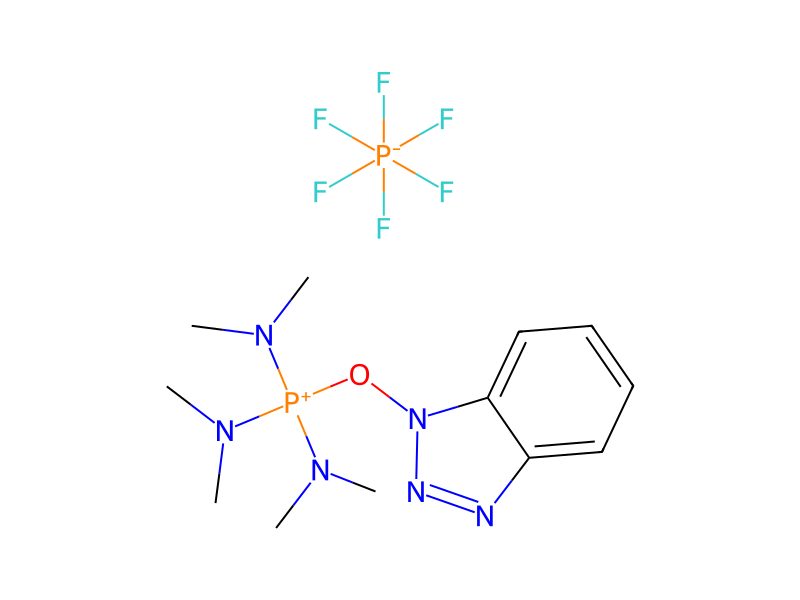
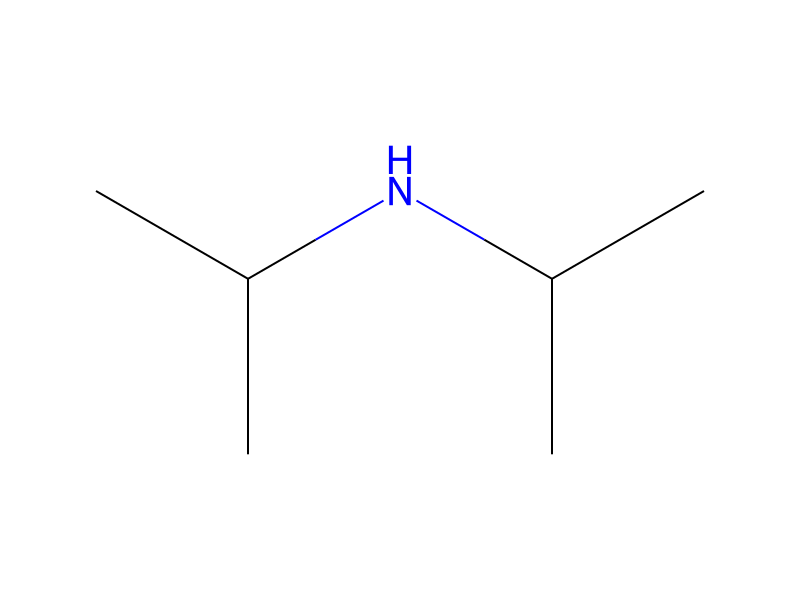
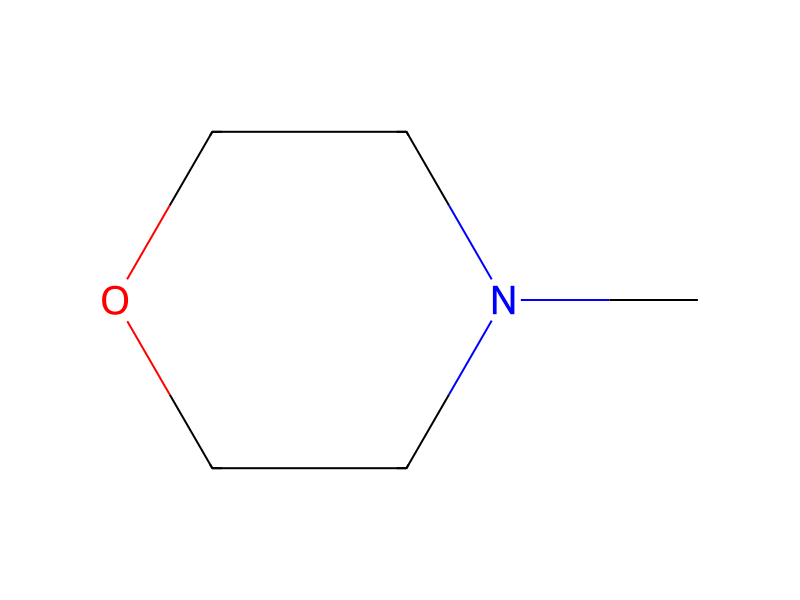
F[P-](F)(F)(F)(F)F.[N:8]1(O[P+]([N:25]([CH3:27])[CH3:26])(N(C)C)N(C)C)[C:12]2[CH:13]=CC=C[C:11]=2N=N1.C[CH2:29][CH2:30]P(=O)=O.[CH:34]1(N=C=NC2CCCCC2)[CH2:39]CCC[CH2:35]1.C[NH3+].F[P-](F)(F)(F)(F)F.N1([O:67][C:68](N(C)C)=[N+](C)C)C2N=CC=CC=2N=N1.F[P-](F)(F)(F)(F)F>>[CH3:26][N:25]1[CH2:30][CH2:29][O:67][CH2:68][CH2:27]1.[CH:34]([NH:8][CH:12]([CH3:11])[CH3:13])([CH3:39])[CH3:35]Participants
Reactant 4


Product 2
Procedure
For example, an imidazopyrimidine (7, Step 4) can be prepared from an appropriate α-bromo or α-chloro ketone with 2-aminopyrimidine in a polar protic solvent such as isopropanol or ethanol or a non-polar solvent such as toluene with or without a base such as sodium bicarbonate to give an imidazo[1,2-a]pyrimidine (7). The imidazo[1,2-a]pyrimidine (7) can be converted to the desired imidazol-2-amine (8, Step 5) with hydrazine, hydrazine hydrate, or hydrazine hydrochloride or hydroxylamine. The primary amino group of compound 8 can then be coupled with the carboxylic acid of compound 5 in Scheme 1 using coupling agents to give compounds of Formula Ia, I and II. Common coupling conditions involve using a coupling agent such as benzotriazol-1-yloxy-tris(dimethylamino)-phosphonium hexafluorophosphate, propylphosphonic anhydride, dicylohexylcarbodiimide, o-benzotriazol-1-yl-N,N,N′N′-tetramethyluronium tetrafluoroborate, and 2-(1H-7-azabenzotriazol-1-yl)--1,1,3,3-tetramethyl uronium hexafluorophosphate methanaminium and an organic base such as N-methylmorpholine or diisopropylamine to give compounds of formula Ia.
Sources & evidence
- ORD record
- ord-2a338f9713dd4661b87076925e421946
- Source dataset
- uspto-grants-2014_02
- Patent number
- US08648200B2
Reaction notes
Loading…