Hydrochloric Acid → Hydrochloric Acid
Reaction equation

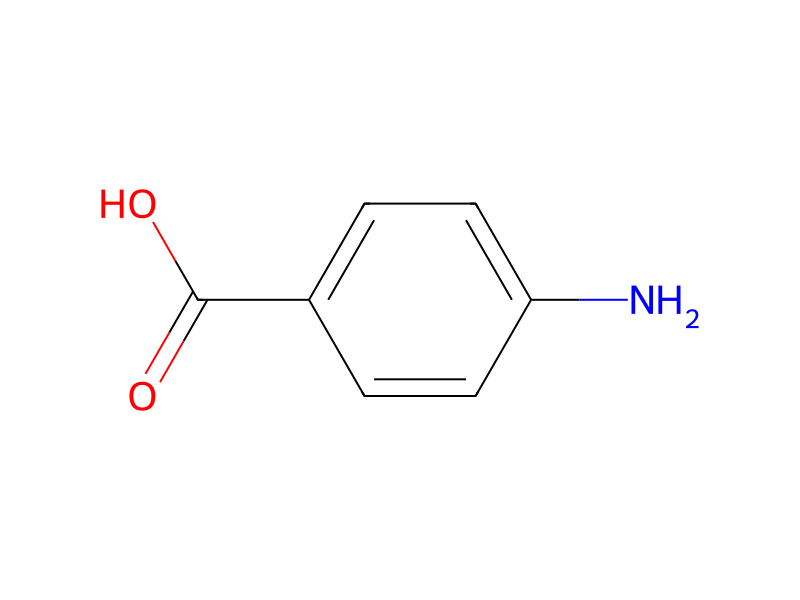
[CH:1]1[C:6]([C:7]([OH:9])=[O:8])=[CH:5][CH:4]=[C:3](N)[CH:2]=1.N([O-])=O.[Na+].O(CC)[C:16]([S-])=[S:17].[K+].C(=O)([O-])[O-].[Na+].[Na+].[OH-].[K+].S(OC)(OC)(=O)=O.[ClH:37]>>[ClH:37].[CH3:16][S:17][C:2]1[CH:1]=[C:6]([CH:5]=[CH:4][CH:3]=1)[C:7]([OH:9])=[O:8]Participants
9







Procedure
The aminobenzoic acid (54.8 g, 0.4 mol) was diazotized in the usual manner with sodium nitrite (27.6 g, 0.4 mol) and hydrochloric acid (40 mL) and the resulting diazonium salt solution poured into a hot (70° C.), freshly prepared solution of potassium ethyl xanthate (64.2 g, 0.4 mol) containing sodium carbonate (55.2 g, 0.4 mol) to neutralize acid in the diazonium salt solution. After the reaction was over, as indicated by the cessation of the evolution of gases, the mixture was cooled. It was then treated with potassium hydroxide (24.7 g, 0.44 mol) and dimethyl sulfate (50.4 g, 0.4 mol). The mixture was refluxed for 5 hours. On acidification with hydrochloric acid, the desired product was obtained (38.2 g, 57%). MS: 167.8 (M+1+).
Workup
- temperaturethe mixture was cooled
- temperatureThe mixture was refluxed for 5 hours
Sources & evidence
- ORD record
- ord-72776ee05ed24787a18917af6c8d7374
- Source dataset
- uspto-grants-2004_11
- Patent number
- US06812228B2
Reaction notes
Loading…