Pyrrole → Furan
Reaction equation

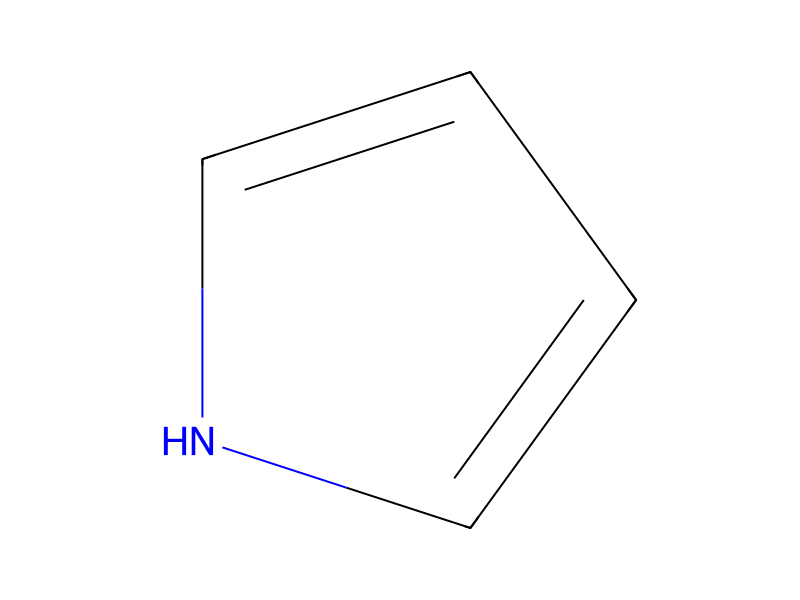
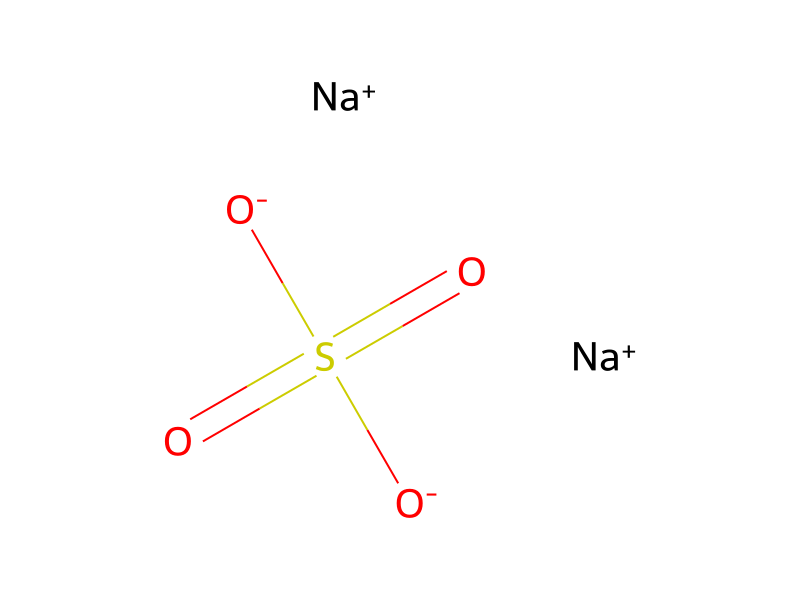
N1[CH:5]=[CH:4][CH:3]=[CH:2]1.[S:6]([O-])([O-])(=O)=[O:7].[Na+].[Na+]>>[O:7]1[CH:5]=[CH:4][CH:3]=[CH:2]1.[S:6]1[CH:5]=[CH:4][CH:3]=[CH:2]1Participants
Reactant 2
Product 2


Procedure
However, at about the same time, a separate group attempted to coat stainless steel and mild steel by the electropolymerization of aniline, pyrrole, furan and thiophene. According to Troch-Nagels, et al., in J. of Appl. Electrochem., 22:756-764, 1992, attempts to coat mild steel with polyaniline in neutral and basic solutions of water and methanol at between 0.8-1.5 V/SCE yielded non-conductive brown films. In 20 vol. % methanol and 0.13 M sulfuric acid, no films were produced below 0.8 V/SCE and poor quality, black and powdery films were produced when the potential was above 1.4 V/SCE. Polyaniline films also were reported to have been produced from 0.3 M aniline solutions in 0.1 M nitric acid with electrode potentials cycling between about −0.5-+1.5 V/SCE, but the films were powdery and brittle. While better films were reported to have been made on mild steel from 0.5 M pyrrole in 0.08 M sodium sulfate at 0.8-1.4 V/SCE, adhesion was reported to have been poor. No suitable films were formed from either furan or thiophene. Troch-Nagels, et al. concluded that polyaniline films on mild steel did not meet the requirements for industrialization because they were brittle, did not allow anaphoretic painting and did not improve corrosion resistance. Polypyrrole films were discovered to be slightly better, but their adhesion was found to be poor and the films were brittle. Aluminum was not included in the work.
Sources & evidence
- ORD record
- ord-9f3b1da79d784da6bfc6263d82224fc0
- Source dataset
- uspto-grants-2004_11
- Patent number
- US06818118B2
Reaction notes
Loading…