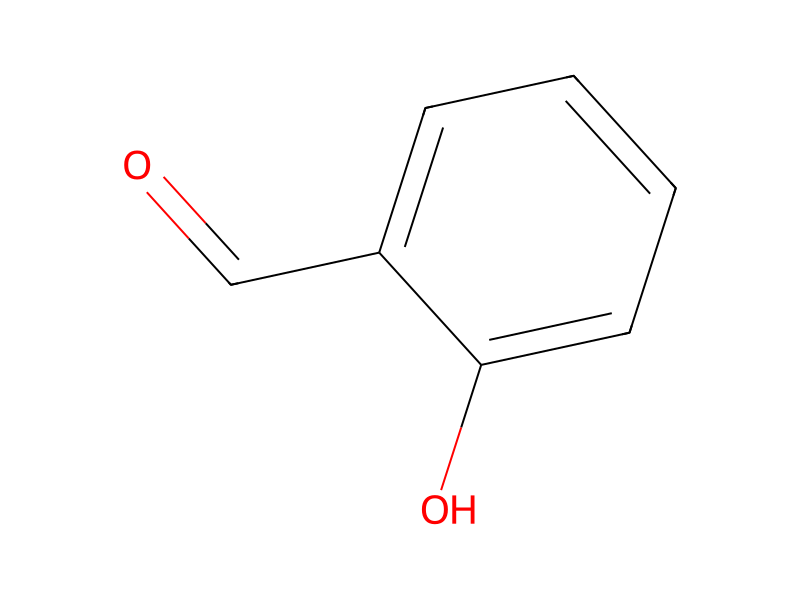
2,3-Dihydroxybutanedioic Acid → Salicylaldehyde
Reaction equation

[NH2:1][C@@H:2]([C:7]([OH:9])=[O:8])[C@H:3]([CH2:5][CH3:6])[CH3:4].[C:10](O)(=O)[CH:11]([CH:13]([C:15]([OH:17])=O)O)[OH:12]>>[NH2:1][C@@H:2]([C:7]([OH:9])=[O:8])[C@H:3]([CH2:5][CH3:6])[CH3:4].[CH:15](=[O:17])[C:13]1[C:11](=[CH:10][CH:3]=[CH:2][CH:7]=1)[OH:12]Participants


Procedure
More recently, Noda et al., in U.S. Pat. No. 6,310,242, have reported a method in which D-allo-isoleucine is separated from an epimeric mixture with L-isoleucine using a tartaric acid derivative by the formation of a complex, which is precipitated and decomposed in alcohol. An alternative uses a selective precipitation of the L-isoleucine derivative. Again, as a separation of stereoisomers, the maximum theoretical yield is 50%, and the actual yields were lower. It is also important to point out that the tartaric acid derivatives used were not readily available and relatively expensive to produce. In an improvement of this method, Noda and coworkers describe the use of the same tartaric acid to form a complex with D-allo-isoleucine in the presence of a C1 to C5 saturated fatty acid and salicylaldehyde. The reaction was carried out in an inert solvent that does not substantially dissolve amino acids. The reported optical purity was 94.6%. A method that achieves closer to 100% optical purity would be preferable and desirable.
Workup
- customis separated from an epimeric mixture with L-isoleucine using a tartaric acid derivative by the formation of a complex, which
- customis precipitated
- customa selective precipitation of the L-isoleucine derivative
- customAgain, as a separation of stereoisomers
- customthe maximum theoretical yield is 50%, and the actual yields
- customrelatively expensive to produce
Sources & evidence
- ORD record
- ord-6a1ca2696f2645a89e2f31056be62589
- Source dataset
- uspto-grants-2004_11
- Patent number
- US06822116B2
Reaction notes
Loading…