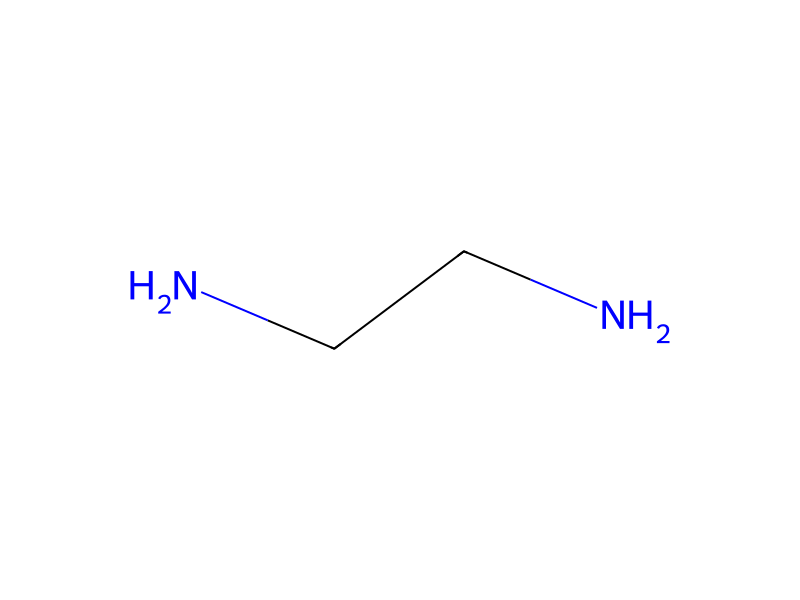
Ethylenediamine → Ammonia
Reaction equation

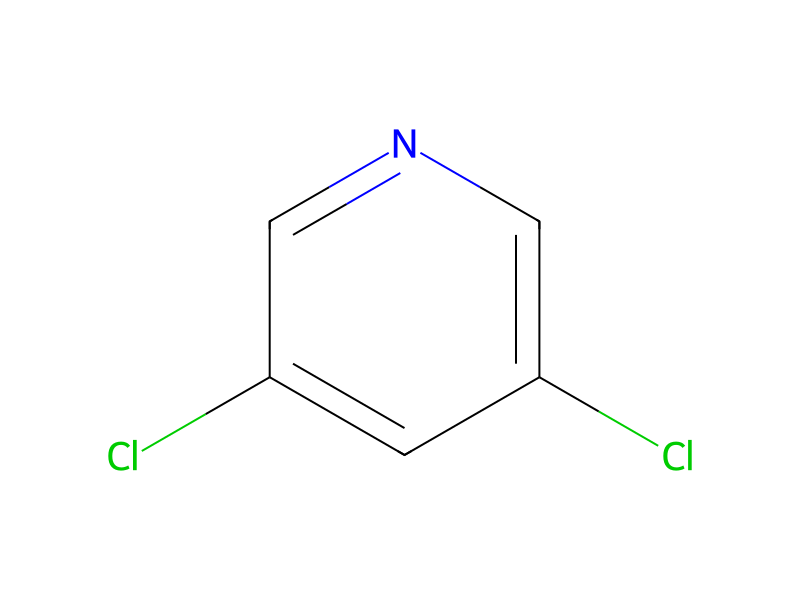
[Na].Cl[C:3]1[CH:4]=[N:5][CH:6]=[C:7](Cl)[CH:8]=1.[OH-].[Na+].[CH2:12]([NH2:15])[CH2:13][NH2:14].C[C:17](C)([O-:19])C.[K+]>COCCOC.CS(C)=O.CO>[NH3:5].[CH3:17][O:19][C:3]1[CH:8]=[C:7]([NH:14][CH2:13][CH2:12][NH2:15])[CH:6]=[N:5][CH:4]=1Participants
Reactant 5



Product 2


Reagents, catalysts & solvents 3



Conditions
- Temperature
- 70 °C
Procedure
Sodium (4.98 g, 216.7 mmol) was added to methanol (100 ml), and was allowed to react, the mixture was evaporated. 3.5-Dichloropyridine (25.0 g, 166.7 mmol) and dimethyl sulfoxide (250 ml) were added. The mixture was stirred at 70° C. overnight. Aqueous sodium hydroxide (500 ml, 1 M) was added, and the mixture was extracted twice with diethyl ether (500 ml). The crude mixture was stirred together with ethylenediamine (50.0 g, 833.5 mmol), potassium tert-butoxide (37.4 g, 333.4 mmol) and 1,2-dimethoxyethane (500 ml) at reflux for 4 h. Aqueous sodium hydroxide (1 l, 1 M) was added, and the mixture was extracted five times with ethyl acetate (500 ml). Chromatography on silica gel with dichloromethane, methanol and conc. ammonia (89:10:1) gave the title compound as free base. Yield 13.0 g, 47%.
Workup
- customto react
- customthe mixture was evaporated
- extractionthe mixture was extracted twice with diethyl ether (500 ml)
- temperatureat reflux for 4 h
- extractionthe mixture was extracted five times with ethyl acetate (500 ml)
Sources & evidence
- ORD record
- ord-f9e99c57c5514b1cb229484f8a0e12ab
- Source dataset
- uspto-grants-2004_11
- Patent number
- US06825189B1
Reaction notes
Loading…