4-Cyanobenzaldehyde → N-{3-[N-(3-aminopropyl)-N-metylamino]propyl}-2-(p-chlorophenyl)ethylamine trihydrochloride
Reaction equation

[ClH:1].Cl.Cl.[NH2:4][CH2:5][CH2:6][CH2:7][N:8]([CH2:10][CH2:11][CH2:12][NH:13]CC1C=CC(C#N)=CC=1)[CH3:9].C(C1C=CC(C=O)=CC=1)#N.[Cl:33][C:34]1[CH:39]=[CH:38][C:37]([CH2:40][CH:41]=O)=[CH:36][CH:35]=1>>[ClH:33].[ClH:1].[ClH:33].[NH2:4][CH2:5][CH2:6][CH2:7][N:8]([CH2:10][CH2:11][CH2:12][NH:13][CH2:41][CH2:40][C:37]1[CH:38]=[CH:39][C:34]([Cl:33])=[CH:35][CH:36]=1)[CH3:9]Participants
4
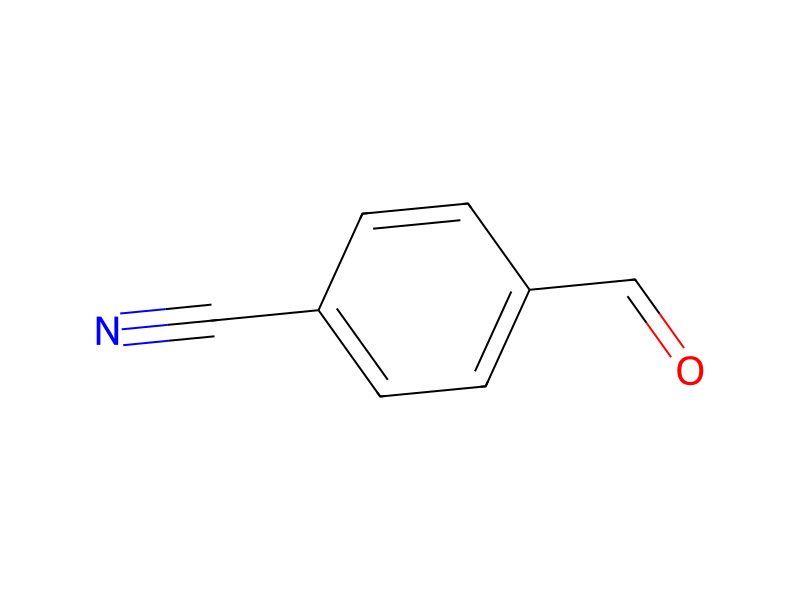


Procedure
In a similar manner to that described above, N-{3-[N-(3-aminopropyl)-N-methylamino]propyl}-p-cyanobenzylamine trihydrochloride (81% yeild) and N-{3-[N-(3-aminopropyl)-N-metylamino]propyl}-2-(p-chlorophenyl)ethylamine trihydrochloride (51% yield) were obtained from p-cyanobenzaldehyde and p-chlorophenylacetaldehyde, respectively. The physicohemical properties of these compounds were as shown in Table 8.
Sources & evidence
- ORD record
- ord-dccc6f69482b47b188458ec414f94d77
- Source dataset
- uspto-grants-1984_09
- Patent number
- US04472304
Reaction notes
Loading…