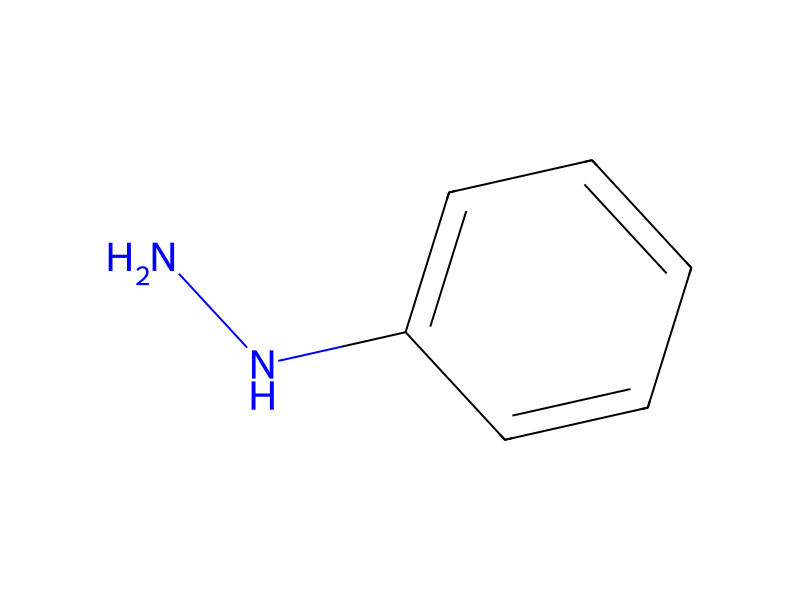
Phenylhydrazine → HCID 57244202, compound
Reaction equation

Br[C:2]1(Br)[C:7]2=[N:8][C:9]3[C:14]([C:15](=[O:16])[N:6]2[CH2:5][CH2:4][CH2:3]1)=[CH:13][CH:12]=[CH:11][CH:10]=3.[C:18]1([NH:24][NH2:25])[CH:23]=[CH:22][CH:21]=[CH:20][CH:19]=1.C([O-])(=O)C.[Na+]>C(O)C>[C:18]1([NH:24][N:25]=[C:2]2[C:7]3=[N:8][C:9]4[C:14]([C:15](=[O:16])[N:6]3[CH2:5][CH2:4][CH2:3]2)=[CH:13][CH:12]=[CH:11][CH:10]=4)[CH:23]=[CH:22][CH:21]=[CH:20][CH:19]=1Participants
Reactant 3

Product 1

Reagents, catalysts & solvents 1

Procedure
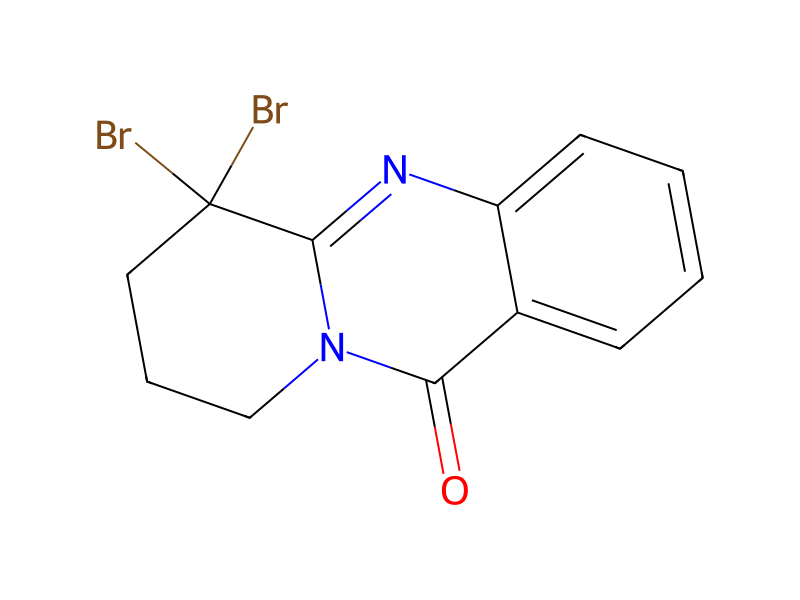
10.8 g. (0.03 mole) 6,6-Dibromo-6,7,8,9-tetrahydro-11-oxo-11H-pyrido[2,1-b]quinazoline and 13.0 g. (0.12 mole] of phenyl hydrazine are heated in 120 ml ethanol for 4 hours. The precipitated crystals are filtered after cooling. When evaporating the mother liquor further crystals are precipitating, which are filtered and washed with some alcohol. The combined filtered product is suspended in 150 ml. of water containing 8.4 g. (0.06 mole) of sodium acetate whereafter it is filtered and washed with water. 8.4 g. (81%) of 6-phenylhydrazono-6,7,8,9-tetrahydro-11-oxo-11H-pyrido[2,1-b]quinazoline are obtained which after recrystallization from isopropanol melts at 177°-179° C. and which does not give a degression of melting point when admixed with the product according to Example 16.
Workup
- filtrationThe precipitated crystals are filtered
- temperatureafter cooling
- customWhen evaporating the mother liquor further crystals
- customare precipitating
- filtrationwhich are filtered
- washwashed with some alcohol
- filtrationThe combined filtered product
- washwashed with water
Sources & evidence
- ORD record
- ord-df33ca8a21a7465ab89d0bbbc2685520
- Source dataset
- uspto-grants-1984_09
- Patent number
- US04472399
Reaction notes
Loading…