Ammonia → propan-2-yl (2S)-2-amino-3-methylbutanoate
Reaction equation

C(=O)=O.CO.S(Cl)(Cl)=O.[NH2:10][C@H:11]([C:15]([OH:17])=[O:16])[CH:12]([CH3:14])[CH3:13].N.[CH:19]1[CH:20]=CC2C(C3C=CC(O)=CC=3)(C3C=CC(O)=CC=3)OC(=O)C=2[CH:24]=1>O.CCOCC.C(O)(C)C>[CH:19]([O:16][C:15](=[O:17])[C@H:11]([CH:12]([CH3:14])[CH3:13])[NH2:10])([CH3:20])[CH3:24]Participants
Reactant 5



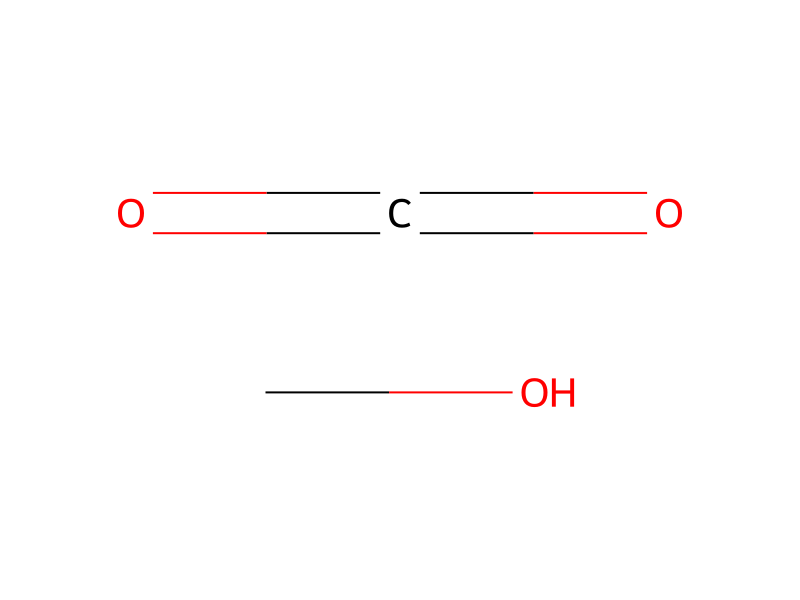
Product 1

Reagents, catalysts & solvents 3



Procedure
One hundred and twenty-five ml (1.64 mole) of isopropanol was cooled to -10° C with a freezing mixture of dry ice-methanol, and 30 ml (0.42 mole) of thionyl chloride was added dropwise thereto while stirring. Thereafter, 25 g (0.21 mole) of l-valine was added little by little while maintaining this temperature. The reaction mixture was first raised to room temperature gradually and then finally it was reacted at 100° C for 40 hours while stirring. After completion of the reaction, unreacted thionyl chloride and isopropanol were evaporated in vacuo. The residue obtained was dissolved in 10 to 20 ml of water. The solution was covered with 400 ml of ether and an aqueous ammonia was added thereto until the phenolphthalein indicator turned red. After extracting the solution with ether three to four times, the ether extract was dried over anhydrous sodium sulfate and distilled under reduced pressure to obtain a colorless and clear l-valine isopropyl ester (B.P. 40° - 41° C/3 - 4 mmHg).
Workup
- additionwas added dropwise
- temperaturewhile maintaining this temperature
- customfinally it was reacted at 100° C for 40 hours
- stirringwhile stirring
- customwere evaporated in vacuo
- customThe residue obtained
- extractionAfter extracting the solution with ether three to four times
- extractionthe ether extract
- dry with materialwas dried over anhydrous sodium sulfate
- distillationdistilled under reduced pressure
Sources & evidence
- ORD record
- ord-ce837109061042218638fd498bf8de54
- Source dataset
- uspto-grants-1978_08
- Patent number
- US04104040
Reaction notes
Loading…