Potassium Carbonate → HCID 12813366, compound
Reaction equation

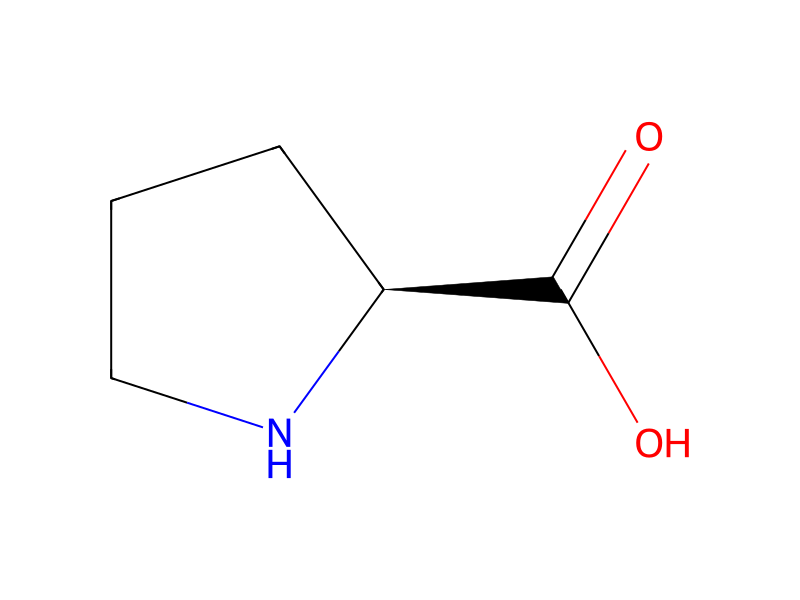
[NH:1]1[CH2:8][CH2:7][CH2:6][C@H:2]1[C:3]([OH:5])=[O:4].Br[CH2:10][CH2:11][C:12](Cl)=[O:13].[C:15]([OH:23])(=[S:22])[C:16]1[CH:21]=[CH:20][CH:19]=[CH:18][CH:17]=1.C(=O)([O-])[O-].[K+].[K+]>[OH-].[Na+].O>[C:15]([S:22][CH2:10][CH2:11][C:12]([N:1]1[CH2:8][CH2:7][CH2:6][C@H:2]1[C:3]([OH:5])=[O:4])=[O:13])(=[O:23])[C:16]1[CH:21]=[CH:20][CH:19]=[CH:18][CH:17]=1Participants






Procedure
L-Proline (5.75 g.) is dissolved in normal sodium hydroxide (50 ml.) and the solution is chilled in an ice bath. 3-Bromopropionyl chloride (8.5 g.) and 2N sodium hydroxide (27 ml.) are added and the mixture is stirred for 10 minutes in the ice bath and three hours at room temperature. A suspension of thiobenzoic acid (7.5 g.) and potassium carbonate (4.5 g.) in water (50 ml.) is added and the mixture is stirred for 18 hours at room temperature. After acidification with concentrated hydrochloric acid, the aqueous phase is extracted twice with ethyl acetate. The organic layers are dried over magnesium sulfate and concentrated to dryness in vacuo to obtain 1-(3-benzoylthiopropanoyl)-L-proline, yield 7.1 g., m.p. 101°-102° (ethyl acetate-hexane).
Workup
- temperaturethe solution is chilled in an ice bath
- additionis added
- extractionAfter acidification with concentrated hydrochloric acid, the aqueous phase is extracted twice with ethyl acetate
- dry with materialThe organic layers are dried over magnesium sulfate
- concentrationconcentrated to dryness in vacuo
Sources & evidence
- ORD record
- ord-80daf3677d2a4808a71fad510f059bd2
- Source dataset
- uspto-grants-1978_08
- Patent number
- US04105776
Reaction notes
Loading…