Quinone → Urethane acrylate
Reaction equation

[C:1]([O:6]CCCO)(=[O:5])[C:2](C)=[CH2:3].[C:11]1(=[O:18])[CH:16]=CC(=O)C=C1.CC1C(=CC(=CC=1)N=C=O)[N:22]=[C:23]=[O:24]>C=CC1C=CC=CC=1>[C:1]([OH:6])(=[O:5])[CH:2]=[CH2:3].[NH2:22][C:23]([O:18][CH2:11][CH3:16])=[O:24]Participants
5
Reactant 3

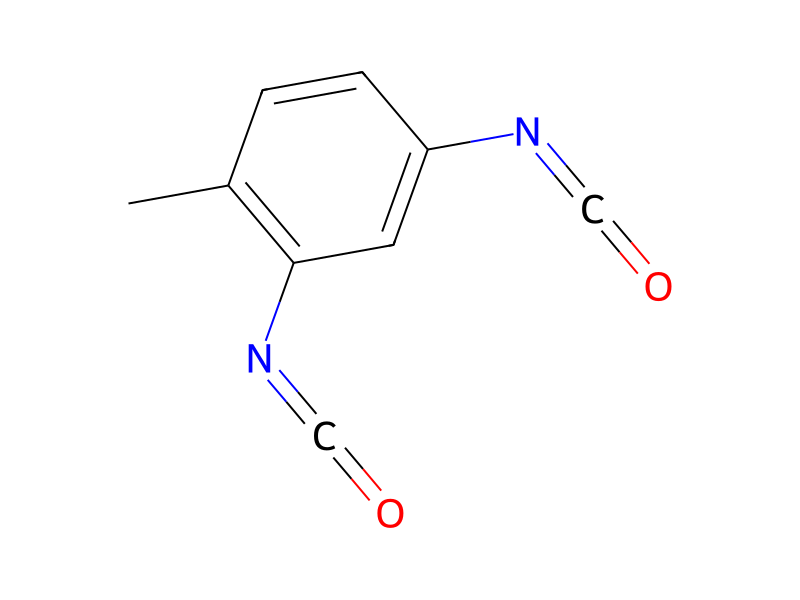

Product 1

Reagents, catalysts & solvents 1

Conditions
- Temperature
- 50 °C
Procedure
A vinyl terminated, fully reacted urethane acrylate was prepared by charging 422 parts of the oxypropylated novolac prepared in Example 1 (2.65 hydroxyl equivalents), 381 parts of hydroxypropyl methacrylate (2.65 moles), 1283 parts of styrene solvent, and 0.28 parts of p-benzoquinone inhibitor to a reactor and heating to 50° C to effect dissolution of the reactants. To the solution was added 460 parts (2.65 moles) of toluene diisocyanate (a commercially available mixture of approximately 80 percent 2,4-isomer and 20 percent 2,6-isomer) and the solution was heated and maintained at about 70° - 80° C with stirring for about 4 hours.
Workup
- customA vinyl terminated
- custominhibitor to a reactor
- dissolutiondissolution of the reactants
- temperaturewas heated
- temperaturemaintained at about 70° - 80° C
Sources & evidence
- ORD record
- ord-d2b56232108747b38f3d5a1c8a1c8ddc
- Source dataset
- uspto-grants-1978_08
- Patent number
- US04107229
Reaction notes
Loading…