Cyclopropanecarbonyl chloride → HCID 20314164, compound
Reaction equation

[F:1][C:2]([F:21])([F:20])[C:3]([C:16]([F:19])([F:18])[F:17])([C:5]1[CH:6]=[CH:7][C:8]2[NH:14][CH2:13][CH2:12][CH2:11][CH2:10][C:9]=2[CH:15]=1)[OH:4].[CH:22]1([C:25](Cl)=[O:26])[CH2:24][CH2:23]1>C1(C)C=CC=CC=1>[CH:22]1([C:25]([N:14]2[C:8]3[CH:7]=[CH:6][C:5]([C:3]([C:2]([F:1])([F:20])[F:21])([C:16]([F:19])([F:17])[F:18])[OH:4])=[CH:15][C:9]=3[CH2:10][CH2:11][CH2:12][CH2:13]2)=[O:26])[CH2:24][CH2:23]1Participants
4
Reactant 2
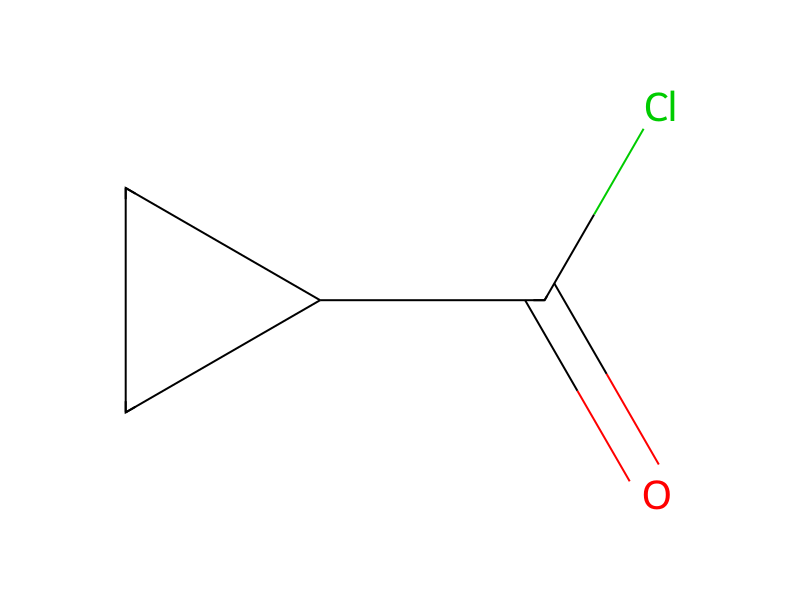

Product 1

Reagents, catalysts & solvents 1

Procedure
To 200 ml dry toluene is added 6.3 g (0.020 mole) α,α-bis(trifluoromethyl)-2,3,4,5-tetrahydro-1H-1-benzazepine-7-methanol and 3.0 g (0.025 mole) cyclopropane carboxylic acid chloride. The solution is stirred and heated at reflux under nitrogen for sixteen hours, then cooled and evaporated at reduced pressure. The residual solid is recrystallized from chlorobutane to give 5.0 g, m.p. 165°-167°.
Workup
- temperatureheated
- temperatureat reflux under nitrogen for sixteen hours
- temperaturecooled
- customevaporated at reduced pressure
- customThe residual solid is recrystallized from chlorobutane
- customto give 5.0 g, m.p. 165°-167°
Sources & evidence
- ORD record
- ord-ed16f582762e42bc9b06fac8ef7463c3
- Source dataset
- uspto-grants-1978_08
- Patent number
- US04107303
Reaction notes
Loading…