Methyl Acrylate → Vinyl acetate methylacrylate
Reaction equation

[Cl-].[Cl-].C([Al+2])C.[C:6]([O:9][CH:10]=[CH2:11])(=[O:8])[CH3:7].[C:12]([O:16][CH3:17])(=[O:15])[CH:13]=[CH2:14].C(=O)(OC(C)C)OOOC(C)(C)C>CCCCCC>[C:6]([O:9][CH:10]=[CH2:11])(=[O:8])[CH3:7].[C:12]([O:16][CH3:17])(=[O:15])[CH:13]=[CH2:14]Participants
Reactant 4
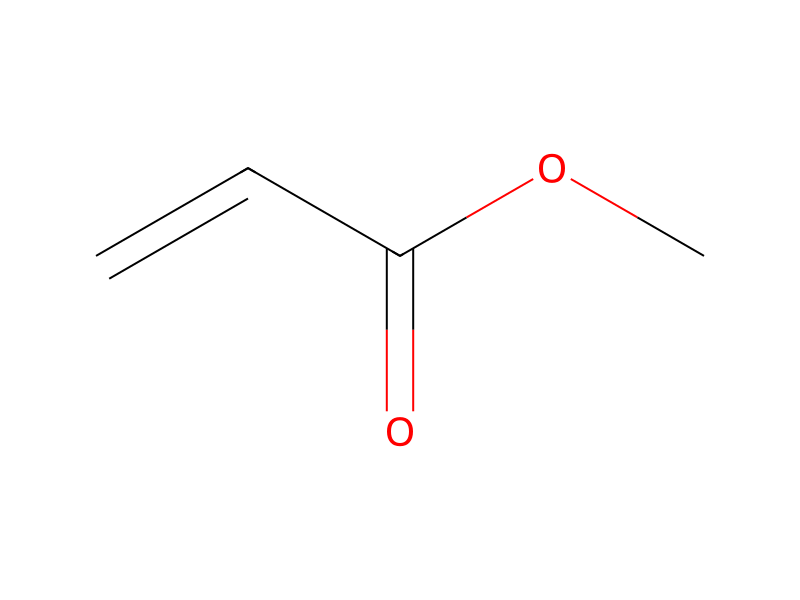


Product 1

Reagents, catalysts & solvents 1

Conditions
- Temperature
- 20 °C
Procedure
The inside of the same flask as used in Example 1 was thoroughly purged with nitrogen, and the flask was charged with 1065 ml of n-hexane and 17.5 millimoles of ethylaluminum dichloride. The temperature of the solution was maintained at 20° C. At this temperature, 301 g of an equimolar mixture of vinyl acetate and methyl acrylate and 300 ml of a 0.03 mole/liter n-hexane solution of tertbutylperoxy isopropyl carbonate were fed continuously with stirring for 5 hours at constant rates using the two metering pumps. In this case, the copolymerization proceeded with almost the same behavior as in Example 1. The same operation as in Example 1 gave 167 g of a vinyl acetate/methyl acrylate copolymer. By NMR spectroscopy, the copolymer was found to have a methyl acrylate content of 60 mole%.
Workup
- customwas thoroughly purged with nitrogen
Sources & evidence
- ORD record
- ord-216614d054af4b72aee0c1438c8e605b
- Source dataset
- uspto-grants-1978_08
- Patent number
- US04107418
Reaction notes
Loading…