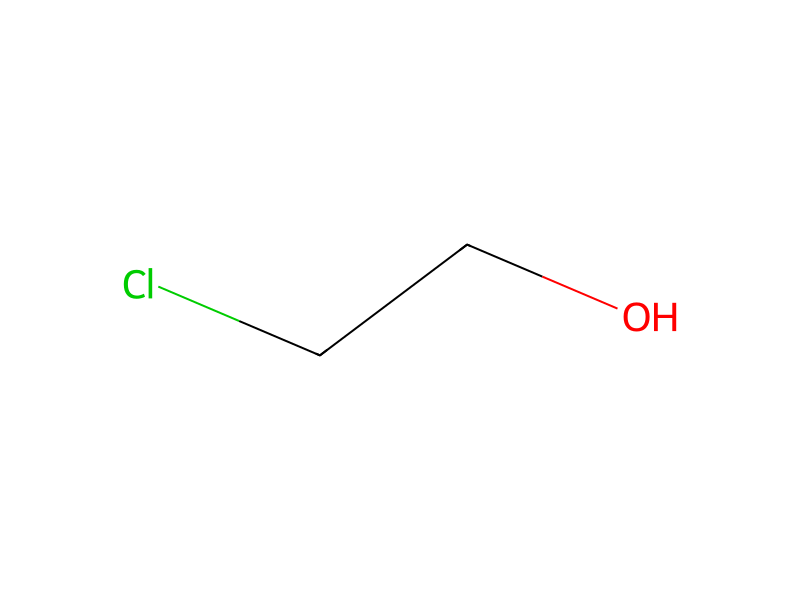
2-Chloroethanol → 2,6-Di-tert-butyl-4-[(2-hydroxyethyl)sulfanyl]phenol
Reaction equation

[C:1]([C:5]1[CH:10]=[C:9]([SH:11])[CH:8]=[C:7]([C:12]([CH3:15])([CH3:14])[CH3:13])[C:6]=1[OH:16])([CH3:4])([CH3:3])[CH3:2].[OH-].[K+].Cl[CH2:20][CH2:21][OH:22]>C(O)C.C1C=CC=CC=1>[C:12]([C:7]1[CH:8]=[C:9]([S:11][CH2:20][CH2:21][OH:22])[CH:10]=[C:5]([C:1]([CH3:4])([CH3:3])[CH3:2])[C:6]=1[OH:16])([CH3:15])([CH3:14])[CH3:13]Participants
6




Procedure
Using the equipment described in Example I, 2,6-ditertiary butyl-4-mercaptophenol (50 grams) was dissolved in 90 millimeters of ethanol (denatured alcohol) and 30 millimeters of benzene. A solution of 12 grams of KOH in 60 millimeters of ethanol was added under a nitrogen blanket. 2-Chloroethanol (19 grams) was slowly added dropwise at room temperature. The combination was reacted for three hours and then diluted with benzene and washed with water. The volatiles were then stripped off.
Workup
- customThe combination was reacted for three hours
- washwashed with water
Sources & evidence
- ORD record
- ord-f0c1fb9c087449b281bbb90694ed55ab
- Source dataset
- uspto-grants-1978_08
- Patent number
- US04108831
Reaction notes
Loading…