Benzene → 1-Benzoyl-1,2,2a,5-tetrahydrobenzo[cd]indol-4(3H)-one
Reaction equation

[C:1]([N:9]1[C:17]2[CH:16]=[CH:15][CH:14]=[C:13]3[CH:18]4[O:21][CH:19]4[CH2:20][CH:11]([C:12]=23)[CH2:10]1)(=[O:8])[C:2]1[CH:7]=[CH:6][CH:5]=[CH:4][CH:3]=1.C1C=CC=CC=1>C(OCC)(=O)C.[I-].[Zn+2].[I-]>[C:1]([N:9]1[C:17]2[CH:16]=[CH:15][CH:14]=[C:13]3[CH2:18][C:19](=[O:21])[CH2:20][CH:11]([C:12]=23)[CH2:10]1)(=[O:8])[C:2]1[CH:3]=[CH:4][CH:5]=[CH:6][CH:7]=1Participants



Procedure
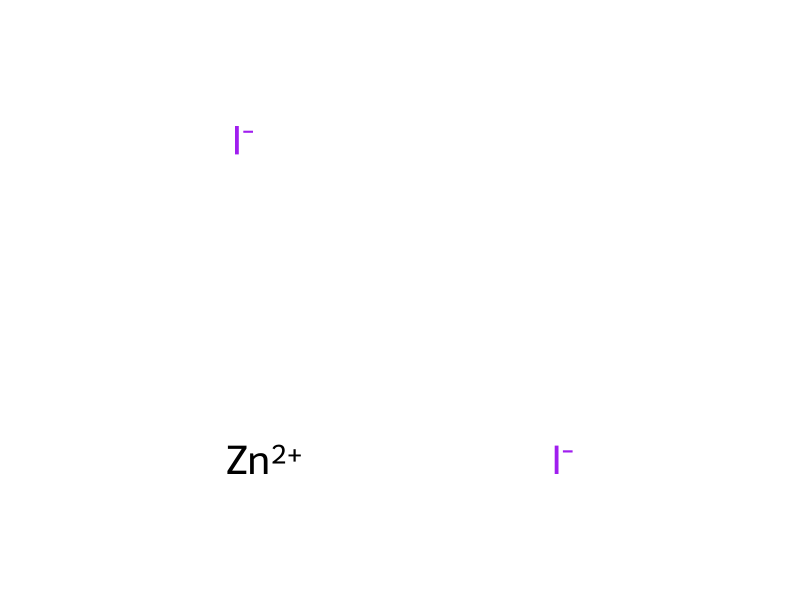
Twenty grams of 1-benzoyl-4,5-epoxy-1,2,2a,3,4,5-hexahydrobenz[cd]indole were dissolved in 500 ml. of benzene. 7.7 g. of zinc iodide were added and the resulting mixture refluxed under nitrogen for about 1.5 hours. Thin layer chromatrography indicated one major spot slightly slower than the spot corresponding to starting material. The reaction mixture was cooled and then diluted with ethyl acetate. The resulting organic layer was washed with water, and with saturated aqueous sodium chloride and was then dried. Evaporation of the solvent yielded a residue comprising 1-benzoyl-4-keto-1,2,2a,3,4,5-hexahydrobenz[cd]indole formed in the above reaction. The residue was crystallized by trituration with ether containing a small amount of benzene, yielding crystals melting at 146°-149° C. (yield equals 16.9 g.)
Workup
- temperaturethe resulting mixture refluxed under nitrogen for about 1.5 hours
- temperatureThe reaction mixture was cooled
- washThe resulting organic layer was washed with water
- dry with materialwith saturated aqueous sodium chloride and was then dried
- customEvaporation of the solvent
Sources & evidence
- ORD record
- ord-0d0019a9c7b843e6a8826d6fbc5b2848
- Source dataset
- uspto-grants-1978_08
- Patent number
- US04110339
Reaction notes
Loading…