Bromobenzene → 6-Bromo-1,1,4,4-tetramethyl-1,2,3,4-tetrahydronaphthalene
Reaction equation

[Br:1][C:2]1[CH:7]=[CH:6][CH:5]=[CH:4][CH:3]=1.Cl[C:9]([CH3:17])([CH2:11][CH2:12][C:13](Cl)([CH3:15])[CH3:14])[CH3:10].[Cl-].[Al+3].[Cl-].[Cl-]>ClCCl>[Br:1][C:2]1[CH:7]=[C:6]2[C:5](=[CH:4][CH:3]=1)[C:13]([CH3:15])([CH3:14])[CH2:12][CH2:11][C:9]2([CH3:17])[CH3:10]Participants
5
Reactant 3
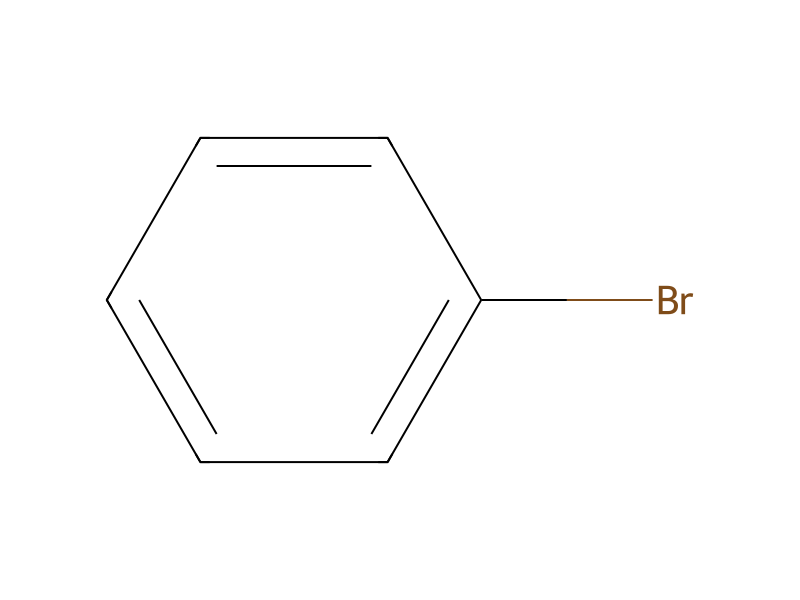


Product 1

Reagents, catalysts & solvents 1

Procedure
A 200 ml round-bottomed flask equipped with a stir bar and a reflux condenser was charged with a solution of bromobenzene (109 mmol, 17 ml) and 2,5-dichloro-2,5-dimethyl hexane (10 grams, 54.6 mmol) in dichloromethane (30 ml). Aluminum chloride (1.45 grams, 10.9 mmol) was added to the solution slowly, until spontaneous reflux subsides. After stirring for 10-15 minutes at room temperature, the reaction was poured into ice water (30 ml) and the layers were separated. The aqueous layer was extracted with EtOAc (5×20 ml). The combined organic layer was washed with water and brine, dried over sodium sulfate, filtered, and concentrated, to yield a 6-bromo-1,2,3,4-tetrahydro-1,1,4,4-tetramethylnaphthalene product.
Workup
- customA 200 ml round-bottomed flask equipped with a stir bar and a reflux condenser
- temperatureuntil spontaneous reflux subsides
- customthe layers were separated
- extractionThe aqueous layer was extracted with EtOAc (5×20 ml)
- washThe combined organic layer was washed with water and brine
- dry with materialdried over sodium sulfate
- filtrationfiltered
- concentrationconcentrated
Sources & evidence
- ORD record
- ord-db3db0cadda847e3be84a6ece7695dfb
- Source dataset
- uspto-grants-2011_06
- Patent number
- US07955852B2
Reaction notes
Loading…