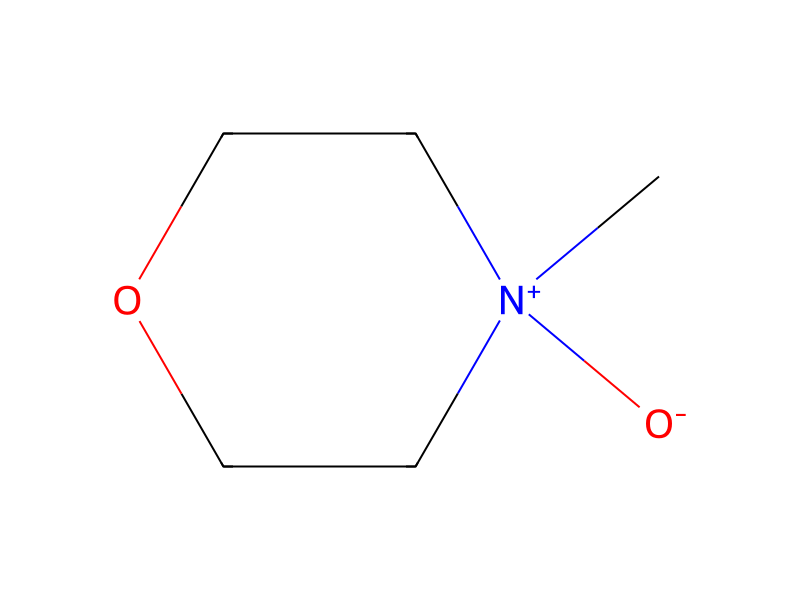
Methyl morpholine oxide → HCID 15074483, compound
Reaction equation

[CH3:1][C:2]([C:6]1[CH:11]=[CH:10][C:9]([N+:12]([O-:14])=[O:13])=[CH:8][CH:7]=1)([CH3:5])[CH2:3][OH:4].C[N+]1([O-])CCOCC1>[Ru]([O-])(=O)(=O)=O.C([N+](CCC)(CCC)CCC)CC.ClCCl>[CH3:5][C:2]([C:6]1[CH:11]=[CH:10][C:9]([N+:12]([O-:14])=[O:13])=[CH:8][CH:7]=1)([CH3:1])[CH:3]=[O:4]Participants
5



Procedure
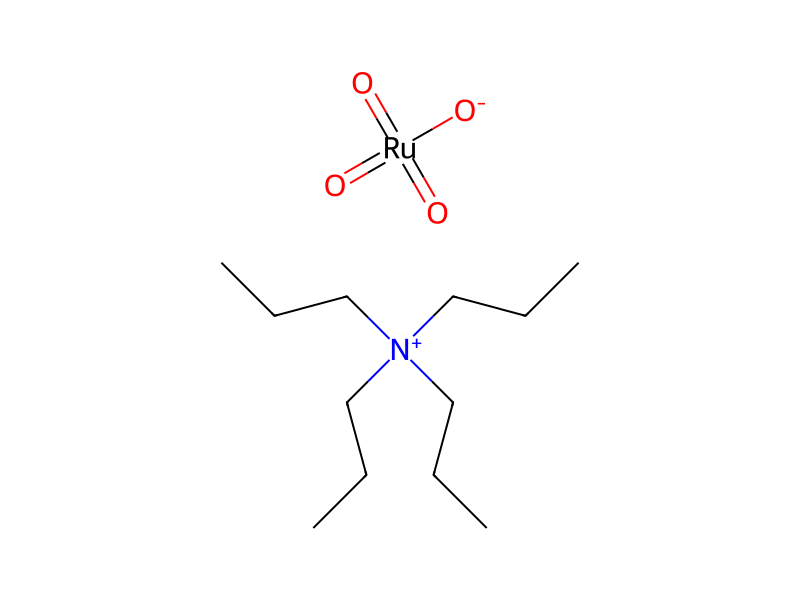
In a 250 mL round bottom flask was charged 2-methyl-2-(4-nitrophenyl)propan-1-ol (3.86 g, 19.8 mmol), anhydrous dichloromethane (75 mL), 4-methylmorpholine N-oxide (3.47 g, 29.7 mmol), and 4 Å molecular sieves (9.8 g). TPAP (tetrapropylammonium perruthenate) (346 mg, 0.98 mmol) was added in one portion and the reaction was stirred at ambient temperature for 16 h. Upon completion of the reaction the material was filtered through a pad of silica and concentrated in vacuo. The material was purified by flash chromatography eluting with a gradient of 20% ethyl actetate/hexanes to 30% ethyl actetate/hexanes to give 2-methyl-2-(4-nitrophenyl)propanal (2.11 g, 55.1%).
Workup
- customUpon completion of the reaction the material
- filtrationwas filtered through a pad of silica
- concentrationconcentrated in vacuo
- customThe material was purified by flash chromatography
- washeluting with a gradient of 20% ethyl actetate/hexanes to 30% ethyl actetate/hexanes
Sources & evidence
- ORD record
- ord-40f5910bb0f44fc9aa0ba011715f084e
- Source dataset
- uspto-grants-2011_06
- Patent number
- US07960569B2
Reaction notes
Loading…