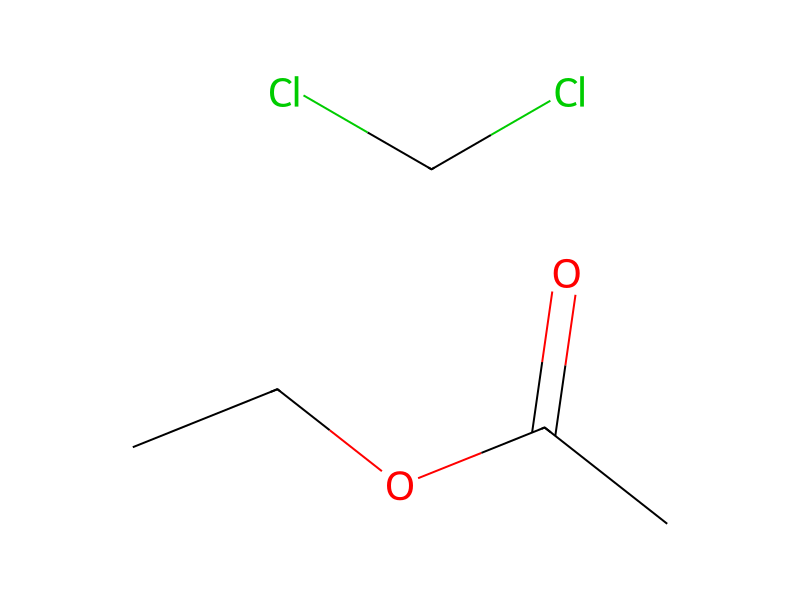
Dichloromethane ethylacetate → HCID 11716827, compound
Reaction equation

[CH3:1][O:2][C:3]1[CH:4]=[C:5]2[C:9](=[CH:10][C:11]=1[O:12][CH3:13])[N:8]([CH3:14])[CH:7]=[C:6]2[C:15]#[C:16][C:17]1[C:18]([NH2:24])=[N:19][CH:20]=[C:21]([F:23])[CH:22]=1.CC(C)([O-])C.[K+].ClCCl.C(OCC)(=O)C>CN1CCCC1=O>[CH3:1][O:2][C:3]1[CH:4]=[C:5]2[C:9](=[CH:10][C:11]=1[O:12][CH3:13])[N:8]([CH3:14])[CH:7]=[C:6]2[C:15]1[NH:24][C:18]2=[N:19][CH:20]=[C:21]([F:23])[CH:22]=[C:17]2[CH:16]=1Participants
5
Reactant 3


Product 1

Reagents, catalysts & solvents 1

Procedure
But using 0.19 g of 3-(5,6-dimethoxy-1-methyl-1H-indol-3-ylethynyl)-5-fluoropyridin-2-ylamine and 0.263 g of potassium tert-butoxide in 15 ml of 1-methylpyrrolidin-2-one. After flash chromatography on a silica column [eluent: dichloromethane/ethyl acetate (90/10 by volume)], 0.046 g of 2-(5,6-dimethoxy-1-methyl-1H-indol-3-yl)-5-fluoro-1H-pyrrolo[2,3-b]pyridine is thus obtained in the form of a solid, the characteristics of which are as follows:
Sources & evidence
- ORD record
- ord-54f9c14262e64e2ca97190e9610842f9
- Source dataset
- uspto-grants-2011_06
- Patent number
- US07968566B2
Reaction notes
Loading…