Methacrylic Acid → HCID 86658984, compound
Reaction equation

[N:1]1[CH:6]=[CH:5][C:4]([CH2:7][CH2:8][CH2:9][OH:10])=[CH:3][CH:2]=1.[C:11]([OH:16])(=[O:15])[C:12]([CH3:14])=[CH2:13].N1(C2C=CN=CC=2)CCCC1.C1(N=C=NC2CCCCC2)CCCCC1>ClCCl>[N:1]1[CH:6]=[CH:5][C:4]([CH2:7][CH2:8][CH2:9][OH:10])=[CH:3][CH:2]=1.[C:11]([O-:16])(=[O:15])[C:12]([CH3:14])=[CH2:13]Participants
Reactant 4



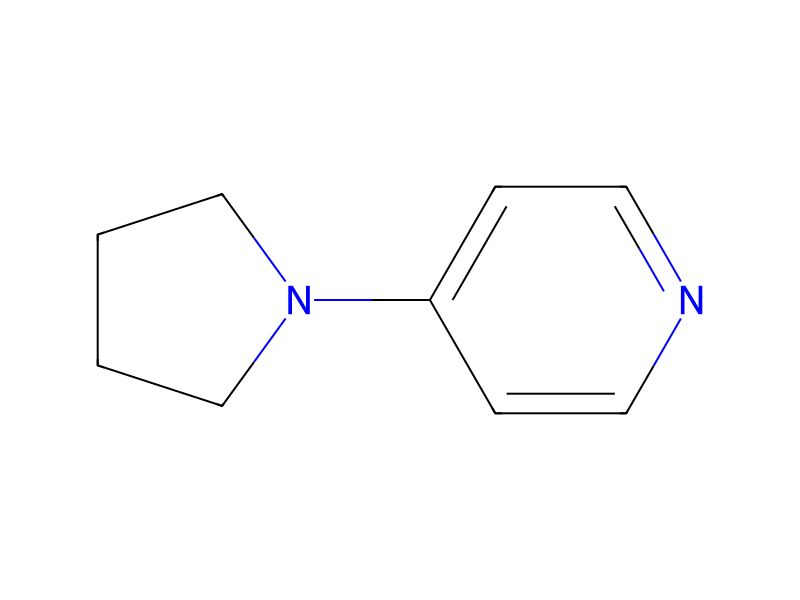
Product 1

Reagents, catalysts & solvents 1

Procedure
After 6.85 g (50 mmol) of 4-pyridinepropanol (manufactured by Aldrich Co.) represented by formula (19), 4.73 g (55 mmol) of methacrylic acid (manufactured by Aldrich Co.) represented by formula (20), and 740 mg (5 mmol) of 4-(1-pyrrolidinyl)pyridine (manufactured by Aldrich Co.) were dissolved in 100 ml of dehydrated dichloromethane (manufactured by WAKO Co.), 11.3 g (55 mmol) of N,N′-dicyclohexylcarbodiimide (DCC) (manufactured by Aldrich Co.) was added thereto and allowed to react at room temperature for 1 hour. Then, insoluble urea was removed by filtration, followed by removal of solvent under reduced pressure. The residual material was purified by column chromatography (column: silica (manufactured by WAKO Co.), solvent: hexane/ethyl acetate) to obtain 4-pyridinepropanol-methacrylate represented by formula (21) (yield amount: 8.5124 g, yield rate: 82.8%). The reaction scheme is shown below.
Workup
- customto react at room temperature for 1 hour
- customThen, insoluble urea was removed by filtration
- customfollowed by removal of solvent under reduced pressure
- customThe residual material was purified by column chromatography (column: silica (manufactured by WAKO Co.), solvent: hexane/ethyl acetate)
Sources & evidence
- ORD record
- ord-1714f9febc124b72b63b2cfa38a36192
- Source dataset
- uspto-grants-2014_02
- Patent number
- US08658735B2
Reaction notes
Loading…