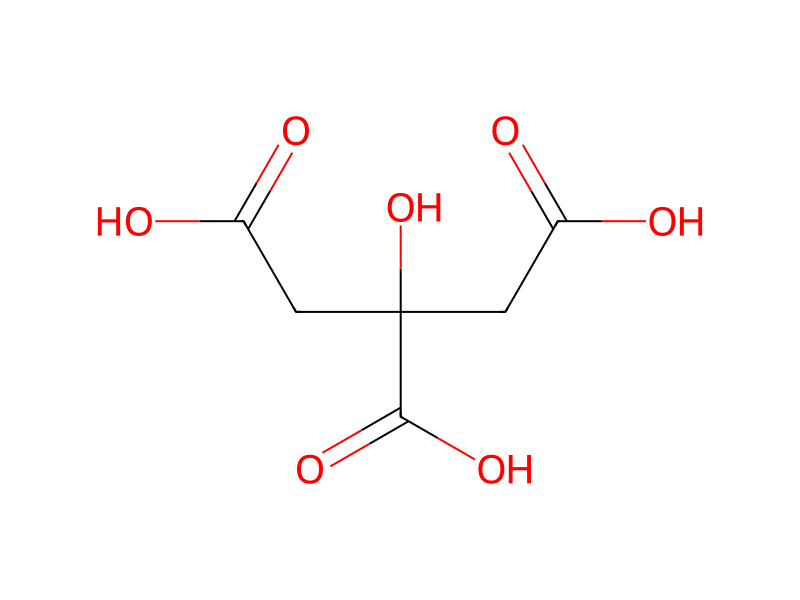
Citric Acid → HCID 14032420, compound
Reaction equation

C([N:4]1[C:8]([C:9]2[CH:14]=[CH:13][C:12]([Cl:15])=[CH:11][CH:10]=2)=[CH:7][C:6]([O:16]C(=O)C)=[CH:5]1)(=O)C.N#N.[OH-].[Na+].C(O)(=O)CC(CC(O)=O)(C(O)=O)O>CO.O>[OH:16][C:6]1[CH:7]=[C:8]([C:9]2[CH:10]=[CH:11][C:12]([Cl:15])=[CH:13][CH:14]=2)[NH:4][CH:5]=1Participants
Reactant 4



Product 1

Reagents, catalysts & solvents 2


Conditions
- Temperature
- -8 °C
Procedure
A sample of N-acetyl-3-acetoxyl-5p-chlorophenylpyrrole (16) (2.8 g; 0.01 mol) was deoxygenated for ten minutes with a stream of N2. The solids were then dissolved in deoxygenated methanol (30 mL) which was then chilled to -8° C. At once was added a cold deoxygenated solution of NaOH (1.6 g; 0.04 mol) in 20 mL H2O, which solution was then heated briefly to 15° C. and then immediately cooled to -5° C.; after 25 minutes the clear solution was treated with a cold deoxygenated solution of citric acid (4.2 g; 0.02 mol) in 15 mL H2O. The temperature rose briefly to 5° C. After 0.5 hr. stirring at -5° C., the solids were collected by filtration and washed with cold deoxygenated H2O. The pale green product was dried under vacuum at room temperature over P2O5 for several days (1.3 g; 68%); TLC Rf=0.19 (CHCl3 :EtOH, 9:1); IR (KCl) showed no evidence for C=O absorption.
Workup
- temperaturewas then heated briefly to 15° C.
- temperatureimmediately cooled to -5° C.
- customrose briefly to 5° C
- filtrationthe solids were collected by filtration
- washwashed
- customwith cold deoxygenated H2O
- dry with materialThe pale green product was dried under vacuum at room temperature over P2O5 for several days (1.3 g; 68%)
- customfor C=O absorption
Sources & evidence
- ORD record
- ord-02b274296a584cdc8a3f44bdc237d529
- Source dataset
- uspto-grants-1987_11
- Patent number
- US04704460
Reaction notes
Loading…