Epichlorohydrin → Sodium 3-chloro-2-hydroxypropylsulfonate
Reaction equation

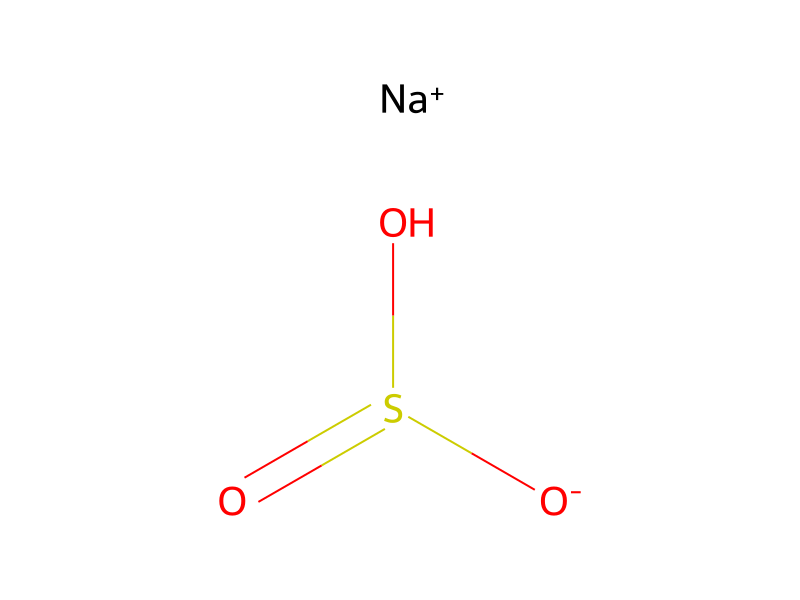
[CH2:1]([CH:3]1[O:5][CH2:4]1)[Cl:2].[S:6](=[O:9])([OH:8])[O-:7].[Na+:10]>>[Na+:10].[Cl:2][CH2:1][CH:3]([OH:5])[CH2:4][S:6]([O-:9])(=[O:8])=[O:7]Participants


Conditions
- Temperature
- 80 °C
Procedure
Epichlorohydrin (one mole, 93 g) is slowly added to an aqueous solution of one mole sodium bisulfite (104 g in about 120 ml water) while maintaining the temperature at about 80° C. The epichlorohydrin is added dropwise over about three hours, and after addition is complete, the mixture is stirred for an additional hour. After the mixture cools to about 20° C., the solids of 3-chloro-2-hydroxypropylsulfonic acid sodium salt formed from the reaction are filtered and analyzed by Nuclear Magnetic Resonance (NMR). The ISC spectra shows peaks at 69.99 ppm, 56.97 ppm, and 51.18 ppm from TMS (tetramethyl silane) and the proton spectrum shows, three groups of peaks centering at 2.95, 3.58 and 4.17 ppm (from TMS), in a 2:2:1 ratio respectively, consistent with the structure of CHPS.
Workup
- additionafter addition
- customcools to about 20° C.
Sources & evidence
- ORD record
- ord-480da781f7eb4f5bb861f5506254469f
- Source dataset
- uspto-grants-1993_05
- Patent number
- US05208369
Reaction notes
Loading…