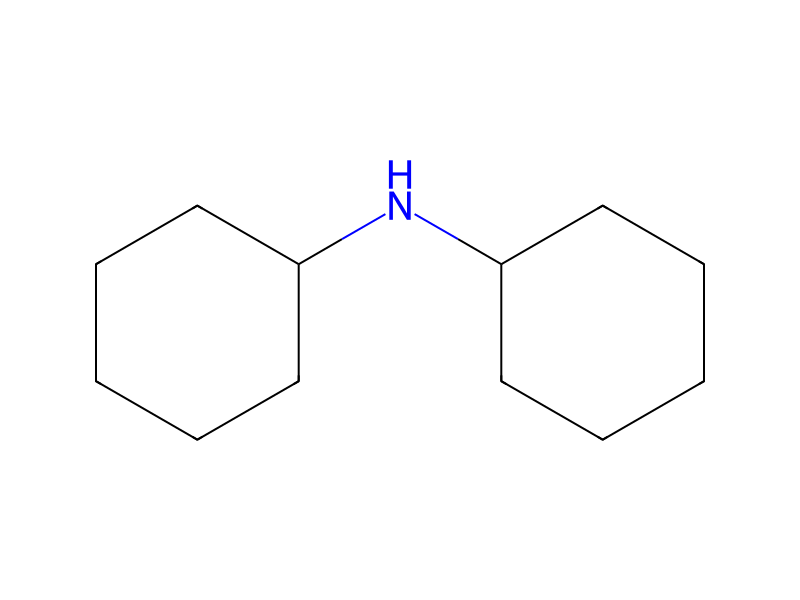
Dicyclohexylamine → HCID 54115622, compound
Reaction equation

[C:1]12([C:11]3[CH:12]=[C:13]([CH:26]=[CH:27][C:28]=3[O:29][CH3:30])[C:14]([NH:16][C:17]3[CH:25]=[CH:24][C:20]([C:21](O)=[O:22])=[CH:19][CH:18]=3)=[O:15])[CH2:10][CH:5]3[CH2:6][CH:7]([CH2:9][CH:3]([CH2:4]3)[CH2:2]1)[CH2:8]2.C1(NC2CCCCC2)CCCCC1.S(Cl)([Cl:46])=O>C1COCC1>[C:1]12([C:11]3[CH:12]=[C:13]([CH:26]=[CH:27][C:28]=3[O:29][CH3:30])[C:14]([NH:16][C:17]3[CH:25]=[CH:24][C:20]([C:21]([Cl:46])=[O:22])=[CH:19][CH:18]=3)=[O:15])[CH2:10][CH:5]3[CH2:6][CH:7]([CH2:9][CH:3]([CH2:4]3)[CH2:2]1)[CH2:8]2Participants
5
Reactant 3


Product 1

Reagents, catalysts & solvents 1

Conditions
- Temperature
- 0 °C
Procedure
2.0 g (5 mmoles) of 4-[3-(1-adamantyl)-4-methoxy benzamido] benzoic acid are dissolved in 60 ml of THF. 1.1 g (6 mmoles of dicyclohexylamine are slowly added. A white precipitate is immediately formed. The reaction mixture is then cooled to 0° C. and 0.7 g (6 mmoles) of thionyl chloride is slowly added. The reaction mixture is stirred for 3 hours at ambient temperature. The solid that forms is filtered and then the filtrate is evaporated. The resulting residue is used, as is, in the following synthesis.
Workup
- customA white precipitate is immediately formed
- filtrationThe solid that forms is filtered
- customthe filtrate is evaporated
- customas is, in the following synthesis
Sources & evidence
- ORD record
- ord-368dc39887234b539d1a2bef7147a4cb
- Source dataset
- uspto-grants-1993_05
- Patent number
- US05212203
Reaction notes
Loading…