Boric Acid → 2,3-Dihydroxypropyl 4-dimethylaminobenzoate
Reaction equation

[CH3:1][N:2]([CH3:20])[C:3]1[CH:8]=[CH:7][C:6]([C:9]([O:11][CH2:12][CH:13]2[CH2:17][O:16]C(C)(C)[O:14]2)=[O:10])=[CH:5][CH:4]=1.B(O)(O)O>COCCOCCOC.O>[CH3:1][N:2]([CH3:20])[C:3]1[CH:4]=[CH:5][C:6]([C:9]([O:11][CH2:12][CH:13]([OH:14])[CH2:17][OH:16])=[O:10])=[CH:7][CH:8]=1Participants
4
Reactant 2
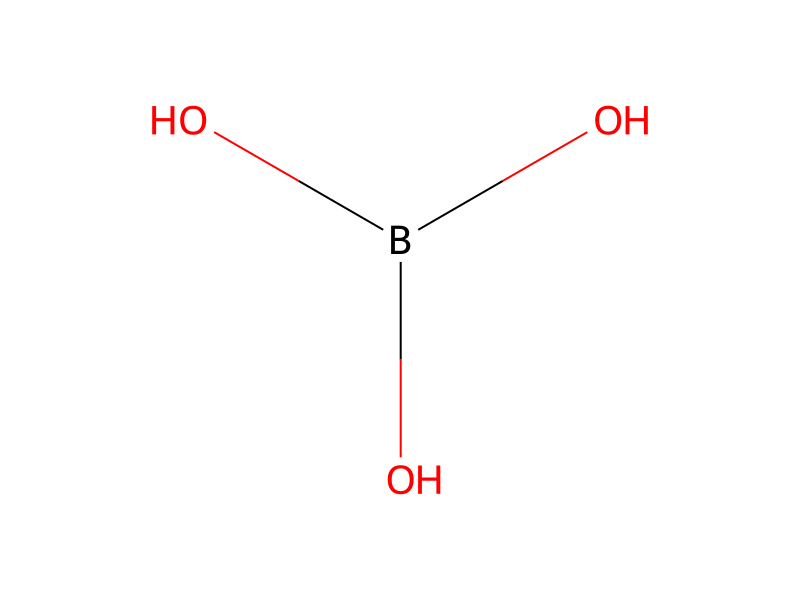

Product 1

Reagents, catalysts & solvents 1

Conditions
- Temperature
- 100 °C
Procedure
4-(4-Dimethylaminophenylcarbonyloxymethyl)-2,2-dimethyl-1,3-dioxolane from Example 4 (3 mmol) is dissolved in the diglyme/H2O 8:2 mixture (25 ml), and boric acid (2 g) is added. The reaction mixture is stirred at 100° C. for 3 h. The solvent is then distilled off in vacuo, the crude product which remains is taken up in water (100 ml) and extracted with ethyl acetate (3×20 ml). The combined organic phases are washed with water (2×50 ml) and dried over magnesium sulfate. The crude product remaining after evaporation of the ethyl acetate in vacuo is employed without further purification for subsequent reactions.
Workup
- additionis added
- distillationThe solvent is then distilled off in vacuo
- extractionextracted with ethyl acetate (3×20 ml)
- washThe combined organic phases are washed with water (2×50 ml)
- dry with materialdried over magnesium sulfate
- customafter evaporation of the ethyl acetate in vacuo
- customis employed without further purification for subsequent reactions
Sources & evidence
- ORD record
- ord-1521a1c10ee943cc8a78ca3b2ba49c83
- Source dataset
- uspto-grants-2011_01
- Patent number
- US07863478B2
Reaction notes
Loading…