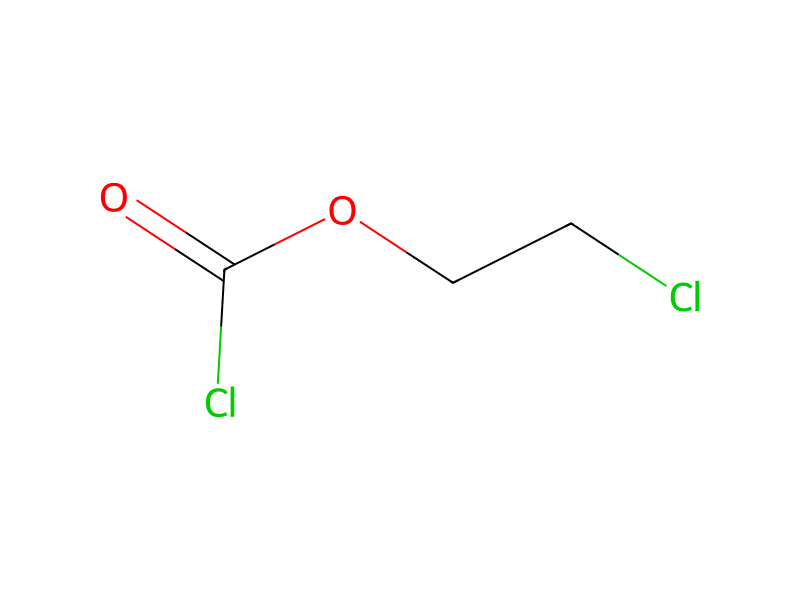
2-Chloroethyl chloroformate → 3-[2-((R)-6,8-Dichloro-2-methyl-1,2,3,4-tetrahydroisoquinolin-4-yl)phenyl]oxazolidin-2-one
Reaction equation

[Cl:1][C:2]1[CH:3]=[C:4]2[C:9](=[C:10]([Cl:12])[CH:11]=1)[CH2:8][N:7]([CH3:13])[CH2:6][C@H:5]2[C:14]1[CH:19]=[CH:18][CH:17]=[CH:16][C:15]=1[NH2:20].Cl[C:22]([O:24][CH2:25][CH2:26]Cl)=[O:23]>>[Cl:1][C:2]1[CH:3]=[C:4]2[C:9](=[C:10]([Cl:12])[CH:11]=1)[CH2:8][N:7]([CH3:13])[CH2:6][C@H:5]2[C:14]1[CH:19]=[CH:18][CH:17]=[CH:16][C:15]=1[N:20]1[CH2:26][CH2:25][O:24][C:22]1=[O:23]Participants
3


Procedure
Analogously to example 45a), (R)-2-(6,8-dichloro-2-methyl-1,2,3,4-tetrahydro-isoquinolin-4-yl)phenylamine (300 mg, enantiomer B, preparation as described in WO2004085404) was reacted with 2-chloroethyl chloroformate (140 mg). 400 mg of the desired product were obtained.
Sources & evidence
- ORD record
- ord-15abb22acc9d4902b84699afde4fba8b
- Source dataset
- uspto-grants-2011_01
- Patent number
- US07868003B2
Reaction notes
Loading…