Lithium Hydroxide → [2-(Dodecanoylamino)-1,3-thiazol-4-yl]acetic acid
Reaction equation

C([O:3][C:4](=[O:25])[CH2:5][C:6]1[N:7]=[C:8]([NH:11][C:12](=[O:24])[CH2:13][CH2:14][CH2:15][CH2:16][CH2:17][CH2:18][CH2:19][CH2:20][CH2:21][CH2:22][CH3:23])[S:9][CH:10]=1)C.[Li+].[OH-]>C1COCC1.O>[C:12]([NH:11][C:8]1[S:9][CH:10]=[C:6]([CH2:5][C:4]([OH:25])=[O:3])[N:7]=1)(=[O:24])[CH2:13][CH2:14][CH2:15][CH2:16][CH2:17][CH2:18][CH2:19][CH2:20][CH2:21][CH2:22][CH3:23]Participants
4
Reactant 2


Product 1

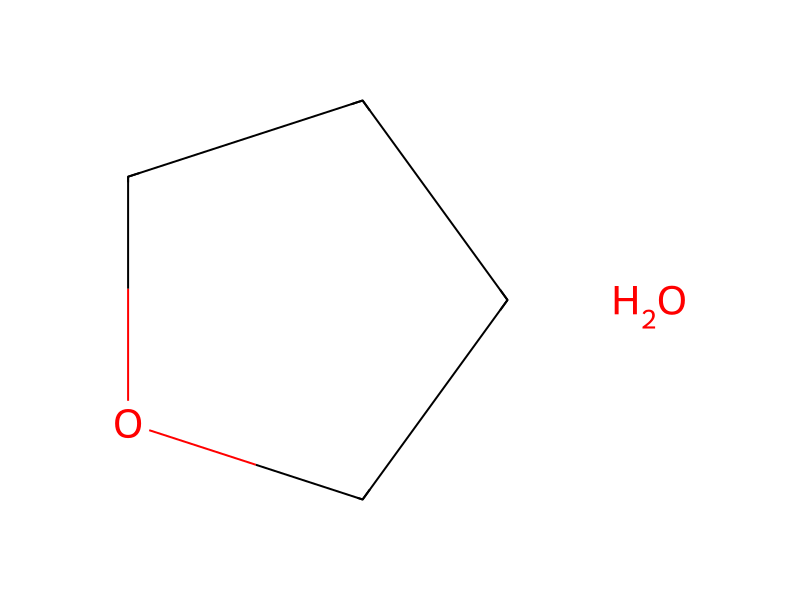
Reagents, catalysts & solvents 1
Procedure
In a first step, (2-amino-thiazol-4-yl)-acetic acid ethyl ester is coupled to dodecanoyl chloride as described in the method of Example 334 to provide (2-Dodecanoylamino-thiazol-4-yl)-acetic acid ethyl ester as a crude solid. In a second step, the crude solid of (2-Dodecanoylamino-thiazol-4-yl)-acetic acid ethyl ester was deprotected using LiOH (2-fold excess) in THF/H2O to provide the title compound as a crude solid, which was used directly without further purification or characterization.
Sources & evidence
- ORD record
- ord-002d5c5f317d4cda9e9f6d399b87d8d2
- Source dataset
- uspto-grants-2011_01
- Patent number
- US07868135B2
Reaction notes
Loading…