Isopropyl Acetate → HCID 59800152, compound
Reaction equation

[N+:1]([C:4]1[CH:5]=[C:6]([S:10](Cl)(=[O:12])=[O:11])[CH:7]=[CH:8][CH:9]=1)([O-:3])=[O:2].C(OC(C)C)(=O)C.[F:21][CH:22]([F:25])[CH2:23][OH:24].C(N(CC)CC)C>>[N+:1]([C:4]1[CH:5]=[C:6]([S:10]([O:24][CH2:23][CH:22]([F:25])[F:21])(=[O:12])=[O:11])[CH:7]=[CH:8][CH:9]=1)([O-:3])=[O:2]Participants




Conditions
- Temperature
- 2.5 °C
Procedure
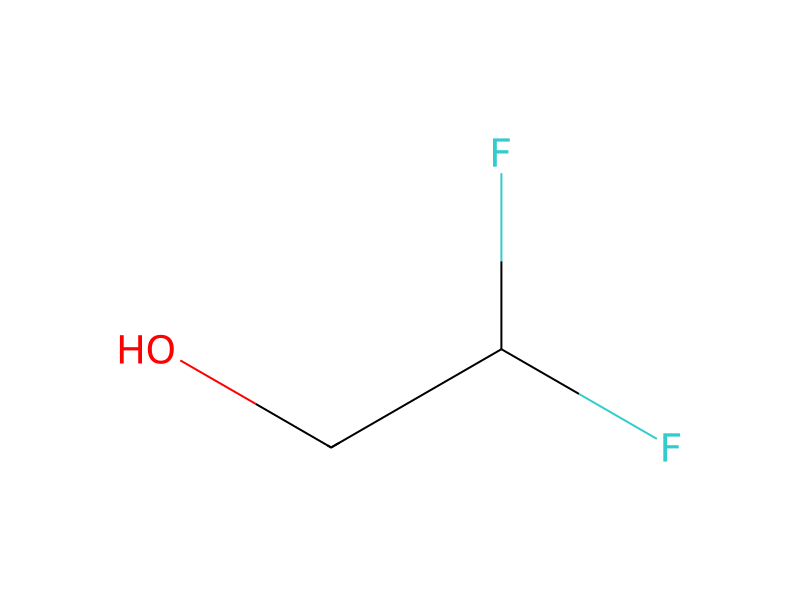
194 g 3-nitro-benzenesulfonyl chloride (1.13 equiv.) were charged in the reaction vessel followed by 1.3 l isopropyl acetate and the solution was cooled to 0-5° C. A solution of 65 g 2,2-difluoroethanol (753 mmol, 1 equiv.), 163 ml triethylamine (1.55 equiv.) and 325 ml isopropyl acetate was added dropwise over 30 min, keeping the temperature between 0-5° C. After 4 h reaction (HPLC in process control), the reaction mixture was washed with 650 ml water. The water phase was re-extracted with 650 ml isopropyl acetate. The organic phases were washed with 650 ml 1M HClaq and 650 ml 10% NaClaq solution. The organic phases were combined, dried over MgSO4, filtered and concentrated to dryness under reduced pressure to give 196 g 2,2-difluoroethyl 3-nitrobenzenesulfonate (97% yield) as a viscous oil which crystallized on standing. The product can also be crystallized from isopropanol (seeding at 30° C., concentration: ca 13 L/kg product).
Workup
- custombetween 0-5° C
- customAfter 4 h reaction (HPLC in process control)
- washthe reaction mixture was washed with 650 ml water
- extractionThe water phase was re-extracted with 650 ml isopropyl acetate
- washThe organic phases were washed with 650 ml 1M HClaq and 650 ml 10% NaClaq solution
- dry with materialdried over MgSO4
- filtrationfiltered
- concentrationconcentrated to dryness under reduced pressure
Sources & evidence
- ORD record
- ord-37bceaedd4e74e2999f23dbd7c95c98f
- Source dataset
- uspto-grants-2011_01
- Patent number
- US07872141B2
Reaction notes
Loading…