Triethylamine → 1,1-Dicyclohexyl-3-(4-formyl-thiazol-2-yl)urea
Reaction equation

[CH:1]1([N:7]([CH:18]2[CH2:23][CH2:22][CH2:21][CH2:20][CH2:19]2)[C:8]([NH:10][C:11]2[S:12][CH:13]=[C:14]([CH2:16][OH:17])[N:15]=2)=[O:9])[CH2:6][CH2:5][CH2:4][CH2:3][CH2:2]1.C1C=CN=CC=1.O=S(=O)=O.C(N(CC)CC)C>C(Cl)Cl.CS(C)=O>[CH:18]1([N:7]([CH:1]2[CH2:6][CH2:5][CH2:4][CH2:3][CH2:2]2)[C:8]([NH:10][C:11]2[S:12][CH:13]=[C:14]([CH:16]=[O:17])[N:15]=2)=[O:9])[CH2:19][CH2:20][CH2:21][CH2:22][CH2:23]1Participants
5



Procedure
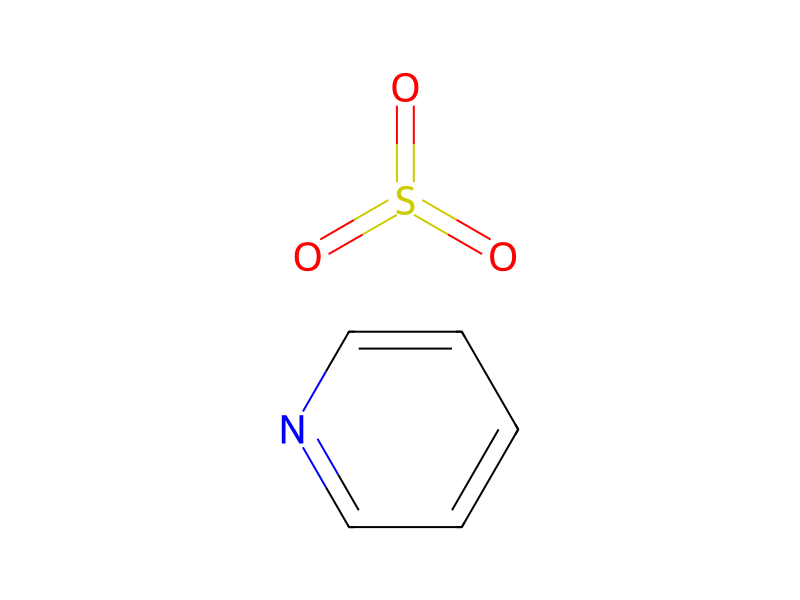
To a solution of 1,1-dicyclohexyl-3-(4-hydroxymethyl-thiazol-2-yl)urea (850 mg, 2.5 mmol) in 4:1 DCM/DMSO (8 mL) was added pyridine-sulfur trioxide (1.59 g, 10.0 mmol) and triethyl-amine (1.55 mL, 11.25 mmol) at 0° C. The mixture was stirred for 6 h and quenched with water (50 mL) and the layers were separated. The aqueous layer was extracted with DCM (2×50 mL). The combined organic layers was washed with water, saturated ammonium chloride solution, brine, dried over sodium sulfate and concentrated in vacuo to obtain 1,1-dicyclohexyl-3-(4-formyl-thiazol-2-yl)urea (800 mg, 2.38 mmol).
Workup
- customquenched with water (50 mL)
- customthe layers were separated
- extractionThe aqueous layer was extracted with DCM (2×50 mL)
- washThe combined organic layers was washed with water, saturated ammonium chloride solution, brine
- dry with materialdried over sodium sulfate
- concentrationconcentrated in vacuo
Sources & evidence
- ORD record
- ord-f2357be24d23442f9f877f7886627c92
- Source dataset
- uspto-grants-2011_01
- Patent number
- US07872139B2
Reaction notes
Loading…