Hydrochloric Acid → 4-(4-difluoromethyl-4,5-dihydro-3-methyl-1,2,4-triazol-5(1H)-on-1-yl)-3-fluorothiophenol
Reaction equation

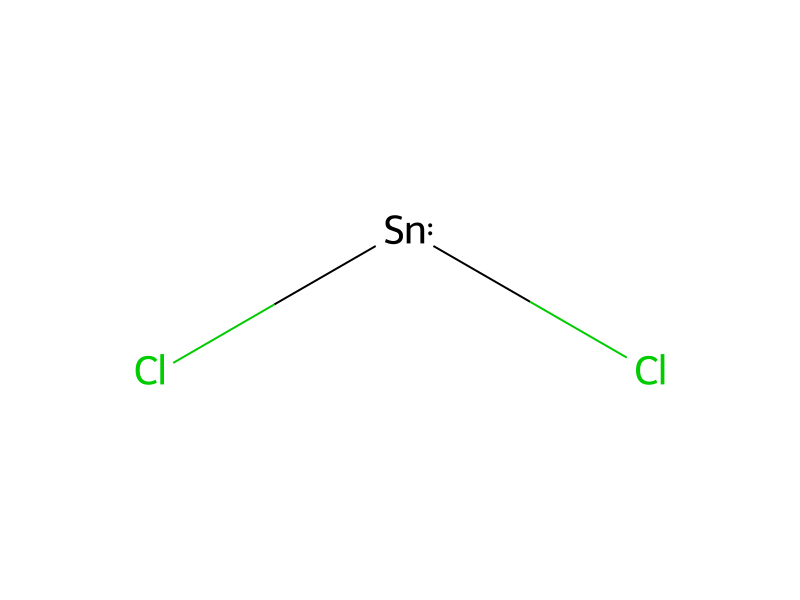
Cl.[Sn](Cl)Cl.[F:5][CH:6]([F:25])[N:7]1[C:11](=[O:12])[N:10]([C:13]2[CH:18]=[CH:17][C:16]([S:19](Cl)(=O)=O)=[CH:15][C:14]=2[F:23])[N:9]=[C:8]1[CH3:24].[Cl-].[Na+]>C(O)(=O)C>[F:25][CH:6]([F:5])[N:7]1[C:11](=[O:12])[N:10]([C:13]2[CH:18]=[CH:17][C:16]([SH:19])=[CH:15][C:14]=2[F:23])[N:9]=[C:8]1[CH3:24]Participants
Reactant 4



Product 1

Reagents, catalysts & solvents 1

Conditions
- Temperature
- 85 °C
Procedure
Gaseous hydrogen chloride was bubbled into a mixture of 3.29 g (0.0146 mole) of tin(II) chloride in 40 mL of acetic acid for about five minutes, causing it to become a clear solution. This solution was then heated to 85° C., and a hot solution of 1.66 g (0.00485 mole) of 4-(4-difluoromethyl-4,5-dihydro-3-methyl-1,2,4-triazol-5(1H)-on-1-yl)-3-fluorophenylsulfonyl chloride was added to the first solution. This reaction mixture was heated at 85° C. for 45 minutes. After cooling to room temperature, the resulting yellow solution was poured into 120 mL of hydrochloric acid. To this mixture was added 100 mL of a saturated aqueous solution of sodium chloride, and the resulting mixture was extracted with ethyl acetate, but the layers did not separate. The addition of a saturated aqueous solution of sodium chloride did effect a partial separation. The aqueous layer was extracted two more times with ethyl acetate, and all extracts were combined. After evaporation of the solvent under reduced pressure, the residue retained an odor of hydrochloric acid. Water was added to the residue, and this mixture was extracted three times with ethyl acetate. The combined extracts were washed with water, dried over anhydrous magnesium sulfate, and filtered. Following evaporation of the solvent under reduced pressure, the yellow residue that remained was dried under vacuum. This dried residue was placed on a column of silica gel and eluted with methylene chloride/ethyl acetate (2:1). After being dried under vacuum for several hours, 0.81 g of 4-(4-difluoromethyl-4,5-dihydro-3-methyl-1,2,4-triazol-5(1H)-on-1-yl)-3-fluorothiophenol was isolated as a yellow syrup. The NMR spectrum was consistent with the proposed structure. This reaction was repeated to obtain additional product for subsequent reactions.
Workup
- temperatureThis reaction mixture was heated at 85° C. for 45 minutes
- temperatureAfter cooling to room temperature
- extractionthe resulting mixture was extracted with ethyl acetate
- customthe layers did not separate
- additionThe addition of a saturated aqueous solution of sodium chloride
- customa partial separation
- extractionThe aqueous layer was extracted two more times with ethyl acetate
- customAfter evaporation of the solvent under reduced pressure
- additionWater was added to the residue
- extractionthis mixture was extracted three times with ethyl acetate
- washThe combined extracts were washed with water
- dry with materialdried over anhydrous magnesium sulfate
- filtrationfiltered
- customevaporation of the solvent under reduced pressure
- customthe yellow residue that remained was dried under vacuum
- washeluted with methylene chloride/ethyl acetate (2:1)
- customAfter being dried under vacuum for several hours
Sources & evidence
- ORD record
- ord-993b179f1cb94a40b11539b92d84aad9
- Source dataset
- uspto-grants-1993_11
- Patent number
- US05262390
Reaction notes
Loading…