Formaldehyde → HCID 67658279, compound
Reaction equation

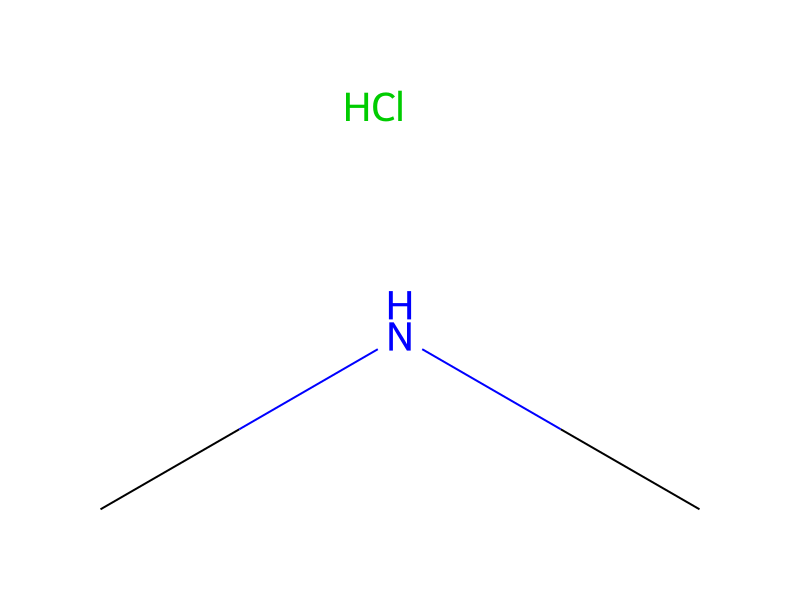
[Br:1][C@H:2]1[C:19](=[O:20])[N:4]2[C:5]([C:12]([O:14][C:15]([CH3:18])([CH3:17])[CH3:16])=[O:13])=[C:6]([CH3:11])[CH2:7][S:8](=[O:10])(=[O:9])[C@H:3]12.Cl.[CH3:22]NC.C(Cl)Cl.C=O>C(O)(C)(C)C>[Br:1][C@H:2]1[C:19](=[O:20])[N:4]2[C:5]([C:12]([O:14][C:15]([CH3:16])([CH3:18])[CH3:17])=[O:13])=[C:6]([CH3:11])[C:7](=[CH2:22])[S:8](=[O:9])(=[O:10])[C@H:3]12Participants
6
Reactant 4



Product 1

Reagents, catalysts & solvents 1

Procedure
A mixture of t-butyl 7α-bromo-3-methyl-3-cephem -4-carboxylate 1,1-dioxide (700 mg, 1.9 mmol), dimethylamine hydrochloride (460 mg, 5.7 mmol), methylene chloride (3 ml) and t-butyl alcohol (50 ml), formaldehyde (0.57 g, 37% w/v) was heated to reflux at 80°-90° C. for 20 hours. t-Butyl alcohol was removed under reduced pressure and the residue was dissolved in methylene chloride, washed with water, brine, dried and concentrated to give 200 mg of crude product which was purified over silica column using methylene chloride as eluant to give 40 mg of pure t-butyl 7α-bromo-2-methylene-3-methyl-3-cephem-4-carboxylate 1,1-dioxide.
Workup
- temperaturewas heated
- temperatureto reflux at 80°-90° C. for 20 hours
- customt-Butyl alcohol was removed under reduced pressure
- dissolutionthe residue was dissolved in methylene chloride
- washwashed with water, brine
- customdried
- concentrationconcentrated
- customto give 200 mg of crude product which
- customwas purified over silica column
Sources & evidence
- ORD record
- ord-1d812d9e7d0440fcb680da2e92c818d1
- Source dataset
- uspto-grants-1993_11
- Patent number
- US05264429
Reaction notes
Loading…