Triethylamine → 4-Cyanophenyl alpha-fluoroacrylate
Reaction equation

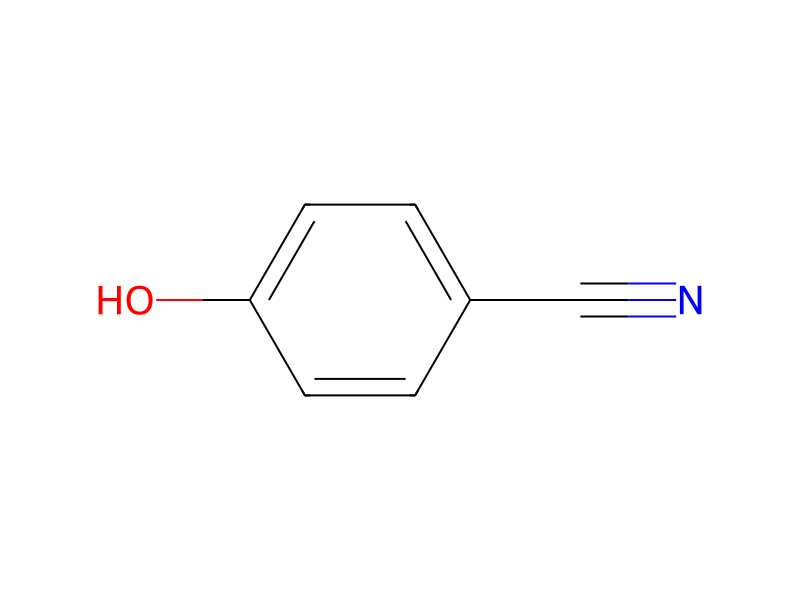
[F:1][C:2](=[CH2:6])[C:3](Cl)=[O:4].[C:7]([C:9]1[CH:14]=[CH:13][C:12]([OH:15])=[CH:11][CH:10]=1)#[N:8].C(N(CC)CC)C>C(Cl)Cl>[F:1][C:2](=[CH2:6])[C:3]([O:15][C:12]1[CH:13]=[CH:14][C:9]([C:7]#[N:8])=[CH:10][CH:11]=1)=[O:4]Participants
Reactant 3


Product 1

Reagents, catalysts & solvents 1

Procedure
10 g (0.092 mol) of α-fluoroacryloyl chloride (obtained in accordance with example 1c) were added dropwise, at a temperature of 5° C., with stirring and in the course of 20 minutes, to a solution of 10.7 g (0.09 mol) of 4-cyanophenol and 9.1 g (0.09 mol) of triethylamine in 150 ml of anhydrous methylene dichloride, and the reaction mixture was then stirred for a further 30 minutes at the same temperature. The solid formed was filtered off and washed with 20 ml of anhydrous methylene dichloride. After 0.005 g of hydroquinone monomethyl ether had been added, the volatile constituents in the mixture of filtrate and wash solution were removed by distillation, and the residue was recrystallized from boiling n-hexane. 11.2 g (65% of theory) of 4-cyanophenyl α-fluoroacrylate were obtained, melting point 78° to 79° C.
Workup
- customThe solid formed
- filtrationwas filtered off
- washwashed with 20 ml of anhydrous methylene dichloride
- additionAfter 0.005 g of hydroquinone monomethyl ether had been added
- additionthe volatile constituents in the mixture of filtrate
- washwash solution
- customwere removed by distillation
- customthe residue was recrystallized
Sources & evidence
- ORD record
- ord-48cedf718b7546a68e7ab87cdf1effe4
- Source dataset
- uspto-grants-1993_11
- Patent number
- US05266668
Reaction notes
Loading…