4-Bromobenzaldehyde → 4-(5-Phenoxypentyl)benzyl alcohol
Reaction equation

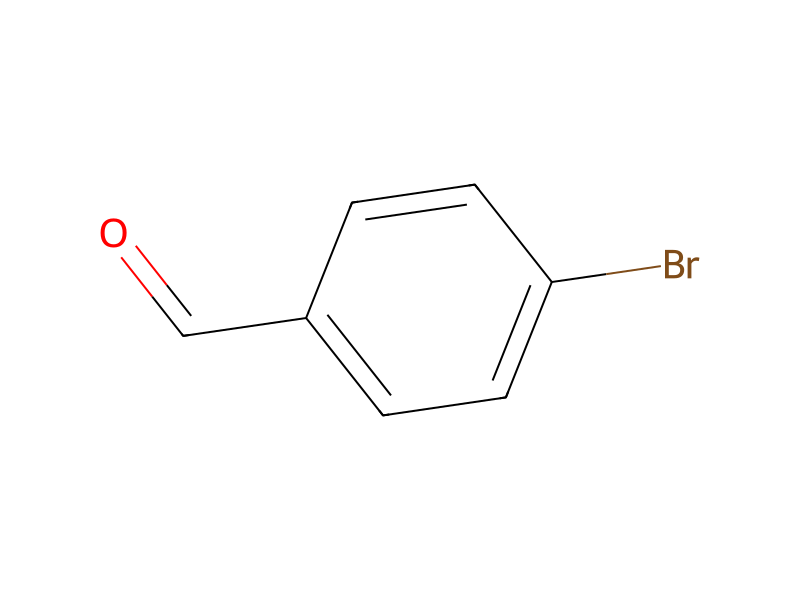
[O:1]([CH2:8][CH2:9][CH2:10][C:11]#[C:12][C:13]1[CH:20]=[CH:19][C:16]([CH:17]=[O:18])=[CH:15][CH:14]=1)[C:2]1[CH:7]=[CH:6][CH:5]=[CH:4][CH:3]=1.BrC1C=CC(C=O)=CC=1.O(CCCC#C)C1C=CC=CC=1>C(N(CC)CC)C.C(OCC)(=O)C.[Pd](Cl)Cl.C1(P(C2C=CC=CC=2)C2C=CC=CC=2)C=CC=CC=1.C1(P(C2C=CC=CC=2)C2C=CC=CC=2)C=CC=CC=1.[Cu]I>[O:1]([CH2:8][CH2:9][CH2:10][CH2:11][CH2:12][C:13]1[CH:14]=[CH:15][C:16]([CH2:17][OH:18])=[CH:19][CH:20]=1)[C:2]1[CH:3]=[CH:4][CH:5]=[CH:6][CH:7]=1Participants
Reactant 3


Product 1

Reagents, catalysts & solvents 4




Procedure
4-(5-Phenoxypent-1-ynyl)benzaldehyde--By the method of C. D. Perchonock, et al., J. Med. Chem., 29, 1442 (1986), 2.0 g 4-bromobenzaldehyde, 2.1 g (0.013 mole) 5-phenoxypent-1-yne, 0.76 g bis (triphenylphosphine) palladium (II) chloride, and 0.10 g copper (I) iodide in 7.0 mL dry triethylamine were stirred under argon for 17 hours. The mixture was diluted with ethyl acetate and washed with 2% H2SO4, then with water and finally with saturated aqueous NaCl. The resultant dark solution was treated with about 2 g activated carbon powder, dried over MgSO4 and then filtered and evaporated in vacuo. The residue was purified by silica gel column chromatography using 3-6% ethyl acetate in hexane as eluant. The title compound was obtained as a tan solid (2.2 g, 78%).
Workup
- washwashed with 2% H2SO4
- additionThe resultant dark solution was treated with about 2 g
- dry with materialdried over MgSO4
- filtrationfiltered
- customevaporated in vacuo
- customThe residue was purified by silica gel column chromatography
Sources & evidence
- ORD record
- ord-e6af206d939441599a746ea73f9a40c7
- Source dataset
- uspto-grants-1993_11
- Patent number
- US05266713
Reaction notes
Loading…