Sodium Chloride → HCID 88746855, compound
Reaction equation

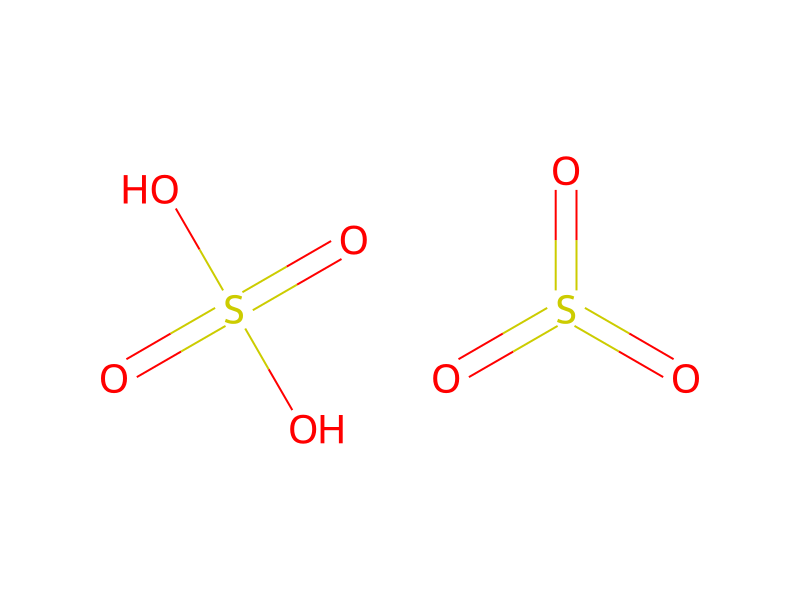
C1(C)C=CC(=[C:7]2[CH:12]3[C:13]([CH3:15])([CH3:14])[C:9]([CH3:16])([CH2:10][CH2:11]3)[C:8]2=[O:17])CC=1.[OH:19][S:20]([OH:23])(=O)=[O:21].O=S(=O)=O.[Cl-].[Na+:29]>>[CH3:16][C:9]1[CH:10]=[CH:11][C:12]([CH:13]=[C:7]2[CH:12]3[C:13]([CH3:15])([CH3:14])[C:9]([CH3:16])([CH2:10][CH2:11]3)[C:8]2=[O:17])=[CH:7][C:8]=1[S:20]([O-:23])(=[O:21])=[O:19].[Na+:29]Participants
4



Procedure
25.4 g of 3-p-tolylidene camphor are added to 64 ml of oleum containing 10% SO3, with cooling so as to keep the temperature of the reaction mixture around 35° C. The resulting mixture is then poured into 150 ml of a saturated sodium chloride solution, the mixture being cooled to below 25° C. A precipitate is obtained which is filtered and then washed with a saturated sodium chloride solution. The wet product is made into paste in 70 ml of water. It is then filtered and recrystallized in an 80:20 water-acetone mixture. Thus, 29.3 g of a white powder, melting at 240° C. are obtained.
Workup
- temperaturewith cooling so as
- customthe temperature of the reaction mixture around 35° C
- temperaturethe mixture being cooled to below 25° C
- customA precipitate is obtained which
- filtrationis filtered
- washwashed with a saturated sodium chloride solution
- filtrationIt is then filtered
- customrecrystallized in an 80:20 water-acetone mixture
Sources & evidence
- ORD record
- ord-e482dfd8acbb4312babac65e0b6137b2
- Source dataset
- uspto-grants-1979_08
- Patent number
- US04165336
Reaction notes
Loading…