Sodium hydride → 7-(6-hydroxycyclohex-2-enyl)hept-5Z-enoic acid
Reaction equation

[H-].[Na+].[H][H].[Br-].[C:6]([CH2:9][CH2:10][CH2:11][CH2:12][P+](C1C=CC=CC=1)(C1C=CC=CC=1)C1C=CC=CC=1)([OH:8])=[O:7].[CH:32]12[CH2:40][CH:39](O)[O:38][CH:37]1[CH2:36][CH2:35][CH:34]=[CH:33]2>CS(C)=O.O>[OH:38][CH:37]1[CH:32]([CH2:40]/[CH:39]=[CH:12]\[CH2:11][CH2:10][CH2:9][C:6]([OH:8])=[O:7])[CH:33]=[CH:34][CH2:35][CH2:36]1Participants
Reactant 4


Product 1

Reagents, catalysts & solvents 2
Procedure
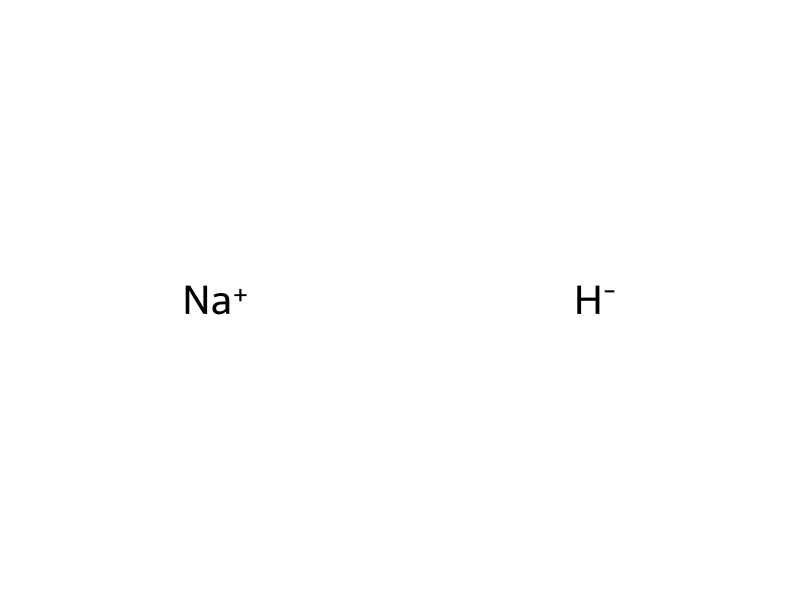
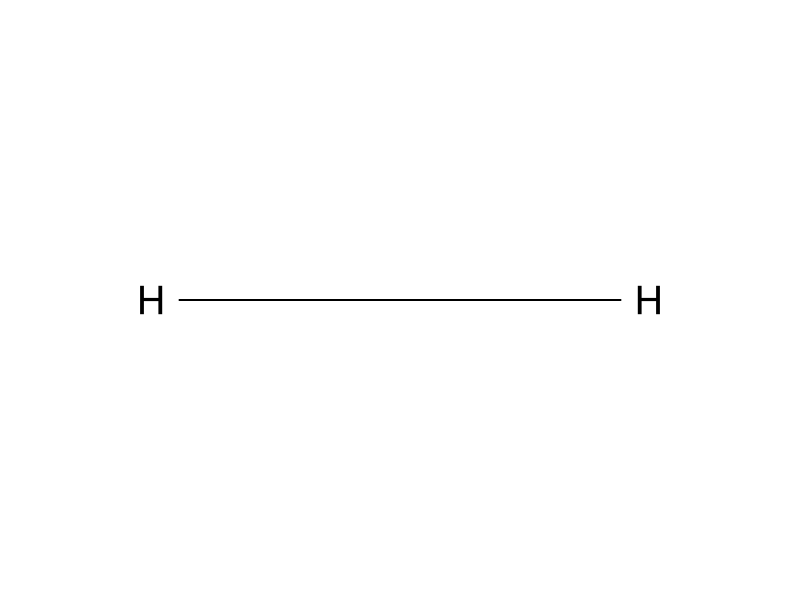
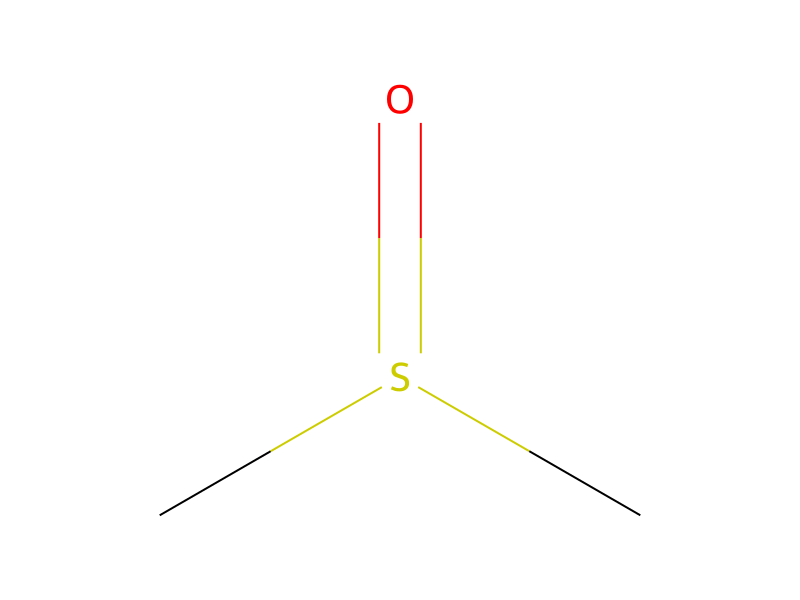
A 12.5 g (296 mmol) portion of sodium hydride (57% oil dispersion) was heated with 95 ml of dry dimethylsulfoxide (DMSO) under argon at 65°-75° for ca. 2.5 hr until hydrogen evolution had ceased. The mixture was stirred with ice-water cooling as 48.3 g (109 mmol) of 4-carboxybutyltriphenylphosphonium bromide (Aldrich) was added as a solid. The resultant deep red mixture was stirred at 0° for several minutes, then at room temperature until most of the salts had dissolved (1 hr). A solution of 12.2 g (87.1 mmol) of 7-oxabicyclo[4.3.0]non-2-en-8-ol in 10 ml of dry DMSO was added dropwise over 2 hr to the vigorously stirred ylide solution. The resultant dark mixture was stirred for 20 hr at room temperature. Water (200 ml) was added then and the resultant mixture was extracted three times with ethyl acetate and these extracts were discarded. The remaining aqueous phase was acidified with concentrated hydrochloric acid and then extracted four times with ethyl acetate. The combined extracts were dried (MgSO4) and evaporated in vacuo. The resultant residue was evaporated at 0.1 mm as the pot was warmed to 50° and the receiver flask was cooled in an acetone-dry bath. The yield of crude orange oil was 32.5 g (theoretical yield 19.5 g) and contained in addition to the desired product, considerable aromatic byproduct as evidenced from an nmr spectrum of this oil. This oil was extracted several times with warm ether-pentane (1:1). The combined extracts were dried (MgSO4) and evaporated in vacuo to give 11.9 g of 7-(6-hydroxycyclohex-2-enyl)hept-5Z-enoic acid. A portion of this product was purified by column chromatography on silicic acid-Celite (85:15) using benzene to ethyl acetate gradient elution to obtain pure 7-(6-hydroxycyclohex-2-enyl)hept-5Z-enoic acid.
Workup
- additionwas added as a solid
- dissolutionat room temperature until most of the salts had dissolved (1 hr)
- stirringThe resultant dark mixture was stirred for 20 hr at room temperature
- extractionthe resultant mixture was extracted three times with ethyl acetate
- extractionextracted four times with ethyl acetate
- dry with materialThe combined extracts were dried (MgSO4)
- customevaporated in vacuo
- customThe resultant residue was evaporated at 0.1 mm as the
- temperaturepot was warmed to 50°
- temperaturethe receiver flask was cooled in an acetone-
- customdry bath
- additioncontained in addition to the desired product, considerable aromatic byproduct
- extractionThis oil was extracted several times with warm ether-pentane (1:1)
- dry with materialThe combined extracts were dried (MgSO4)
- customevaporated in vacuo
Sources & evidence
- ORD record
- ord-d56a26a5e6b744b08f0c476045507f10
- Source dataset
- uspto-grants-1979_04
- Patent number
- US04149017
Reaction notes
Loading…