Benzyl Alcohol → Benzyl carbamate
Reaction equation

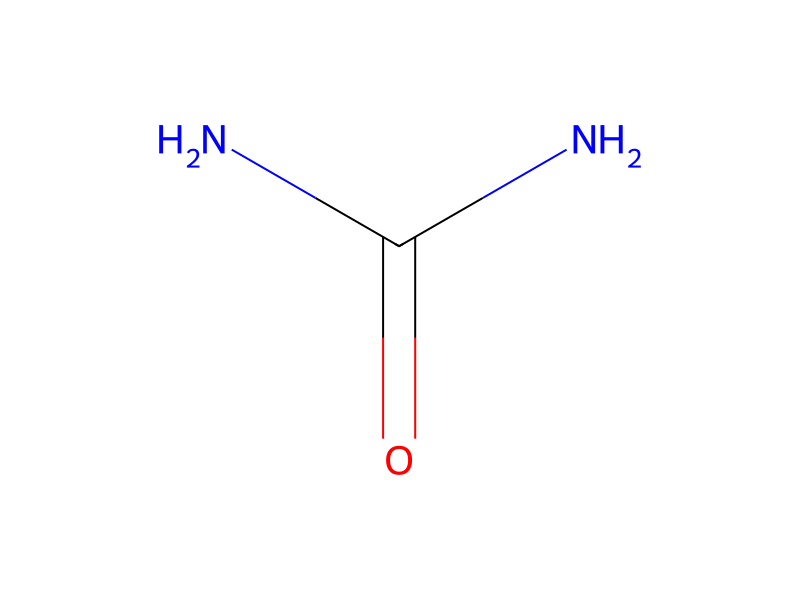
[NH2:1][C:2](N)=[O:3].[CH2:5]([OH:12])[C:6]1[CH:11]=[CH:10][CH:9]=[CH:8][CH:7]=1>[Ni]>[C:2](=[O:3])([O:12][CH2:5][C:6]1[CH:11]=[CH:10][CH:9]=[CH:8][CH:7]=1)[NH2:1]Participants
Reactant 2

Product 1

Reagents, catalysts & solvents 1

Conditions
- Temperature
- 131 °C
Procedure
A mixture of 240 parts of urea, 778 parts of benzyl alcohol and 11 parts of a cation exchanger which is commercially available under the registered name Amberlyst 15 and, having been treated in accordance with Example (1 a), contains nickel, is heated to the reflux temperature (131° C.) in a stirred vessel. In the course of 6 hours, the reflux temperature rises to 149° C. The reaction mixture is then heated at 149°-150° C. for a further 2 hours. After filtering off the exchanger, excess benzyl alcohol is removed by distillation under reduced pressure. 586 parts of benzyl carbamate are obtained. This corresponds to a yield of 97% of theory, based on urea. Benzyl carbamate boils at 116°-118° C. under from 0.3 to 0.4 mm Hg. Melting point= 75°-76° C. On distillation, a residue of 1% by weight is left.
Workup
- customIn the course of 6 hours
- customrises to 149° C
- temperatureThe reaction mixture is then heated at 149°-150° C. for a further 2 hours
- filtrationAfter filtering off the exchanger, excess benzyl alcohol
- customis removed by distillation under reduced pressure
Sources & evidence
- ORD record
- ord-1391f8b61e1e4f50b57924d2033d94f7
- Source dataset
- uspto-grants-1979_05
- Patent number
- US04156784
Reaction notes
Loading…