Hydrochloric Acid → (1R,2S)-1-(3,4-difluorophenyl)-2-[[(1R)-2-hydroxy-1-methylethyl]amino]propanol
Reaction equation

Br.[F:2][C:3]1[CH:4]=[C:5]([C@:10]2([OH:18])[O:15][CH2:14][C@@H:13]([CH3:16])[NH:12][C@H:11]2[CH3:17])[CH:6]=[CH:7][C:8]=1[F:9].C(O)C.O.[BH4-].[Na+].Cl>O>[F:2][C:3]1[CH:4]=[C:5]([C@@H:10]([OH:18])[C@@H:11]([NH:12][C@H:13]([CH3:16])[CH2:14][OH:15])[CH3:17])[CH:6]=[CH:7][C:8]=1[F:9]Participants
Reactant 4


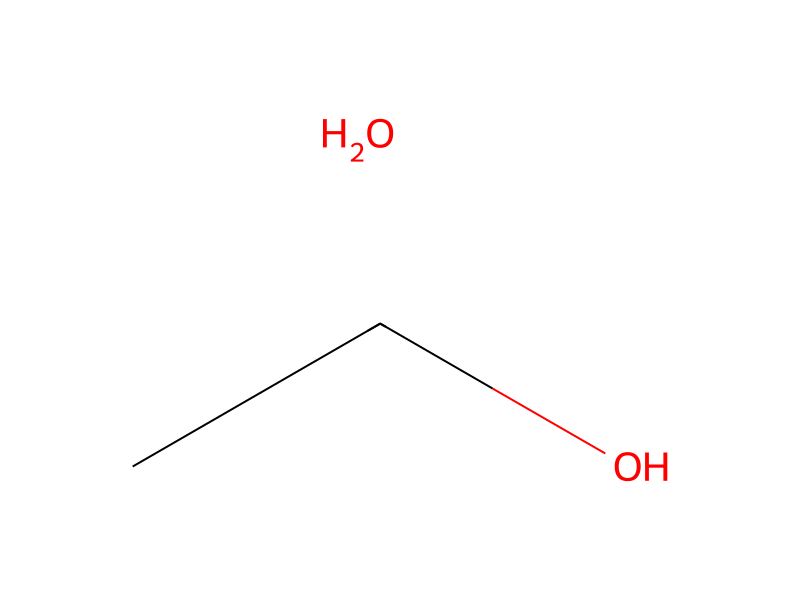

Product 1

Reagents, catalysts & solvents 1

Procedure
To a solution of (2S,3S,5R)-2-(3,4-difluorophenyl)-3,5-dimethyl-2-morpholinol hydrobromide (25.4 g, 0.078 mole) in 50--50 ethanol-water (300 ml) was added a solution of sodium borohydride (11.9 g, 0.31 mole) in water (120 ml) at 0° C. The resulting mixture was stirred for 16 hours at room temperature. The reaction mixture was treated with concentrated hydrochloric acid and concentrated under reduced pressure. The residue was dissolved in water, basified (40% aqueous sodium hydroxide), and extracted with dichloromethane. The organic layers were combined, washed with brine and dried (potassium carbonate) to give a solution of (1R,2S)-1-(3,4-difluorophenyl)-2-[[(1R)-2-hydroxy-1-methylethyl]amino]propanol in dichlomethane (500 ml). 50 ml of the solution was concentrated under reduced pressure to yield 1.9 g of the free base as a white solid. The free base was dissolved in diethyl ether and treated with ethereal hydrogen chloride. The hydrochloride salt was recrystallized from ethanol-diethyl ether mixtures to give 1.1 g of (1R,2S)-1-(3,4-difluorophenyl)-2-[[(1R)-2-hydroxy-1-methylethyl]amino]propanol hydrochloride as a white solid. m.p. 116°-117° C.
Workup
- concentrationconcentrated under reduced pressure
- dissolutionThe residue was dissolved in water
- extractionextracted with dichloromethane
- washwashed with brine
- dry with materialdried (potassium carbonate)
Sources & evidence
- ORD record
- ord-03490d7d38a0454e86827525a094716d
- Source dataset
- uspto-grants-1997_07
- Patent number
- US05648347
Reaction notes
Loading…