Ammonia → 4-[4-(4-Pyridyl)piperazin-1-yl]anisole
Reaction equation

[N:1]1([C:7]2[CH:12]=[CH:11][C:10]([O:13][CH3:14])=[CH:9][CH:8]=2)[CH2:6][CH2:5][NH:4][CH2:3][CH2:2]1.Cl.Cl[C:17]1[CH:22]=[CH:21][N:20]=[CH:19][CH:18]=1.N>O>[N:20]1[CH:21]=[CH:22][C:17]([N:4]2[CH2:3][CH2:2][N:1]([C:7]3[CH:8]=[CH:9][C:10]([O:13][CH3:14])=[CH:11][CH:12]=3)[CH2:6][CH2:5]2)=[CH:18][CH:19]=1Participants
5
Reactant 3

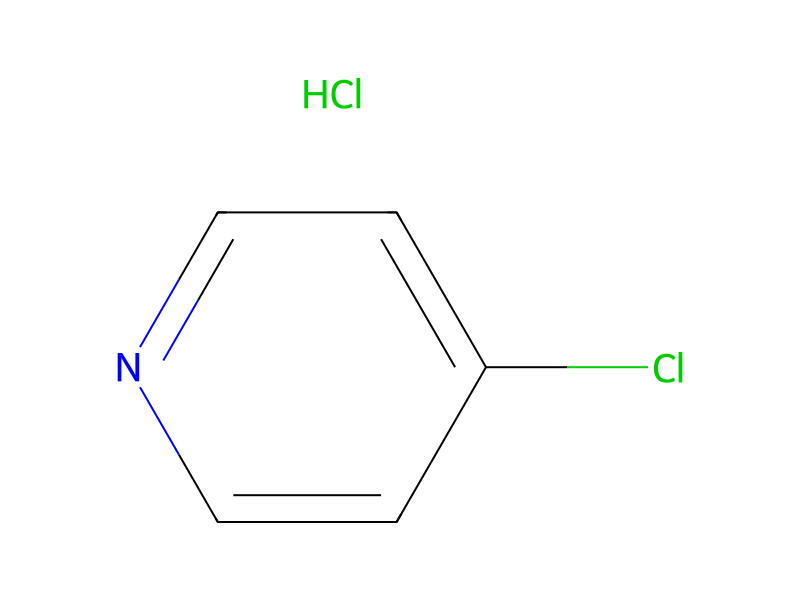

Product 1

Reagents, catalysts & solvents 1

Procedure
4-(piperazin-1-yl)anisole (4.24 g) and 4-chloropyridine hydrochloride (3.35 g) were intimately mixed and heated at 160°-170° C. (bath temperature) for 7 minutes. The solid obtained on cooling was dissolved in water (75 ml) and the solution basified with aqueous ammonia. The solid precipitate was extracted into ethyl acetate and the organic extract washed with water, filtered through phase separating paper (Whatman 1PS) and evaporated. The residue was recrystallised from ethanol to give 4-[4-(4-pyridyl)-piperazin-1-yl]anisole (1.84 g) as a solid: m.p. 165°-167° C.; NMR (CDCl3) δ 8.3(2H,d); 6.86(4H,m); 6.71(2H,d); 3.78(3H,s); 3.46(4H,m); 3.2(4H,m).
Workup
- temperatureheated at 160°-170° C. (bath temperature) for 7 minutes
- customThe solid obtained
- temperatureon cooling
- extractionThe solid precipitate was extracted into ethyl acetate
- extractionthe organic extract
- washwashed with water
- filtrationfiltered through phase
- customseparating paper (Whatman 1PS)
- customevaporated
- customThe residue was recrystallised from ethanol
Sources & evidence
- ORD record
- ord-16b05626bf44492a89a3942b5d6bbb66
- Source dataset
- uspto-grants-1997_07
- Patent number
- US05652242
Reaction notes
Loading…