p-Toluenesulfonic acid → HCID 21825359, compound
Reaction equation

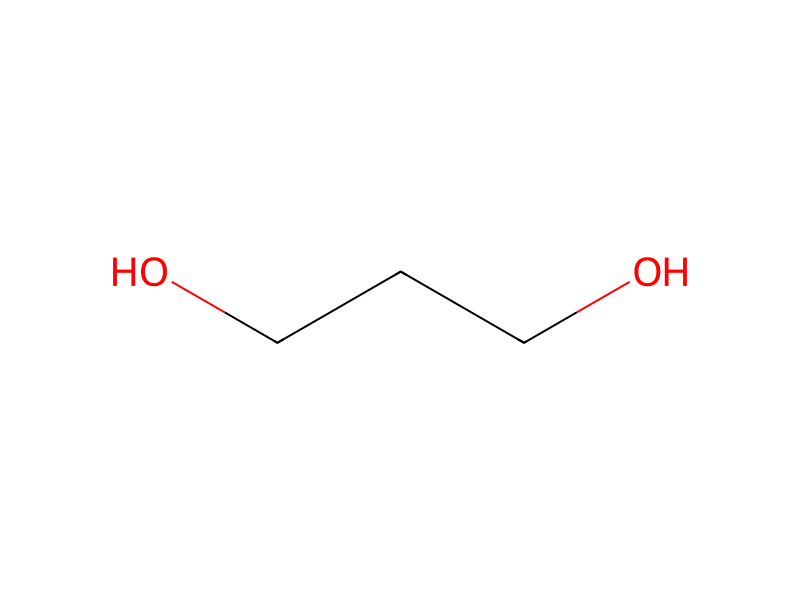
[CH3:1][C:2]1[N:7]=[C:6]([C:8]([C:10]2[CH:15]=[CH:14][C:13]([O:16][CH3:17])=[C:12]([O:18][CH3:19])[CH:11]=2)=[O:9])[CH:5]=[CH:4][CH:3]=1.C1(C)C=CC(S(O)(=O)=O)=CC=1.[CH2:31](O)[CH2:32][CH2:33][OH:34].C(=O)(O)[O-].[Na+]>C1(C)C=CC=CC=1.O>[CH3:19][O:18][C:12]1[CH:11]=[C:10]([C:8]2([C:6]3[CH:5]=[CH:4][CH:3]=[C:2]([CH3:1])[N:7]=3)[O:34][CH2:33][CH2:32][CH2:31][O:9]2)[CH:15]=[CH:14][C:13]=1[O:16][CH3:17]Participants
7






Procedure
About 77.1 g. of (3,4-dimethoxyphenyl) (6-methyl-2-pyridyl) ketone, 74.1 g. of p-toluenesulfonic acid and 22.8 ml of 1,3-propanediol in 600 ml of toluene were heated under reflux with stirring for 17 hours. The water evolved during the reaction was neutralized with 500 ml of saturated sodium bicarbonate. Two phases formed and the phases were separated. The organic layer was washed with saturated sodium bicarbonate solution and dried over magnesium sulfate. Removal of the desiccant and solvent gave a solid residue which, on recrystallization from a mixture of acetone and petroleum ether (b.p. 60°-80°C.), yielded 2-(3,4-dimethoxyphenyl)-2-(6-methyl-2-pyridyl)-1,3-dioxane, m.p. 124°-126°C.
Workup
- temperatureunder reflux
- customTwo phases formed
- customthe phases were separated
- washThe organic layer was washed with saturated sodium bicarbonate solution
- dry with materialdried over magnesium sulfate
- customRemoval of the desiccant and solvent
- customgave a solid residue which
- customon recrystallization
- additionfrom a mixture of acetone and petroleum ether (b.p. 60°-80°C.)
Sources & evidence
- ORD record
- ord-42a08db92df4430580a07c155ef81c4c
- Source dataset
- uspto-grants-1976_03
- Patent number
- US03941796
Reaction notes
Loading…