1,5-Naphthalenedisulfonic acid → Phosphate
Reaction equation

C1(S(O)(=O)=O)C2C=CC=C(S(O)(=O)=O)C=2C=CC=1.[Na][Na].[Na].[P:22]([O-:26])([O-:25])([O-:24])=[O:23].[OH-].[Na+].[O-:29][P:30]([O:33][P:34]([O:37][P:38]([O-:41])([O-:40])=[O:39])([O-:36])=[O:35])([O-:32])=[O:31].[Na+].[Na+].[Na+].[Na+].[Na+].C1(S(O)(=O)=O)C(S(O)(=O)=O)=CC=C2C=1C=CC=C2.[Na].[Na]>O>[O-:41][P:38]([O:37][P:34]([O:33][P:30]([O-:32])([O-:31])=[O:29])([O-:36])=[O:35])([O-:40])=[O:39].[P:22]([O-:26])([O-:25])([O-:24])=[O:23]Participants
Reactant 6



Product 2


Reagents, catalysts & solvents 1
Procedure
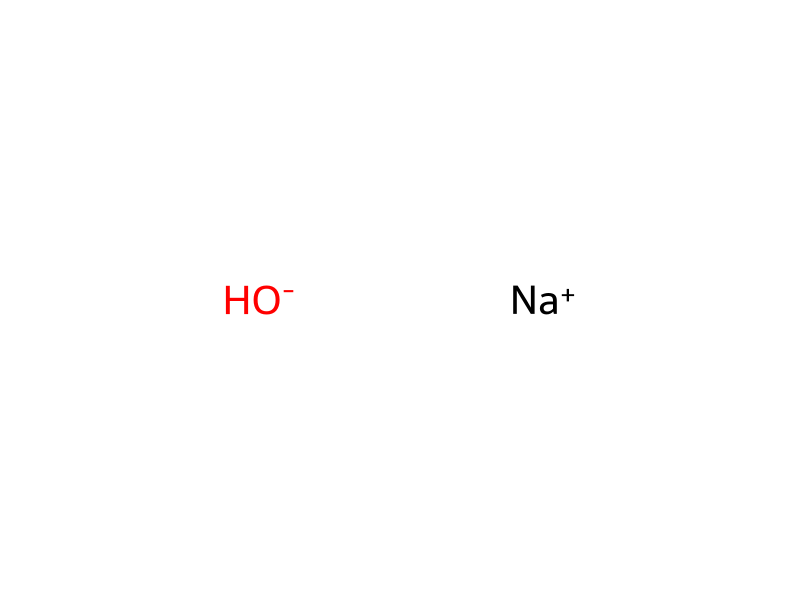
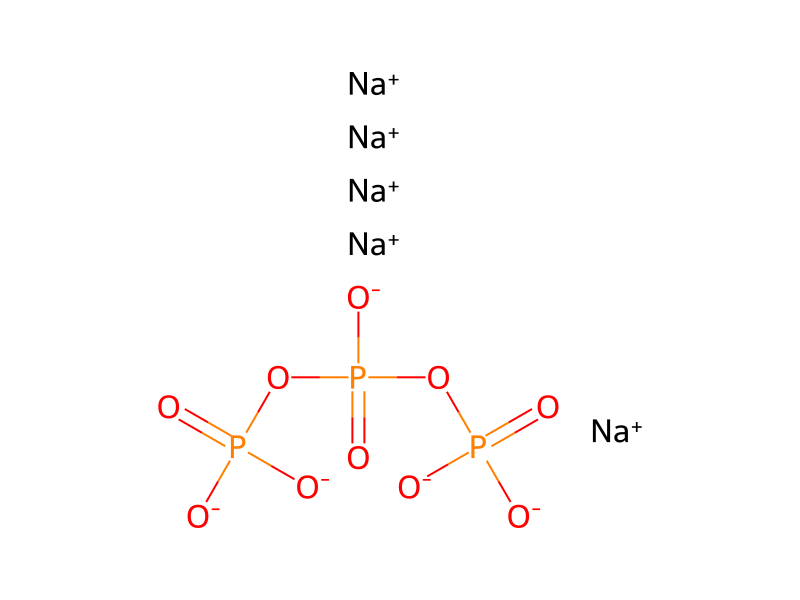
Here is an example of the use of 1,5 naphthalenedisulfonic acid, disodium salt at a coal-fired power plant. The 1,5 naphthalenedisulfonic acid was applied to the high-pressure steam generator operating at 2000 psig (636° F.). The 1,5 naphthalenedisulfonic acid, disodium salt was added in combination with sodium/phosphate-based program. The treatment was supplied to the boiler by diluting a liquid product in a daytank and pumping the resulting dilute solution into the chemical injection line in the steam drum of the boiler. Sodium hydroxide was added to the tank as needed to control boiler pH. The liquid product contained sodium tripolyphosphate and disodium naphthalene disulfonic acid dissolved in deionized water. The mass ratio of sodium tripolyphosphate to disodium naphthalene disulfonic acid in the liquid product was 28:1. The tripolyphosphate ion hydrolyses immediately in the high temperature boiler conditions to produce orthophosphate ion PO4. The orthophosphate ion was analyzed by various wet chemistry and spectroscopic techniques in the boiler water. The fluorometers measuring the naphthalene disulfonic acid fluorescence were calibrated to read directly in ppm orthophosphate based on the ratio of sodium tripolyphosphate to disodium naphthalene disulfonic acid in the liquid product. This fluorometer calibration allowed for a direct comparison of the data from the orthophosphate tests and the fluorometric readings. If the orthophosphate test data differed from the fluorometric readings that would be evidence of a chemical reaction that had changed the ratio of phosphate to fluorophore in the boiler water as compared to the ratio found in the original liquid product injected into the boiler. FIG. 2 shows the 1,5 naphthalenedisulfonic acid, disodium salt and PO4 readings, both in terms of ppm PO4 over eighty day time period.
Workup
- customwas applied to the high-pressure steam generator operating at 2000 psig (636° F.)
- additionby diluting a liquid product in a daytank
Sources & evidence
- ORD record
- ord-04bbc27c5ca84264a7efe1e4081bf493
- Source dataset
- uspto-grants-2008_11
- Patent number
- US07448255B2
Reaction notes
Loading…