3,3,3-Triphenylpropionic Acid → N-{(1S)-2-(3-{((3R)-1-cyclohexylmethyl-3-piperidyl)methyl}amino-3-oxopropyl)amino-1-(2-carbamoylethyl)-2-oxoethyl}-3,3,3-triphenylpropanamide
Reaction equation

Cl.[NH2:2][C@@H:3]([CH2:26][CH2:27][C:28]([NH:30]C(C1C=CC=CC=1)(C1C=CC=CC=1)C1C=CC=CC=1)=[O:29])[C:4]([NH:6][CH2:7][CH2:8][C:9]([NH:11][CH2:12][C@H:13]1[CH2:18][CH2:17][CH2:16][N:15]([CH2:19][CH:20]2[CH2:25][CH2:24][CH2:23][CH2:22][CH2:21]2)[CH2:14]1)=[O:10])=[O:5].[C:50]1([C:56]([C:67]2[CH:72]=[CH:71][CH:70]=[CH:69][CH:68]=2)([C:61]2[CH:66]=[CH:65][CH:64]=[CH:63][CH:62]=2)[CH2:57][C:58](O)=[O:59])[CH:55]=[CH:54][CH:53]=[CH:52][CH:51]=1.O.ON1C2C=CC=CC=2N=N1.Cl.C(N=C=NCCCN(C)C)C.C(=O)(O)[O-].[Na+]>C(Cl)(Cl)Cl.C(N(CC)C(C)C)(C)C>[CH:20]1([CH2:19][N:15]2[CH2:16][CH2:17][CH2:18][C@H:13]([CH2:12][NH:11][C:9](=[O:10])[CH2:8][CH2:7][NH:6][C:4](=[O:5])[C@@H:3]([NH:2][C:58](=[O:59])[CH2:57][C:56]([C:50]3[CH:55]=[CH:54][CH:53]=[CH:52][CH:51]=3)([C:61]3[CH:62]=[CH:63][CH:64]=[CH:65][CH:66]=3)[C:67]3[CH:72]=[CH:71][CH:70]=[CH:69][CH:68]=3)[CH2:26][CH2:27][C:28](=[O:29])[NH2:30])[CH2:14]2)[CH2:21][CH2:22][CH2:23][CH2:24][CH2:25]1Participants
Reactant 5
 HCID 1366963,3,3-Triphenylpropionic Acid
 HCID 516892Sodium Bicarbonate2×
 HCID 27239391,3-Propanediamine, N'-(ethylcarbonimidoyl)-N,N-dimethyl-, monohydrochloride
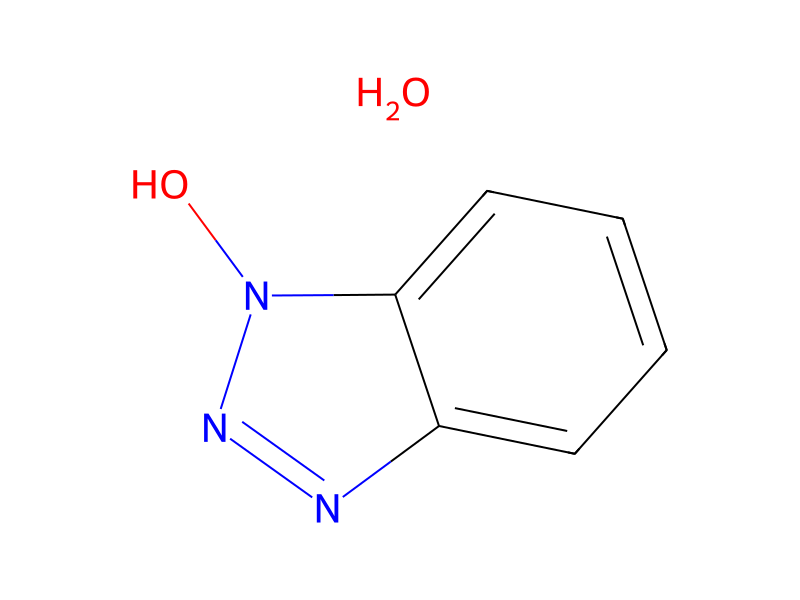 HCID 27960291-Hydroxybenzotriazole hydrate
 HCID 69101269(2S)-2-amino-N5-triphenylmethyl-N1-(3-{((3R)-1-cyclohexylmethyl-3-piperidyl)methyl}amino-3-oxopropyl)pentanediamide monohydrochloride
Product 1

Reagents, catalysts & solvents 2


Procedure
To a solution of 84 mg of (2S)-2-amino-N5-triphenylmethyl-N1-(3-{((3R)-1-cyclohexylmethyl-3-piperidyl)methyl}amino-3-oxopropyl)pentanediamide monohydrochloride in 1.5 ml of chloroform, 0.052 ml of N,N-diisopropylethylamine was added at room temperature, followed by an hour's stirring at the same temperature. Then 39 mg of 3,3,3-triphenylpropionic acid, 24 mg of 1-hydroxy-benzotriazole monohydrate and 31 mg of 1-ethyl-3-(3-dimethylaminopropyl)carbodiimide monohydrochloride were added at room temperature by the order stated, followed by 17 hours' stirring at the same temperature. The reaction liquid was rendered weakly basic with saturated aqueous sodium bicarbonate solution, extracted with chloroform and dried over anhydrous sodium sulfate. Distilling the solvent off, the resultant residue was dissolved in 1 ml of chloroform, and to the solution 1 ml of trifluoroacetic acid was added at room temperature, followed by 20 minutes' stirring at the same temperature. The reaction liquid was rendered weakly basic with saturated aqueous sodium bicarbonate solution, extracted with chloroform and dried over anhydrous sodium sulfate. The solvent was distilled off under reduced pressure, and the resultant residue was purified with preparative thin layer chromatography (Kieselgel™60F254, Art 5744 (Merck), chloroform/methanol/28% aqueous ammonia=90/10/1) to provide 43 mg of the title compound as a white solid.
Workup
- waitfollowed by an hour
- stirring' stirring at the same temperature
- customThe reaction liquid
- extractionextracted with chloroform
- dry with materialdried over anhydrous sodium sulfate
- distillationDistilling the solvent off, the resultant residue
- dissolutionwas dissolved in 1 ml of chloroform
- additionto the solution 1 ml of trifluoroacetic acid was added at room temperature
- waitfollowed by 20 minutes
- stirring' stirring at the same temperature
- customThe reaction liquid
- extractionextracted with chloroform
- dry with materialdried over anhydrous sodium sulfate
- distillationThe solvent was distilled off under reduced pressure
- customthe resultant residue was purified with preparative thin layer chromatography (Kieselgel™60F254, Art 5744 (Merck), chloroform/methanol/28% aqueous ammonia=90/10/1)
Sources & evidence
- ORD record
- ord-57c4905a59c6485e908710019aec26a2
- Source dataset
- uspto-grants-2008_11
- Patent number
- US07452908B2
Reaction notes
Loading…