Sodium Thiosulfate → Sodium Chloride
Reaction equation

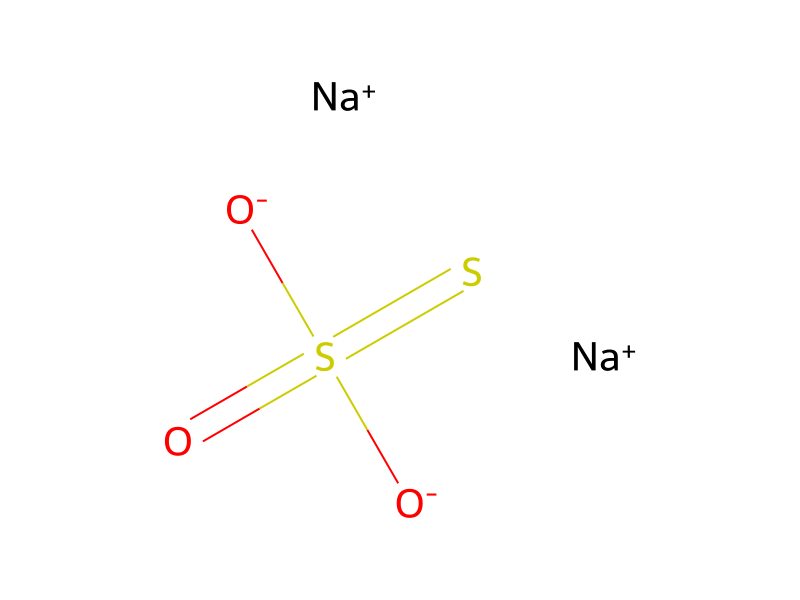
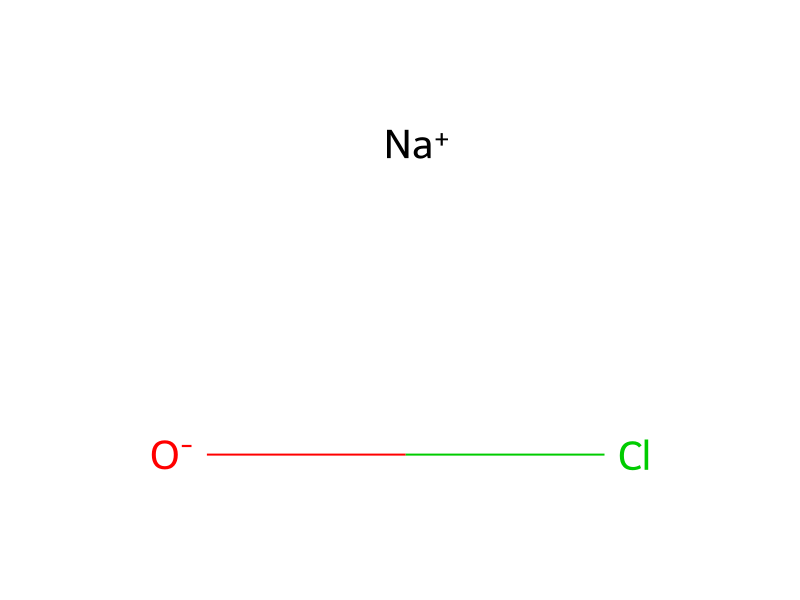
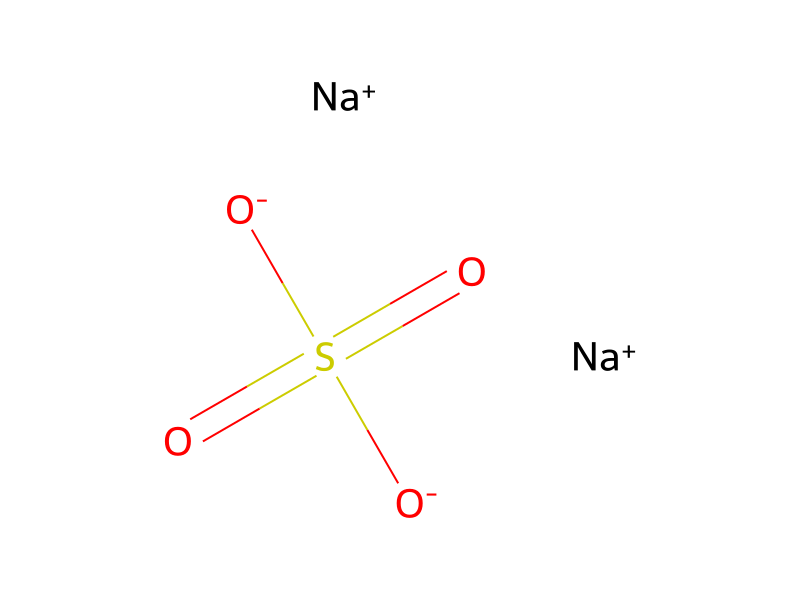
[Cl:1][O-:2].[Na+:3].[S:4]([O-:8])([O-:7])(=[O:6])=S.[Na+].[Na+]>>[S:4]([O-:8])([O-:2])(=[O:7])=[O:6].[Na+:3].[Na+:3].[Cl-:1].[Na+:3]Participants

Procedure
However, as discussed above it is not desirable or necessary to consume all of the carbon dioxide of the gas stream 34 in this manner. What is desired is to convert all or most all of the sodium hydroxide of the fresh absorption liquor 33 to sodium carbonate and sodium bicarbonate in the upper portions of the packing 12 so that when it reaches the lower portions of the bed of packing 12 the reaction between sodium hydroxide and chlorine to form sodium chloride and sodium hypochlorite is minimized. If there is any sodium hypochlorite formed it reacts with the sodium thiosulfate to form sodium sulfate and sodium chloride with the consumption of base. The desired reaction in the lower portions of the bed of packing 12 is the reaction between sodium thiosulfate and chlorine to form sodium sulfate and sodium chloride with the consumption of base. Most preferably, almost all of the thiosulfate of the fresh absorption liquor 33 is consumed in the bed of packing 12 so that very little remains in the contacted absorption liquor 36.
Workup
- customformed it
Sources & evidence
- ORD record
- ord-6c81bdd8e7f64992a4f5fd9488d708c2
- Source dataset
- uspto-grants-1995_02
- Patent number
- USH0001417
Reaction notes
Loading…